
New Construction Loans Texas: Your 2026 Guide
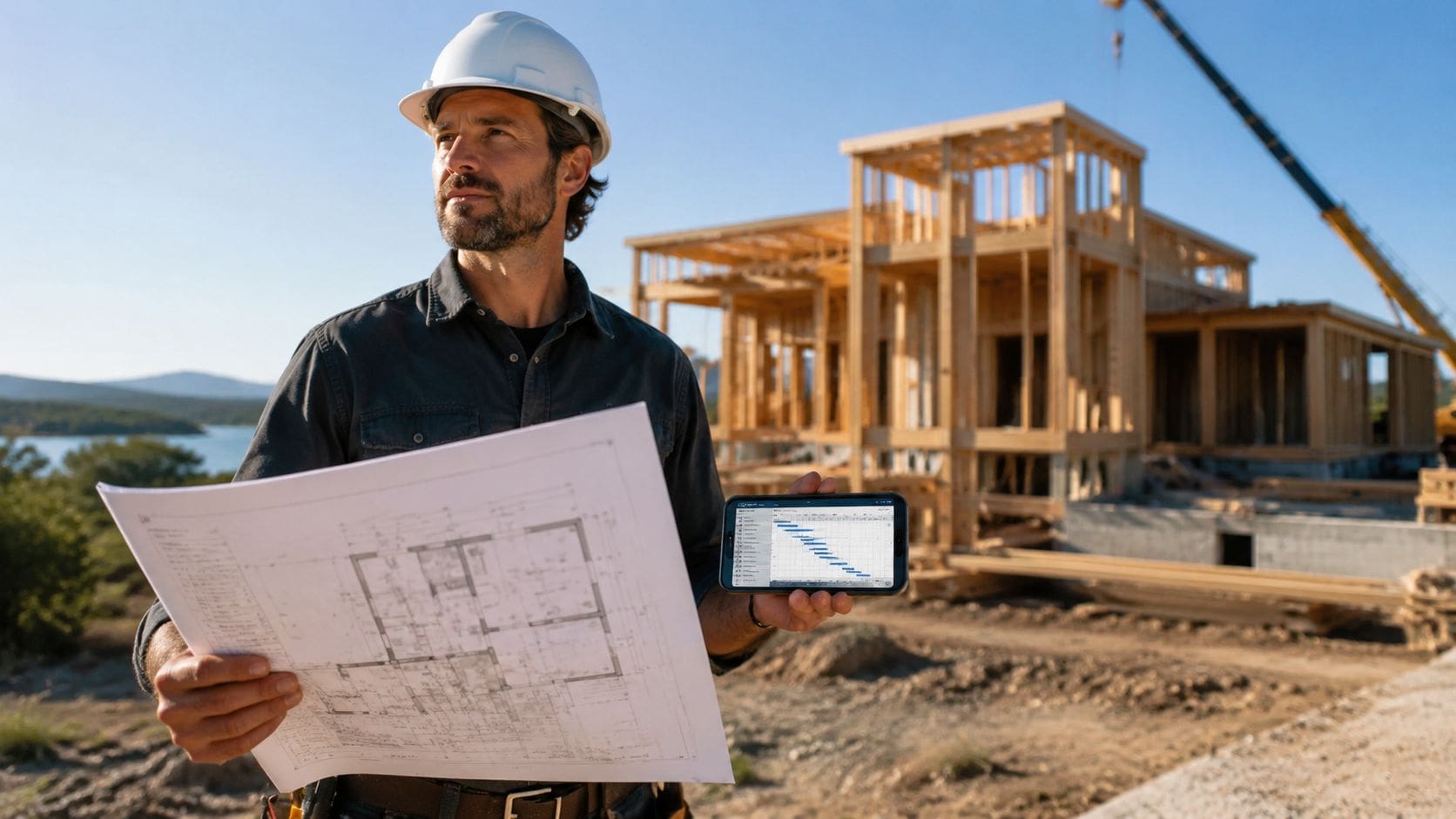
You're standing in a half-finished build with a draw request in your inbox, a subcontractor waiting on payment, and a lender asking for one more inspection before they release the next tranche. That's the operational reality behind new construction loans Texas, and it's why many borrowers often misunderstand the financing question. They think they're shopping for a mortgage. Instead, they are deciding how to structure project capital, how much equity to trap, and what the exit looks like when the slab cures and the last punch-list item gets signed off.
Why Construction Financing in Texas Feels Different in 2026
A Texas ground-up deal lives or dies on milestones. The lender wants the foundation poured, the plans complete, the budget believable, and the builder proven before real cash starts moving. That makes construction financing feel harsher than a normal home loan, because the lender is not buying a finished house, it is funding a project that still has to earn its next draw.
Texas also rewards borrowers who understand timing. Builders, flippers, and build-to-rent investors do not get paid for effort alone, they get paid when the capital stack keeps pace with the work and the exit stays realistic. Miss the schedule, and the numbers stop working fast.
The Texas market is built around project timing
Texas hard-money construction data points to a short-duration, equity-heavy market. A 2024 directory of Texas new-construction lenders lists 50 new-construction lenders operating in Texas, with average loan terms of 15 months, average rates of 10.8%, mean origination fees of 3.0%, and average loan-to-value of 74%. That is not a casual financing profile. It says lenders expect speed, borrower equity, and a project that can finish on schedule.
The same state market also shows how a conventional one-time-close structure is set up. A Texas construction program can give you a construction phase of 9 months with a possible 3-month extension, then roll into a 30-year term loan after completion and certificate of occupancy (Texans Credit Union construction loan). That matters because it separates a temporary build loan from the long-term takeout that follows.
Practical rule: if your budget only works when every draw lands on time, your budget is too tight.
Three decisions drive the deal
Start with the loan structure. Then choose the lender type. Then decide the exit. Those three choices control everything that comes after, and if they do not fit together, the project gets expensive in a hurry. A spec home for sale, a custom build for an owner-occupant, and a build-to-rent project all need different capital plans.
Ground-up financing in Texas is a capital-structure problem first. The question is whether the loan gives you enough speed to start, enough control to finish, and enough flexibility to refinance or sell without running out of cash before the project stabilizes.
What a Construction Loan Actually Is
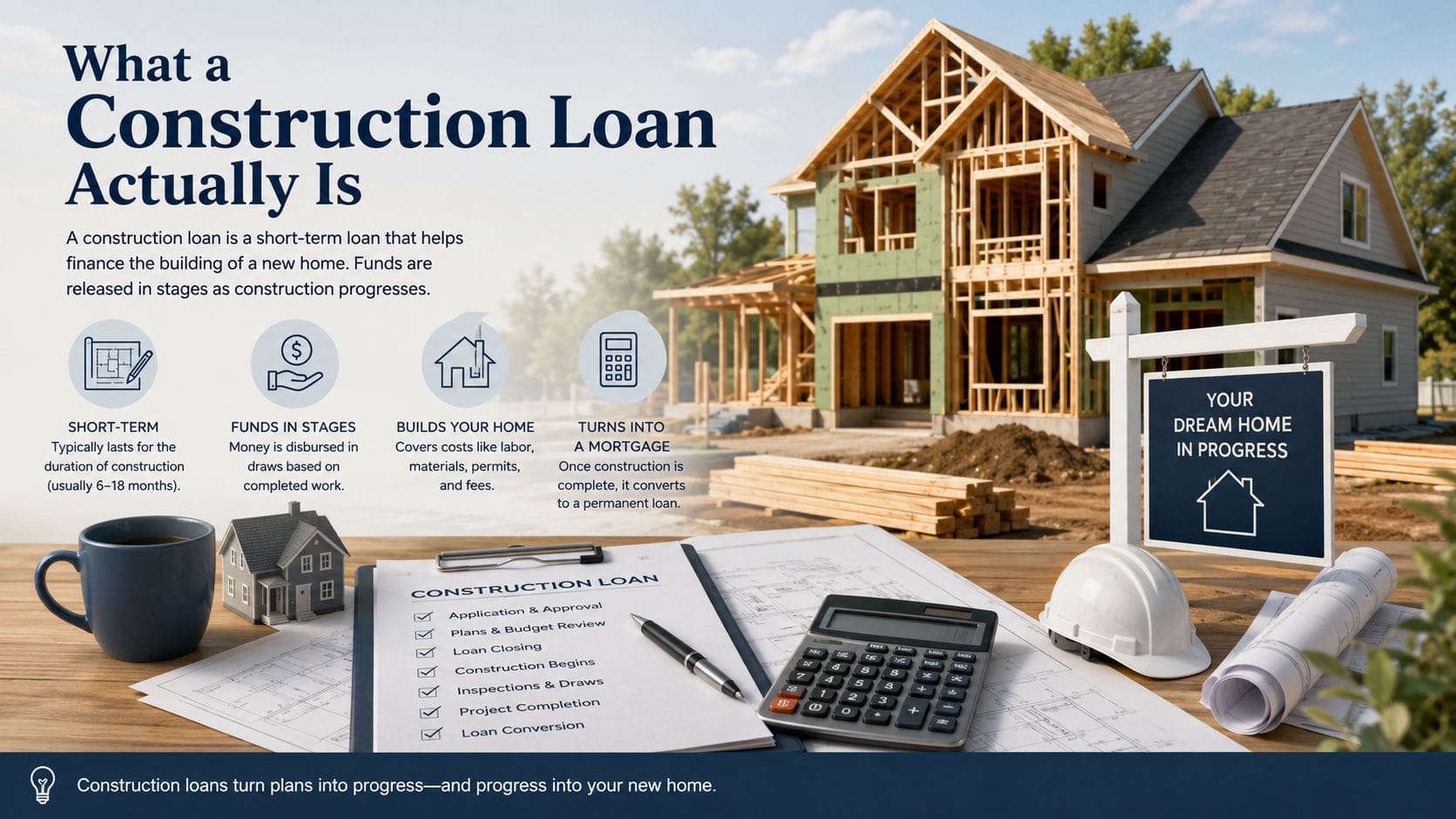
A construction loan funds a property that is still on paper or still under construction. The lender is financing future value, not a finished house. That is a different deal from a standard mortgage, where the collateral already exists, the condition is known, and the loan closes on a completed asset.
The lender is funding a process, not just a house
The lender sets a maximum commitment, then releases money in stages as the work gets completed and verified. That staged release matters because it keeps a half-finished project from turning into an open-ended loss and keeps the borrower inside the approved scope, budget, and schedule. Texas lending guidance says lenders usually review blueprints, budgets, contractor credentials, permits, and projected value before any money moves, then fund draws after inspections.
That is why construction loans feel so different from purchase mortgages. The lender is watching the build, not just the borrower's credit file. If framing runs late or the electrical rough-in fails inspection, the next draw stops. That is not a flaw in the system. It is the control that protects both sides.
Duration, payments, and the end state matter
A Texas one-time-close structure shows how the product works in actual practice. It uses interest-only payments during construction, a construction period with a possible extension, then converts into a long-term loan after completion and certificate of occupancy. That setup fits an owner who wants one closing and a clear path into permanent debt, instead of scrambling for a refinance the day the home is done.
A construction loan is a controlled line of credit against future value, not a normal home loan.
That is the point. Treat it like a mortgage and you will miss the draw timing, inspection gates, and exit plan. Treat it like project finance and the structure makes sense.
The Three Main Construction Loan Structures in Texas
A Texas ground-up deal lives or dies on structure. The wrong structure can leave you with a cheap rate on paper and a mess in practice, because the money does not match the way the project gets built, sold, or refinanced. I look at these files as capital-structure decisions first, loan decisions second: construction-only, construction-to-permanent, or land-plus-construction.
Construction-only fits builders and investors who already have an exit
This is the cleanest option for a spec home, a flip-style build, or an investor who already knows where the takeout is coming from. The lender funds the build, then the loan gets repaid or refinanced at completion. That gives you flexibility while the project is in motion, but it also means you need a real exit plan before the first draw.
If the sale or refinance is shaky, this structure gets expensive fast. It works best when the borrower is comfortable living with short-term debt and the project is meant to move on quickly once the house is finished.
Construction-to-permanent fits an owner who wants one close
This structure combines the build phase and the permanent mortgage into one file. The one-time-close model used by Texans Credit Union construction loan is a straightforward example, because it pairs a construction period with a possible extension and then converts into a long-term term loan after completion and certificate of occupancy. That setup fits an owner-occupant who wants one closing and a clean path into permanent debt.
It also fits some build-to-rent borrowers who want to hold the property for the long term and avoid a separate refinance after the build. The main benefit is simple. You lock in the end state early and avoid scrambling for new debt the day the house is done.
Land-plus-construction solves the lot problem
A raw lot in a growth corridor often does not fit neatly into a standard mortgage box. If you need to buy the land and fund the vertical build, the financing has to cover both pieces under one capital plan. That matters when the site is part of the value creation, because the borrower is not just buying dirt, they are assembling the finished deal from the ground up.
This is the structure that keeps acquisition and construction from pulling in different directions. It is the right fit when the land has to be controlled first, then improved, then rolled into the finished project or eventual refinance.
| Structure | Best for | Typical Texas duration | Equity typically required | Exit |
|---|---|---|---|---|
| Construction-only | Spec homes, investors, flippers | Short-term, often around a year | Meaningful cash equity | Sale or refinance |
| Construction-to-permanent | Owner-occupants, some BTR | Build phase plus permanent term | Often 20% or more | Automatic conversion to long-term debt |
| Land-plus-construction | Buyers needing lot acquisition plus build funds | Project-based, tied to milestones | Meaningful cash equity | Sale, refinance, or occupancy |
From my seat, the structure choice tells me almost everything about the deal. A builder with a clean sale path belongs in construction-only. An owner who wants to stay in the house belongs in construction-to-permanent. A borrower who must control the lot before the build needs land-plus-construction. If the file has no clear exit, the structure will not save it, and the underwriting will expose that fast.
For a broader look at how lenders think about the file itself, real estate underwriting for ground-up deals is the right place to start.
How Texas Lenders Underwrite a Construction Project
Construction underwriting in Texas is a project review first and a credit review second. The lender wants to know whether the deal makes sense from dirt to delivery, whether the borrower can carry it, and whether the builder can finish it without turning the file into a problem asset. Credit matters, but it does not carry a weak project.
A lender is trying to avoid an unfinished house that eats cash, drags on schedule, and becomes hard to sell or refinance. That is the true test. If the numbers, the scope, and the exit do not line up, the file is exposed before the first draw ever hits.
The lender wants proof, not promises
A strong file starts with documentation that shows the project is real and controllable. That means architectural plans that match the scope, a line-item budget that explains where the money goes, a builder agreement the lender can underwrite, permits or a clean permit path, land title or a clear acquisition plan, and a draw schedule that follows the build sequence. Lenders want to see the full path, not a hopeful summary.
Independent Texas lending guidance notes that construction loans often require a credit score around 680 or higher and a down payment of about 20% or more, with funds released in draws as milestones are completed and inspected. That tells you what the lender is really buying, borrower discipline, real equity, and a project that can be verified as it moves.
The builder often matters as much as the borrower
A lender gets comfortable when the builder has a track record and the budget fits the scope. A borrower with average experience can still get financed if the builder, plans, and costs are tight. A borrower with strong credit and a sloppy project package usually gets pushed out of the queue. The collateral is a half-built structure until the job is finished, and lenders know exactly how hard that is to recover from.
That is why the builder file gets so much attention. Experience, pricing discipline, subcontractor coordination, and timeline control all matter because they affect whether the house becomes a finished asset or a stalled one. Borrowers who treat the builder as an afterthought usually pay for that mistake in tighter terms or a failed approval.
Private lenders often put even more weight on the deal itself. Sims Ventures' real estate underwriting analysis for ground-up projects points to a process centered on deal economics and collateral strength rather than a traditional income file, which is the right fit for self-employed investors and first-time builders who do not fit a bank's standard box.
Rule of thumb: if the lender cannot see the path from land to finished product to exit, the file is too speculative.
That is why the paperwork matters so much. The lender is not being picky for sport. It is trying to decide whether the project can be finished on budget and turned into something saleable or financeable.
Draw Schedules, Inspections, and the Build Lifecycle
A construction loan lives or dies on the draw schedule. The first funding gets the job started, then every later release depends on progress the lender can verify. If you do not understand that rhythm before closing, you end up arguing over paperwork while the contractor needs cash now. A clear construction draw schedule keeps the project tied to real work, not wishful thinking. See the draw schedule framework here.
The build moves in stages
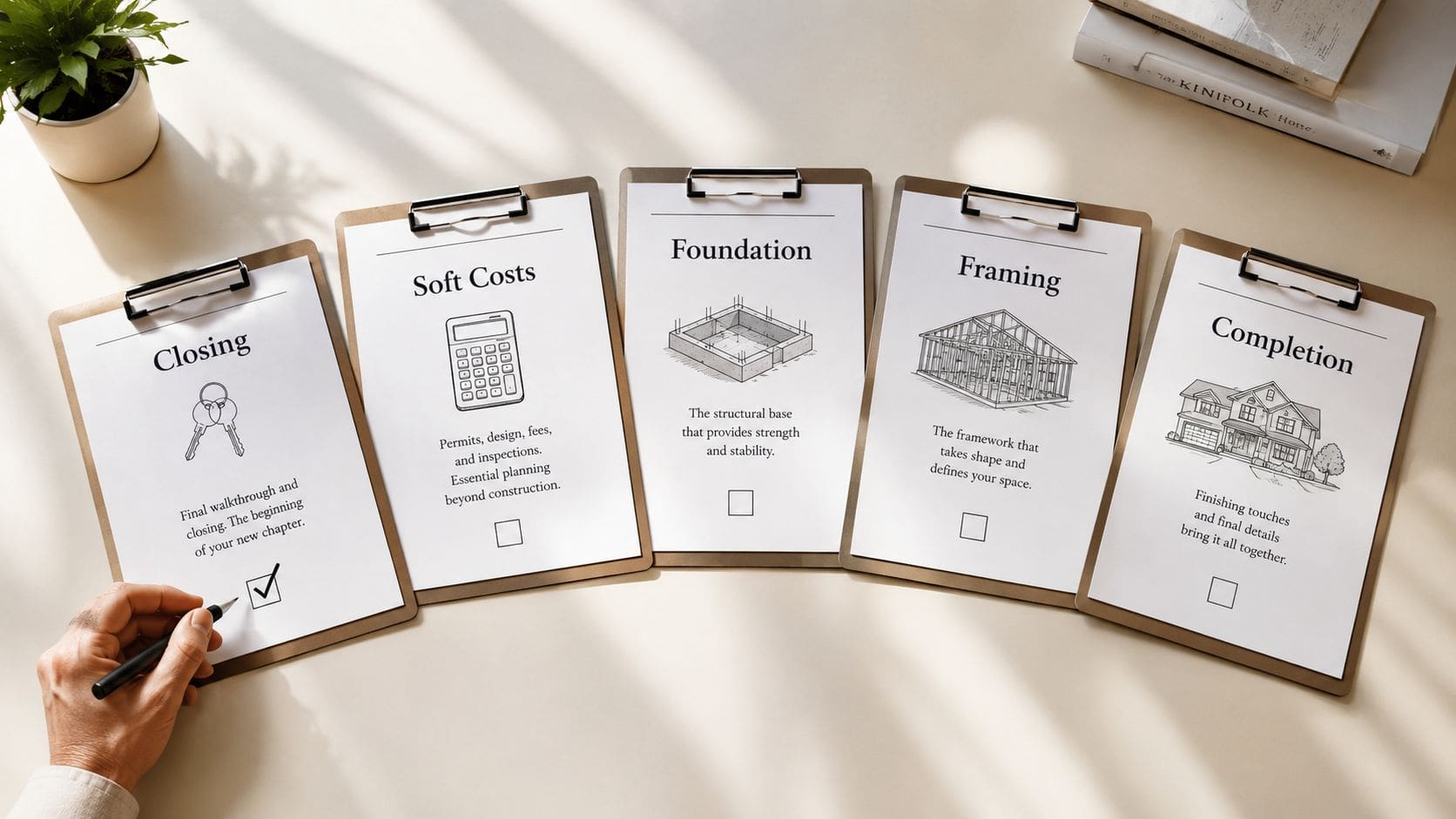
The loan usually starts with an initial advance at or shortly after closing. That can cover soft costs and the first hard-cost item, depending on the structure. After that, the project moves through the usual milestones, foundation, framing, rough-in for mechanical, electrical, and plumbing, drywall, then finishes. Each request for funds should match work already completed, not work that might get done later.
The lender or its inspector verifies progress before each release. That protects the lender from funding ahead of the build and gives the borrower a clean checklist for what has to be finished before the next check goes out. It sounds procedural because it is procedural. On a ground-up deal, procedure is what keeps the capital stack from turning into a mess.
Interest reserves are there for delay risk
Most construction loans are interest-only during the build, and many lenders require some form of reserve so the project can carry itself if completion slips. That reserve is not extra money sitting around for comfort. It is part of the project's survival plan. If the schedule stretches and the reserve is too thin, the borrower has to inject more cash or ask for an extension.
The Texas construction cycle is often built around a 12-month period in the broader market, with some products shorter and some longer depending on the lender and project type. If the build overruns, the borrower may need an extension request, re-approval, or added documentation before the lender agrees to keep the file alive. That matters for builders, flippers, and BTR investors alike, because a delayed draw can throw off the exit and force a rushed refinance or sale.
Keep your draw package organized from day one. A messy draw file can stall a good project just as fast as a bad contractor can.
The end point is simple. The project either converts into permanent financing, gets sold, or is paid off at completion. If the exit is not ready when the final inspection lands, the borrower is back in negotiation mode. That is why I want the refinance or sale plan nailed down before the first shovel hits dirt.
Comparing Banks, Credit Unions, and Private Hard Money Lenders
Texas borrowers usually face three capital sources for a ground-up deal. Each one can work, but they behave differently on timing, paperwork, draw control, and exit pressure. The right choice is the one that matches the project's actual capital stack, not the one that sounds cheapest on a rate sheet.

Speed versus certainty is the real trade
Banks and credit unions usually cost less, but they move slower and want cleaner files. That works for owner-occupants and established custom-home builders who can wait for underwriting, appraisals, and committee review. Credit unions also tend to fit borrowers who want a one-time-close structure, where the build and the permanent takeout are handled under one relationship. That is the point of a Texas-only construction program like the one described by Texans Credit Union construction loan.
Private hard money lenders are built for speed and flexibility. Sims Ventures says its process commonly targets about 15 days to close, subject to appraisal, title, and underwriting completion, and it offers ground-up residential construction loans for builders and investors with milestone-based draws. For a borrower who is trying to keep a contract alive, that pacing matters more than shaving a little off the coupon.
Fit matters more than ego
Use the bank path when the project is straightforward, the borrower file is clean, and time is not under pressure. Use a credit union when you want a mainstream one-time-close option and the deal fits owner-occupant style underwriting. Use a private lender when the contract clock is tight, the borrower is self-employed, the project is investor-driven, or the exit depends on speed and execution instead of conventional income documentation.
That is the decision. If a deal dies because the bank is too slow, the bank was the wrong lender for that file. If a deal dies because the private money is too expensive and the margin is thin, the private loan was the wrong capital source. Match the money to the project's tolerance for time, carry, and refinance risk.
If you want the difference between hard money and private lending in plain English, this private lending overview breaks down the structure in a way that helps builders and investors choose the right lane.
Hidden Costs and Common Traps on Texas Construction Loans
The headline rate is only one piece of the bill. In construction finance, borrowers lose money through draw timing, reserve drag, and underwritten equity that turns out to be tighter than they expected. A deal can look fine at closing and still get ugly if the schedule slips or the budget cannot absorb extra carry.
Fees are small individually, then painful together
Texas hard-money construction loans typically come with origination fees around 3.0%, rates around 10.8%, terms around 15 months, and loan-to-value near 74%. That mix shows you what the borrower is really buying, speed, control, and a short runway. It also makes the equity requirement plain, because the lender is not funding the whole build.
The trap is the stack on top of the note rate. Origination, inspections, draw administration, and carry while the property is unfinished all hit the file at the same time. If reserves are sized too tight and the project slips, the borrower ends up bringing more cash just when the build should be using capital, not demanding more of it.
That is where bad planning turns expensive. A project that needs an extra draw inspection, another month of interest, and one more round of holding costs can burn through margin fast. The borrower who only shops the note rate usually misses the true cost of the loan.
Delay risk is the hidden budget killer
A one-month delay can matter more than a small pricing difference when the file is already stretched. Every budget line should survive a slower build and a higher carry bill. If it cannot handle either one, it is not a construction budget, it is a guess.
Build the file as if the project will run late and cost more than expected. If it still works, the deal is real.
That is the habit I trust. Stress-test the budget against a longer timeline before you sign. If the lender caps borrowing in the mid-70s, do not treat the required equity as a surprise later. That is the structure, and the structure is what keeps the deal alive.
Speed can still save money. If a slower lender would miss the contract window or force the builder to sit on idle time, the carry cost of delay can wipe out the savings from a lower nominal rate. Pick the capital source that keeps the project moving and does not force emergency money in the middle of the build.
A Practical Game Plan for Texas Builders and Investors
A Texas ground-up deal lives or dies on structure. A builder with a clean file can get terms fast, but the wrong capital stack slows the job before the first draw ever funds. Start by getting the file ready, then shop lenders with a clear view of how the project will exit.
Get the file ready before you shop
Before you ask for terms, tighten the basics and present the file like a lender will fund it.
- Entity setup: Have the borrowing entity ready, or at least documented clearly.
- Credit review: Fix obvious errors and know exactly where the file stands.
- Builder resume: Show completed work, project type, and scope experience.
- Plans and budget: Bring a full scope, not a rough guess.
- Permits and title: Know what is already cleared and what still needs work.
- Exit plan: State whether the project will sell, refinance, or roll into long-term debt.
That package tells the lender two things. The deal is real, and the borrower understands how the capital will move from land or acquisition, into construction, and then into the next stage.
Match the structure to the deal
A primary residence usually fits a one-time-close construction-to-permanent loan if the file qualifies. A small builder doing a spec home usually belongs in construction-only financing because the project should exit through a sale, not a permanent takeout. A build-to-rent deal needs a different mindset altogether, because the question is how the loan moves from draw funding into a stabilized refinance that can support the asset once it is leased.
For that investor path, private money makes sense when speed and project review matter more than squeezing the last basis point out of the note. Ground-up lenders that focus on residential construction can move faster when appraisal, title, and underwriting are already lined up. Sims Ventures is one example, and the point is simple, if the contract and carry costs are tight, the lender that can close cleanly may be the better capital source even if it is not the cheapest one on paper.
Compare term sheets the right way
Stop comparing a bank quote to private money by staring at the coupon alone. Compare the total cost over the expected project life, the certainty of closing, the draw process, and the risk of losing the lot, builder, or contract because the lender moved too slowly. A cheaper loan that misses the closing window is the expensive one.
If you are putting a Texas ground-up deal together, get the file in order, ask for a bank or credit union quote, and request a faster private quote at the same time. Choose the structure that fits the exit, the timeline, and the equity you are willing to keep in the project.
