

Investment Property Refinance: A Guide to Unlock Equity
You bought the property, fixed what needed fixing, got it rent-ready, and now the money is stuck in the walls. The hard money payoff is looming, your next deal is on the market, and a conventional bank wants tax returns that don't reflect how you operate.
That's where an investment property refinance stops being a generic mortgage move and becomes a capital move.
For active investors, refinancing isn't just about shaving a rate. It's how you pull equity out of a finished project, replace expensive short-term debt, improve property-level cash flow, or free up capital so one deal doesn't choke your whole pipeline. In Georgia, North Carolina, South Carolina, and Texas, that matters even more because speed, appraisal discipline, and clean exit planning often decide whether a project scales or stalls.
Why Refinance Your Investment Property Now
A lot of investors wait too long to refinance because they treat it like a passive cleanup step. It's usually better to treat it as an active portfolio decision.
If your property is stabilized, leased, or near lease-ready, your capital may be trapped in the exact place you need it least. The project is done. The question is whether the current loan structure still fits the job. A short-term bridge loan or hard money note is useful when you're buying fast or funding rehab. It usually isn't the right long-term home for a finished rental.
The moments that usually justify action
Three situations push refinancing to the front of the line:
- The rehab is complete: You've already created the value. Now you need a permanent loan structure that matches rental use.
- You need acquisition capital: Equity in one property can help fund the next down payment, renovation budget, or reserve account.
- Your current payment is hurting flexibility: Even if the property works on paper, expensive debt can keep you from moving on the next opportunity.
Practical rule: Refinance when the property's business plan changes. If the deal moved from renovation to stabilization, the debt should change too.
What smart investors focus on first
Start with the use of proceeds, not the headline rate. Ask yourself:
- Is this refinance meant to lower friction or create fuel?
- Will the new loan improve cash flow, release equity, or both?
- Does the property support the debt based on rent, not just hope?
A high-rate market doesn't automatically mean you should wait. It means you need to be more selective. Some investors still refinance because the strategic gain matters more than the coupon alone. If you're weighing how financing decisions shift in today's environment, this guide on financing strategies in a high-rate market is a useful companion.
The best refinance isn't the one that looks good in isolation. It's the one that lets the property carry itself while your capital goes back to work.
Defining Your Refinance Objective
You finish a rehab in Atlanta, place a tenant, and the hard money clock is still running. The property is finally acting like a rental, but the debt is still priced like a short-term project. That is the point where many investors lose margin. They ask for a refinance without first deciding what the new loan needs to accomplish.
Start there. A refinance can do three very different jobs: reduce debt pressure, pull cash for the next move, or replace temporary financing with long-term rental debt. If you are buying, rehabbing, renting, and repeating in GA, NC, SC, or TX, that distinction matters even more because the wrong loan structure can stall your pipeline even when the property itself is performing.

Rate-and-term when the priority is control
Choose a rate-and-term refinance when the property is a keeper and your main goal is to improve the loan attached to it. You are replacing existing debt, not treating the property like an ATM.
That approach usually fits in a few common situations:
- The current note is squeezing cash flow: The asset rents well enough, but the payment is still too aggressive for a stable hold.
- The loan term no longer matches the business plan: Short debt belongs on short timelines. A long-term rental needs room to operate.
- You want more margin for normal problems: Vacancy, repairs, taxes, and insurance increases hit differently when debt service is already tight.
The upside is durability. The trade-off is that your equity stays in the deal instead of going back into circulation.
Cash-out when the property needs to fund growth
A cash-out refinance makes sense when the equity has a defined job. That could mean a down payment on the next purchase, rehab capital for another project, or reserve buildup across the portfolio. If that is your objective, study the mechanics of a rental property cash-out refinance before you apply.
Discipline matters here. Pulling cash only works if the post-refi payment still makes sense at the property level. I look at this the same way every experienced lender does. If the new debt service leaves you exposed after one vacancy or one major repair, the refinance created activity, not strength.
Rehab exit when short-term debt has done its job
For active investors, this is often the primary objective, especially with DSCR loans in the current market. You used bridge or hard money to buy fast, close as-is, or finance renovation work. Once the unit is leased or lease-ready, that debt has served its purpose.
Now the question changes. You are no longer financing a project. You are financing an income-producing property.
That shift is where asset-based lending becomes useful. Instead of forcing the deal through a full income-doc approach that may not reflect how investors operate, many refinance structures focus on rent, DSCR, and stabilized value. That is why rehab-exit refinances are such a common tool for investors scaling in markets like Charlotte, Greenville, Dallas, Houston, Atlanta, and Savannah. The property can move from expensive, short-duration debt into a hold structure that better fits portfolio growth.
Set the objective before you compare terms. If you do not know whether the refinance is supposed to protect cash flow, release capital, or exit hard money, it is too easy to choose a loan that solves the wrong problem.
Choosing Between Cash-Out and Rate-and-Term
You finish a rehab in Atlanta, the tenant is in place, and the hard money note is about to reset or mature. At that point, the refinance decision is not abstract. It determines whether this property becomes stable long-term debt or a source of capital for the next deal.
That choice usually comes down to two structures. Cash-out puts equity back in your hands. Rate-and-term replaces the existing loan with a better one, usually to improve payment, term, or both.
For active investors using DSCR and other asset-based products in GA, NC, SC, and TX, this decision affects more than one property. It affects how fast you can recycle capital, how much margin you keep each month, and how exposed you are if rents soften or repairs hit at the wrong time.
The practical difference
A rate-and-term refinance is built to strengthen the hold. A cash-out refinance is built to pull usable equity from a stabilized asset.
Neither option wins on principle. The right answer depends on what the property can support after the new loan closes.
| Feature | Cash-Out Refinance | Rate-and-Term Refinance |
|---|---|---|
| Primary use | Pull equity for another purpose | Improve existing loan structure |
| Best fit | Investors trying to scale, recapitalize, or redeploy funds | Investors prioritizing payment relief and hold stability |
| Equity sensitivity | High. Proceeds depend heavily on appraised value and lender LTV limits | Lower, since the main goal is replacing debt rather than extracting cash |
| Risk to cash flow | Higher if the new payment pushes the deal too close to break-even | Usually lower if the new structure reduces monthly pressure |
| Typical borrower mindset | Growth-focused | Stability-focused |
| Common mistake | Pulling too much cash and weakening the asset | Chasing a lower payment while leaving useful capital trapped |
In practice, lenders on investment-property refinances often limit cash-out based on equity and loan-to-value, so the property has to support both the valuation and the new payment. That is standard underwriting, and it quickly separates realistic exit plans from optimistic ones.
When cash-out is the right move
Cash-out works when the proceeds already have an assignment.
Good uses are straightforward:
- Funding the next purchase: You need down payment or rehab capital without selling a performing rental.
- Cleaning up expensive debt: A refinance can replace short-term or high-cost obligations if the property still carries the new loan comfortably.
- Supporting another asset in the portfolio: One stabilized property can provide capital for improvements, lease-up, or payoff pressure elsewhere.
If you are weighing that route, this guide to rental property cash-out refinance strategies explains how investors typically structure proceeds.
The mistake is easy to spot. An investor sees available equity, maxes out proceeds, then creates a thinner deal with less room for vacancy, taxes, insurance increases, or maintenance. I see this most often after a strong appraisal, especially in fast-moving submarkets across Dallas, Charlotte, and parts of coastal South Carolina. Value went up, but that does not mean the property should carry the highest possible loan.
When rate-and-term is the smarter play
Rate-and-term usually makes more sense when the property already did its job and now needs a durable debt structure.
Choose it when:
- The asset is carrying enough debt already.
- You do not have a clear next use for pulled cash.
- The priority is better monthly cash flow and a safer hold.
- You are exiting bridge or hard money and want the cleanest path into DSCR long-term financing.
For many investors, especially those holding in Georgia, North Carolina, South Carolina, and Texas, rate-and-term is the move that keeps the portfolio scalable. Lower friction on debt service gives you more room to absorb turnover, insurance shocks, and market slowdowns. It is less exciting than taking cash out, but plenty of strong portfolios are built by protecting margin first and extracting equity later.
How to Qualify Using Asset-Based Lending
You finish a rehab with hard money, the property is rented, and the deal should be ready for permanent debt. Then a conventional lender starts pulling apart tax returns, write-offs, entity documents, and income swings that have little to do with whether the rental can carry the loan. That is where many active investors lose time.
Asset-based lending solves that problem by underwriting the property first. For investors refinancing single-family rentals and small residential portfolios in Georgia, North Carolina, South Carolina, and Texas, DSCR loans are often the cleanest way to exit short-term debt and keep buying. They are built for operators who use LLCs, write off expenses properly, and do not fit a salaried borrower profile.

What DSCR underwriting actually looks at
The core question is simple. Does the property generate enough rent to support the proposed payment?
In a DSCR refinance, the lender measures market rent or in-place rent against the monthly housing expense. That usually includes principal, interest, taxes, insurance, and association dues if they apply. If the ratio is strong enough, the file works. If the ratio is thin, the deal usually needs a lower loan amount, a better rate structure, or more rent support. Good storytelling does not fix weak math.
Active investors are rarely clean fits for agency-style income review. Rehab profits can be uneven. Depreciation can suppress taxable income. Multiple properties across different entities can make a solid borrower look messy on paper. Asset-based lending strips out a lot of that noise and keeps the focus on whether the asset performs.
Why active investors use it to scale
For investors exiting hard money, speed and repeatability matter as much as rate.
A DSCR refinance can move faster than a conventional file because the lender is not rebuilding your entire personal financial story from tax returns and employment records. More important, the process is easier to repeat across multiple properties. That is a real advantage if you are turning over units in Atlanta, stabilizing rentals in Charlotte, refinancing beach-market assets in South Carolina, or cycling capital across Texas metros where insurance and taxes can change the payment more than investors expect.
One option in this category is Sims Ventures, which offers DSCR refinance lending for 1 to 4 unit rental properties and underwrites to property cash flow rather than traditional income documentation. Investors should also understand how rental property underwriting is reviewed in practice before applying, because file quality often determines whether a refinance closes cleanly or drags.
What makes approval easier
Approval usually comes down to alignment. The rent, condition, title, and loan request all need to tell the same story.
A lender has a much easier time with a file when these pieces are in place:
- Clear rent support: Signed leases, a clean rent roll if applicable, and deposit evidence help confirm real income.
- A stable property condition: Completed rehab, no obvious deferred maintenance, and no half-finished scope still affecting marketability.
- Clean entity and title paperwork: If the property is in an LLC, the ownership documents should match the vesting and borrower structure.
- A refinance request that fits the asset: Long-term DSCR debt works best on a rental that is operating like a rental, not one still behaving like a construction project.
- Realistic payment tolerance: Taxes, insurance, and HOA dues can tighten DSCR quickly, especially in coastal and high-growth markets.
I tell investors to treat the refinance package like they are presenting the property for sale to a debt buyer. If the lease is sloppy, the insurance is outdated, or the rehab is not fully documented, the lender starts making conservative assumptions. Conservative assumptions reduce proceeds.
Strong DSCR files tend to be straightforward. The property is rented or rent-ready, the numbers support the payment, and the exit strategy makes sense. That is why asset-based lending has become such a useful refinance tool for investors who need to get out of hard money and keep the portfolio moving.
Navigating the Refinance Timeline and Costs
You finish the rehab, line up the tenant, and expect the refinance to clear before the hard money extension hits. Then the appraisal comes in lower than you underwrote, title finds an entity mismatch, or the payoff statement expires while conditions are still open. That is how a solid exit gets expensive.
Refinance timing usually breaks down at the handoff points, not at the headline terms. For active investors using DSCR loans to exit short-term debt, the risk is rarely just a higher rate. The primary issue is missing the window to retire costly capital, especially if you are trying to recycle cash into the next purchase in Georgia, North Carolina, South Carolina, or Texas.
A common issue is value coming in below the number the investor expected. When that happens, proceeds shrink, cash-out plans change, and some deals that looked easy on paper stop penciling at closing.
The file you should have ready
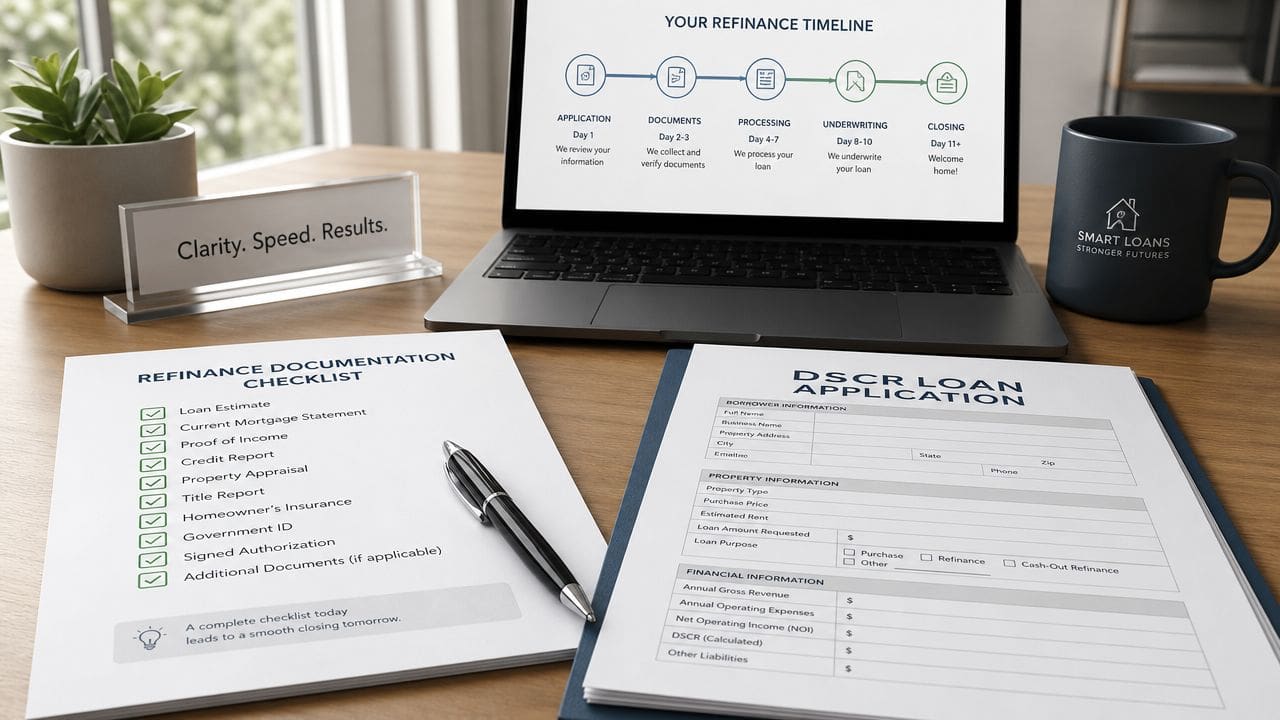
Prepare the file before you apply, not after underwriting starts asking for it.
For a rental refinance, that usually means:
- Income support: Signed lease, rent roll if there are multiple units, and proof of deposits if requested
- Insurance documents: Current hazard coverage and any flood, wind, or liability policies tied to the property
- Borrowing entity documents: Articles, operating agreement, and anything else needed to match title and borrower structure
- Current debt information: Mortgage statement, payoff request details, and extension terms if you are still in hard money
- Property condition support: Rehab summary, invoices if useful, photos, and a clear record that the property is complete or fully rent-ready
The payoff statement deserves more attention than it gets. Hard money lenders often issue payoffs with short expiration windows, per diem interest, and fees that change the final number quickly. If your refinance is tight on proceeds, a stale payoff can create a last-minute cash gap.
Where the timeline usually gets won or lost
Most refinance files move through the same four stages:
Application and sizing review
The lender tests the deal against program rules, expected value, rent support, and the loan structure you are requesting.Third-party work
Appraisal, title, insurance review, and sometimes rent analysis start here. This stage creates the most delays because it depends on outside parties and property access.Underwriting conditions
Conditions are usually fixable. Delays come from slow borrower responses, missing entity documents, unclear leases, or condition questions that should have been addressed before application.Closing and payoff
Final figures are balanced, documents are signed, and the old loan is paid off. This stage should be administrative. It turns into a problem when numbers changed earlier in the file and no one adjusted the plan.
In practice, speed comes from control. Make the property accessible, keep your insurance agent responsive, order payoff figures at the right time, and clear any title or entity mismatch early. Investors who do this well are usually the ones using refinance proceeds to buy again quickly instead of spending another month paying default-level interest.
Costs to expect without guessing
Do not underwrite refinance costs as a rounding error. They directly affect whether a DSCR exit still leaves enough room for reserves, repairs, or the next down payment.
Expect costs in these buckets:
- Appraisal
- Title work and title insurance
- Lender fees and points
- Recording, settlement, and escrow charges
- Prepaid interest, insurance, and tax escrows, if the loan requires them
- Extension fees or added interest on the current loan if the refinance drags
Ask a harder question than “what are closing costs?” Ask how much cash you need if value comes in light, if escrows are required, or if the payoff increases before closing. That is the math that decides whether the refinance helps your portfolio grow or just gets you out of a problem.
Refinance Scenarios for GA, NC, SC, and TX Investors
The mechanics stay the same across markets. The use case changes.
Georgia
An Atlanta investor finishes a renovation on a single-family property that now fits a long-term rental strategy. The hard money loan did its job during acquisition and rehab, but it's too expensive to hold. The investor refinances into a DSCR structure, pulls some equity, and uses that capital for the next down payment in a growing suburb.
The key decision wasn't “can I get a lower rate.” It was whether the finished asset could fund the next move without being sold.
North Carolina
A Charlotte operator planned a flip, then changed course after seeing stronger rental demand for the neighborhood and product type. That shift created a common problem. The investor needed to exit short-term debt without relying on tax returns that didn't reflect the current business.
The refinance worked because the investor treated the property like a rental business before applying. Lease readiness, clean documentation, and a clear hold strategy mattered more than the story behind the original purchase.
South Carolina
A Charleston portfolio owner holds several rentals with different loan structures created at different times. None of them are individually broken, but together they create inconsistent debt service and a weaker overall portfolio profile.
A rate-and-term approach can help in that situation. The objective is less about pulling cash and more about improving the portfolio's operating rhythm. When investors say they want “a better financial arrangement,” sometimes they really mean they want fewer surprises.
Texas
In Dallas-Fort Worth, a builder completes a spec home and decides not to sell immediately. Instead, the property becomes a bridge asset for the next project cycle. Refinancing frees capital tied up in the completed build so the investor can start the next project without waiting on a sale.
That's a useful reminder for builders and hybrid investors. Refinance strategy isn't only for long-time landlords. It also matters when finished inventory temporarily shifts roles inside a broader business plan.
Frequently Asked Questions about Investment Refinancing
Can I refinance a property held in an LLC
Yes. Many lenders that work with investors will lend to an LLC, but the file has to match all the way through. Title, hazard insurance, entity documents, operating agreement, and the borrower information on the application should all line up before underwriting starts.
If they do not, the refinance slows down fast.
What are the tax implications of a cash-out refinance
The answer depends on how you hold the property, where the cash goes after closing, and how your CPA treats the interest and related expenses. A cash-out refinance can help you redeploy capital into another purchase, pay off short-term debt, or fund repairs, but those uses do not all get treated the same way for tax purposes.
Get deal-specific tax advice before closing, especially if you are refinancing multiple properties or moving proceeds across entities.
How soon after purchase can I refinance
It depends on the loan program and what you are trying to do. Many lenders want a seasoning period before they allow a refinance, and cash-out requests usually face tighter rules than rate-and-term transactions.
For active investors using hard money or bridge debt, that detail matters early. If your exit plan depends on a DSCR refinance, confirm the seasoning requirement before you buy, not when your payoff is coming due.
What if I'm trying to exit hard money with very little room left in the deal
That is a real pressure point for BRRRR investors and operators trying to recycle capital. If the payoff is high, the appraisal comes in soft, or the property is only partly stabilized, the new loan may not clear the old debt cleanly.
The usual fix is not a better story. It is better structure. You may need more documented rent, a stronger lease file, additional principal brought to closing, or a short extension on the hard money so the asset has time to qualify for permanent debt. In GA, NC, SC, and TX, I see this problem most often when investors move too early on the refinance or underwrite future value too aggressively on the purchase.
What usually kills a refinance that looked good at the start
A few issues show up again and again:
- The value does not support the payoff. Your refinance is sized off the lender's valuation, not your pro forma.
- The property is not ready for permanent debt. Vacancy, incomplete repairs, or weak lease documentation can knock a DSCR file out of contention.
- The loan type does not match the business plan. A transitional asset needs transitional financing. A stabilized rental can fit long-term debt.
- The borrower waited too long to prepare. Insurance problems, entity clean-up, and missing documents often delay closings more than investors expect.
If you're working through an investment property refinance in Georgia, North Carolina, South Carolina, or Texas, Sims Ventures offers asset-based lending for DSCR refinances, bridge-to-DSCR transitions, rental portfolios, and investor strategy support. If you want to test whether your property is ready for a refinance and what structure fits the next move, that's the conversation to have first.
