

Real Estate Funding Guide 2026: Secure and Structure Your Deals
Every real estate deal begins with one urgent question: how do you secure the right capital for your project in a shifting United States market? With housing affordability soaring to unprecedented highs in 2024 and more households dedicating over 30 percent of income to housing expenses, careful planning has never been more important. This guide offers practical steps to assess funding needs, evaluate financing options, and structure compliant deals for success in 2026.
Step 1: Assess Funding Needs and Market Conditions
Successfully structuring real estate deals begins with a precise understanding of your funding requirements and the current market landscape. This critical first step involves comprehensive research and strategic planning to position your investment for maximum potential.

In 2024, the real estate market continues to present complex challenges. Housing affordability challenges have reached unprecedented levels, with a record number of households dedicating over 30% of their income to housing expenses. This trend demands a meticulous approach to funding assessment.
To effectively assess your funding needs, consider these strategic steps:
- Analyze your specific project requirements
- Evaluate current market conditions
- Calculate precise capital requirements
- Compare potential funding sources
- Understand regional market variations
Developers must recognize that funding strategies are not one-size-fits-all. Each real estate project requires a nuanced approach that considers local market dynamics, project scale, and financial constraints. Public funding sources are often fragmented across federal, state, and local levels, which means you’ll need to navigate a complex financing landscape.
Strategic funding assessment is more than number-crunching—it’s about understanding the intricate relationship between your project’s potential and market realities.
A comprehensive funding assessment involves detailed financial modeling, risk evaluation, and alignment with broader market trends. You’ll want to examine factors like local economic indicators, demographic shifts, and real estate development patterns that could impact your investment’s viability.
Pro tip: Always maintain a 20% buffer in your financial projections to account for unexpected market fluctuations and potential funding gaps.
Step 2: Identify Optimal Financing Sources
Identifying the most suitable financing sources is a pivotal step in securing successful real estate investments. Your ability to match project requirements with the right funding mechanism can dramatically impact your overall financial strategy and project viability.
The US real estate market offers diverse financing mechanisms including conventional bank loans, government-sponsored enterprises, private lenders, and real estate investment trusts (REITs). Understanding these options requires a strategic approach tailored to your specific investment goals.
Key financing sources to explore include:
- Conventional bank loans
- Government-sponsored programs
- Private equity investments
- Hard money loans
- Real estate investment trusts (REITs)
- Partnership arrangements
Each financing source presents unique advantages and challenges. Creditworthiness and project risk play critical roles in determining your most appropriate funding strategy. Investors must carefully evaluate their project’s specific requirements, including property type, investment timeline, and expected returns.
Successful real estate financing is about matching the right funding source with your project’s unique financial blueprint.
Government programs and private lenders offer varied terms that can significantly impact your investment’s profitability. Some sources provide more flexible terms, while others demand stricter qualification criteria. Your goal is to balance cost-effectiveness with financial flexibility.
Comparing financing options requires deep analysis of interest rates, loan terms, repayment structures, and potential restrictions. Consider factors like loan-to-value ratios, prepayment penalties, and the total cost of financing over your project’s lifecycle.
Pro tip: Always obtain multiple financing proposals and conduct a comprehensive comparison to ensure you select the most advantageous funding source for your specific real estate investment.
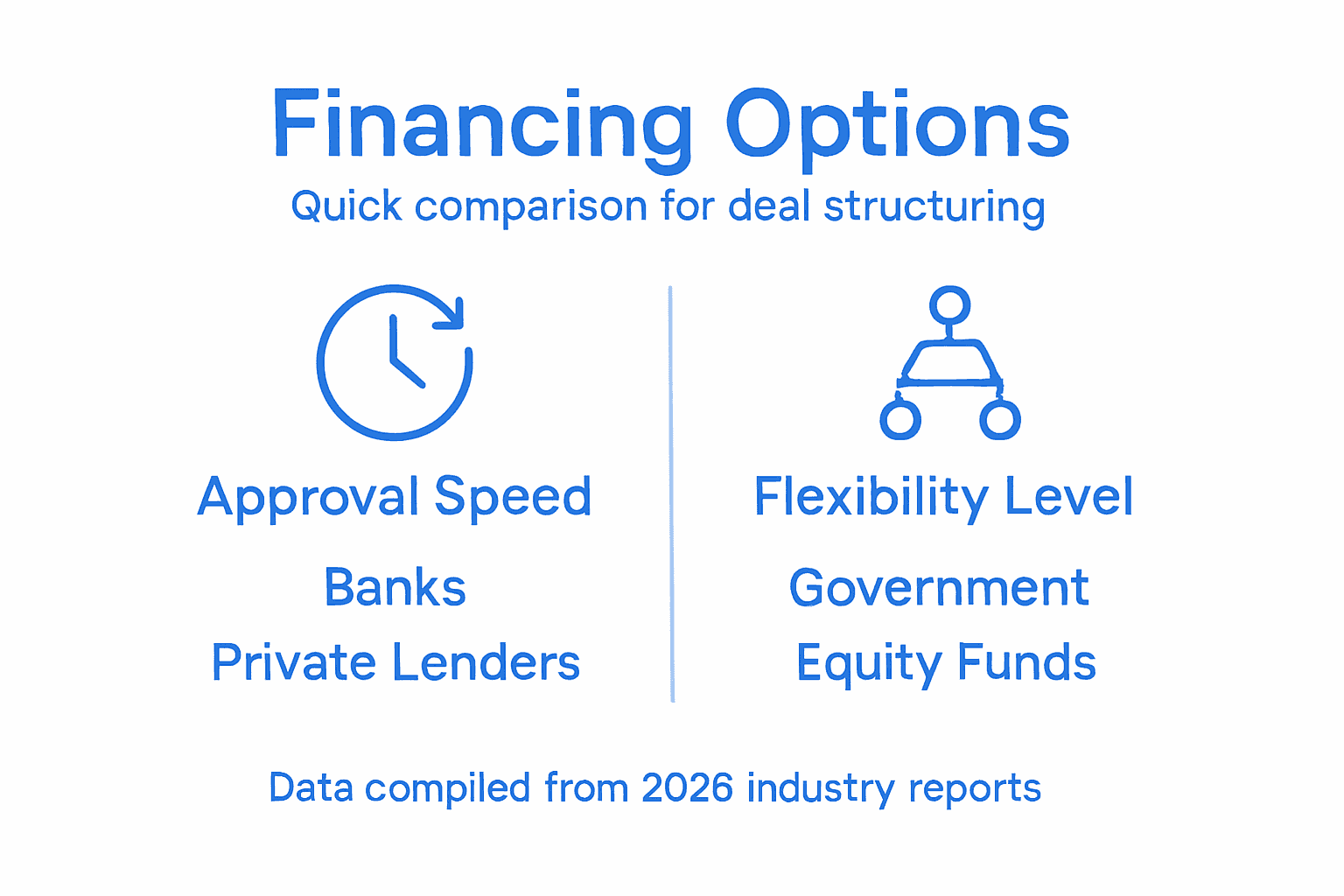
Here’s a quick comparison of common real estate financing sources and their impact on project flexibility and cost:
| Financing Source | Typical Approval Speed | Flexibility Level | Relative Cost |
|---|---|---|---|
| Conventional Bank Loan | Moderate (weeks) | Structured terms | Lower interest |
| Private Equity Investment | Fast (days to weeks) | High customization | Higher returns |
| REITs | Moderate (weeks) | Less project control | Variable yields |
| Hard Money Loan | Very fast (days) | Limited negotiation | Highest rates |
Step 3: Structure Entities and Negotiate Terms
Successfully navigating real estate deals requires strategic entity structuring and masterful negotiation techniques that protect your investments while maximizing potential returns. This critical step transforms your financing concept into a legally robust and financially sound framework.
FinCEN’s Residential Real Estate Rule introduces significant compliance requirements for real estate transactions, emphasizing the need for transparent and carefully structured legal entities. Starting March 1, 2026, professionals must report non-financed residential transfers to legal entities or trusts, adding complexity to deal negotiations.
Key considerations for entity structuring include:
- Limited liability company (LLC) formation
- Partnership agreements
- Trust configurations
- Tax optimization strategies
- Investor protection mechanisms
- Compliance documentation
Legal entity selection dramatically impacts your investment’s financial and operational flexibility. Different structures offer varying levels of personal asset protection, tax implications, and operational complexity. Your choice should align with project scale, investment goals, and risk management strategies.
Effective negotiation is an art of collaborative problem-solving, not a battlefield of competing interests.
Negotiation strategies require a nuanced approach that balances assertiveness with mutual understanding. Principled negotiation techniques focus on creating value for all parties, separating personal dynamics from substantive issues and generating innovative solutions.
Careful attention to detail in contract terms can prevent future disputes. Examine every clause related to ownership percentages, profit distribution, decision-making processes, and exit strategies. Understanding the fine print protects your interests and establishes clear expectations among all stakeholders.
Pro tip: Always engage a specialized real estate attorney to review entity structures and negotiation terms, ensuring comprehensive legal protection and strategic alignment with your investment objectives.
The following table summarizes essential deal structuring entities and their main advantages for real estate investors:
| Entity Structure | Primary Benefit | Typical Use Case |
|---|---|---|
| LLC | Personal asset protection | Small-to-medium developments |
| Partnership | Shared investment control | Joint ventures, pooled capital |
| Trust | Estate planning, privacy | Long-term or generational hold |
Step 4: Execute Due Diligence and Secure Funding
Successful real estate investing hinges on comprehensive due diligence and strategic funding acquisition. This critical phase transforms your investment strategy from conceptual to actionable, ensuring legal compliance and financial viability.
Due diligence requirements have become increasingly complex, particularly with the Residential Real Estate Rule mandating thorough verification of beneficial ownership and fund sources. Investors must navigate a sophisticated landscape of regulatory compliance and financial transparency.
Key components of effective due diligence include:
- Comprehensive financial documentation review
- Property condition assessment
- Title search and verification
- Market value analysis
- Risk assessment and mitigation
- Compliance documentation verification
Financial documentation scrutiny represents the cornerstone of successful real estate investments. Each document provides critical insights into the project’s potential risks and opportunities. Thorough examination helps identify potential red flags before they become significant problems.
Diligence is the bridge between opportunity and successful investment.
Securing funding requires a multifaceted approach that combines rigorous financial preparation with strategic relationship building. Funding acquisition strategies must align with your specific investment profile, demonstrating your project’s potential to potential lenders and investors.
Your due diligence process should create a compelling narrative that showcases your investment’s value proposition. This involves preparing comprehensive financial models, market analysis reports, and detailed project plans that instill confidence in potential funding sources.
Pro tip: Develop a standardized due diligence checklist and create digital documentation folders to streamline your verification process and present a professional image to potential investors.
Step 5: Verify Compliance and Monitor Deal Progress
Navigating the complex landscape of real estate transactions requires a vigilant approach to compliance and ongoing deal monitoring. This critical phase ensures your investment remains legally sound and strategically aligned with regulatory requirements.
Anti-money laundering regulations have introduced stringent reporting requirements that demand meticulous attention from real estate professionals. Starting December 1, 2025, timely and accurate documentation becomes paramount to maintaining the integrity of your transaction.
Key compliance monitoring strategies include:
- Regular documentation review
- Tracking regulatory submission deadlines
- Maintaining comprehensive transaction records
- Conducting periodic risk assessments
- Implementing internal compliance checks
- Updating documentation protocols
Regulatory compliance tracking represents more than a bureaucratic exercise. It is a critical shield protecting your investment from potential legal complications and financial risks. Each document and submission builds a comprehensive narrative of transparency and professional diligence.
Compliance is not a destination, but a continuous journey of strategic vigilance.
Successful deal monitoring requires developing a systematic approach that integrates proactive compliance management. This means creating robust internal processes that anticipate regulatory requirements and adapt to evolving legal landscapes.
Your monitoring strategy should include regular checkpoints to assess project progress, validate ongoing compliance, and quickly address any potential discrepancies. This approach transforms compliance from a reactive task to a strategic advantage that demonstrates your professionalism to investors and regulatory bodies.
Pro tip: Create a digital compliance dashboard that provides real-time tracking of regulatory submissions, documentation status, and potential risk indicators to streamline your monitoring process.
Empower Your Real Estate Deals with Confidence and Strategic Support
The challenge of navigating complex funding needs, entity structuring, and compliance requirements is at the heart of successful real estate investing. This article highlights key pain points such as assessing capital requirements, negotiating deal terms, and managing regulatory obligations that often overwhelm investors and builders seeking secure, profitable deals in 2026 and beyond.
At Sims Ventures, we understand the critical importance of aligning your funding strategy with market realities while structuring deals to protect your investments. Our partnership approach goes beyond simply providing capital. We specialize in strategic advisory services that include entity formation, rigorous due diligence, and post-closing execution. Explore tailored solutions designed to maximize your returns and simplify your path in Real Estate Investment: Maximize Your Profits.
Ready to transform complex deal-making into a streamlined, confident process? Visit Sims Ventures today and partner with experts committed to your stability and growth. Don’t wait—secure your next deal with precision and strategic advantage now.
Frequently Asked Questions
How do I assess my real estate funding needs for 2026?
To assess your real estate funding needs, analyze your project’s specific requirements and evaluate current market conditions. Calculate your capital requirements and compare potential funding sources to determine what fits your investment goals best.
What types of financing sources should I consider for real estate deals?
Consider financing options such as conventional bank loans, government-sponsored programs, private equity investments, and real estate investment trusts (REITs). Evaluating these options based on your project’s requirements and risk profile will help you select the most suitable source.
How can I effectively structure my real estate entities for compliance and protection?
To effectively structure your real estate entities, form a Limited Liability Company (LLC) or establish partnership agreements that align with your investment goals. Consult with a specialized real estate attorney to ensure that your entity structure provides personal asset protection and tax optimization.
What steps should I take for due diligence before securing funding?
For thorough due diligence before securing funding, review financial documentation, assess property conditions, and conduct market value analyses. Compile a standardized checklist to ensure you cover all critical areas and present a comprehensive overview to potential investors.
How do I monitor compliance throughout the real estate transaction process?
To monitor compliance, implement a systematic approach that includes regular documentation reviews and tracking regulatory submission deadlines. Develop a compliance dashboard to manage ongoing requirements and potential risks effectively.
