

Master the Real Estate Investment Process for Success
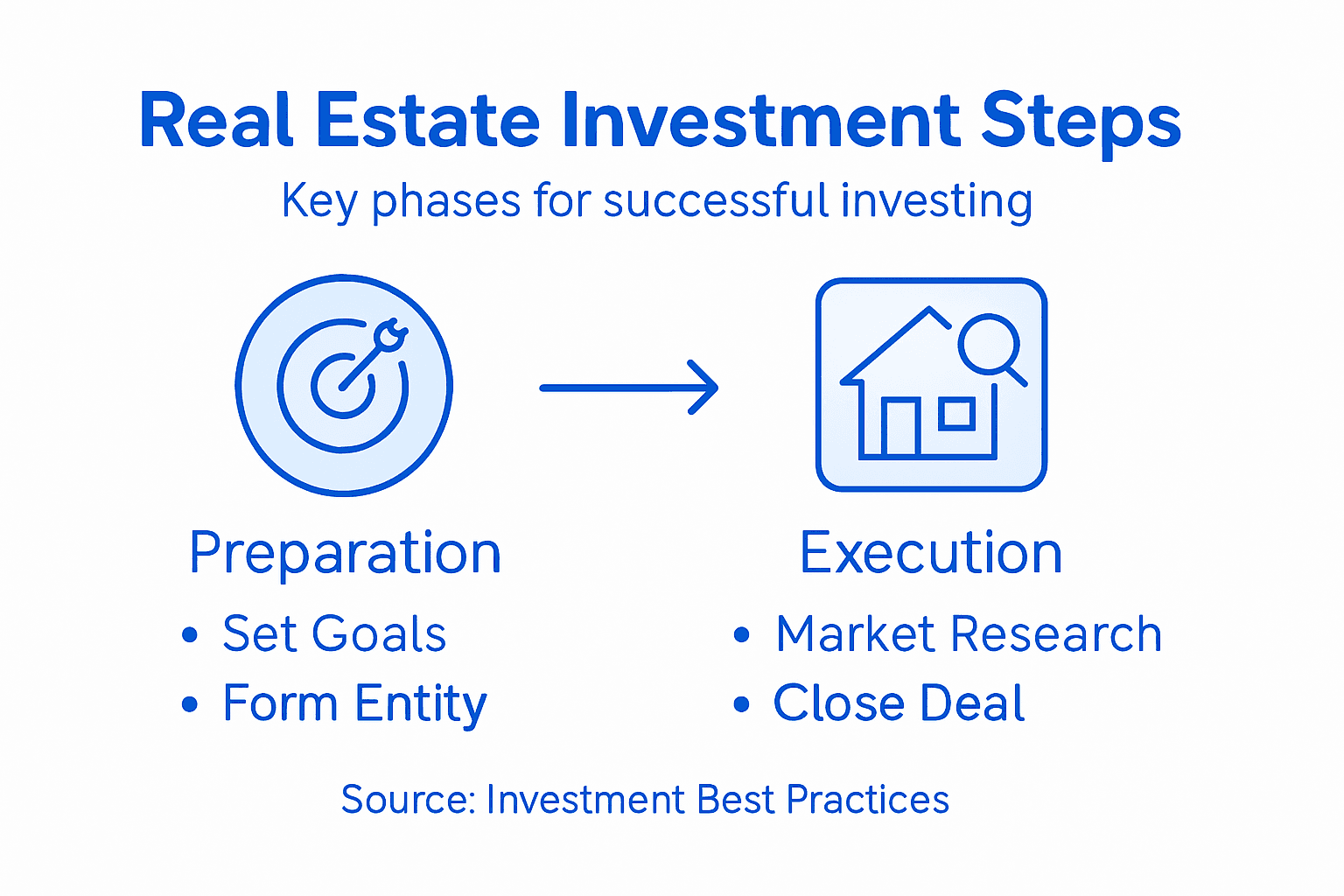
Balancing ambition with smart decision-making is a daily reality for mid-level investors across the United States. Defining clear investment goals and choosing the right legal entity structure lays the groundwork for tax efficiency, liability protection, and scalable growth. A strategic approach to structuring your deals, conducting due diligence, and managing post-closing execution empowers you to capitalize on opportunities while minimizing avoidable setbacks.
Step 1: Establish Investment Goals and Structure Entities
Successfully navigating real estate investment requires a strategic approach to defining your investment objectives and selecting the most appropriate legal entity. Your goals will directly influence the structure you choose, impacting everything from tax implications to liability protection.
Start by clearly articulating your investment strategy. Are you pursuing long-term appreciation, generating consistent rental income, or seeking quick property flips? Understanding your primary objective helps determine the optimal investment vehicle. For instance, REITs provide income-producing real estate opportunities without direct property management.
When selecting an entity structure, consider these key options:
- Limited Liability Company (LLC): Provides personal asset protection and flexible tax treatment
- S-Corporation: Offers potential tax advantages for smaller investment operations
- Partnership: Enables shared investment responsibilities and risk distribution
- Real Estate Investment Trust (REIT): Allows passive investment in large-scale property portfolios
Your chosen structure should align with your investment scale, risk tolerance, and long-term financial goals. Consulting with a tax professional can help you navigate the nuanced legal and financial considerations.
Here’s how different real estate investment entities compare on key factors:
| Entity Type | Liability Protection | Tax Treatment | Management Complexity |
|---|---|---|---|
| LLC | Shields personal assets | Pass-through or corporate | Moderate; flexible structure |
| S-Corporation | Limited to shareholder investment | Pass-through with payroll tax rules | Higher; strict compliance needed |
| Partnership | Individual partners exposed | Pass-through to partners | Low to moderate, depends on type |
| REIT | Limited for shareholders | Corporate, but high dividend payouts | Low; externally managed |
Pro tip: Always conduct thorough due diligence and consider consulting a real estate attorney to ensure your entity structure perfectly matches your specific investment strategy.
Step 2: Conduct Market Research and Perform Due Diligence
Successful real estate investment hinges on thorough market research and comprehensive due diligence. This critical step involves systematically evaluating potential investment opportunities, understanding market dynamics, and uncovering potential risks before committing your capital.
Begin by analyzing local market trends, including property values, rental rates, vacancy rates, and economic indicators. Real estate due diligence examines legal, financial, and physical property conditions to protect your investment from unexpected challenges. Key research areas include:
- Property Valuation: Compare recent sales, assess current market values
- Location Analysis: Evaluate neighborhood trends, development plans, infrastructure
- Financial Performance: Review income potential, operating expenses, historical financials
- Legal Examination: Check title status, zoning restrictions, potential encumbrances
- Physical Inspection: Assess property condition, potential repair or renovation needs
Documentation plays a crucial role in your due diligence process. Collect and carefully review:
- Property tax records
- Lease agreements
- Maintenance histories
- Zoning and land use permits
- Environmental assessment reports
Detailed research minimizes risks and provides a comprehensive understanding of your potential investment. Look beyond surface-level metrics to uncover hidden opportunities or potential challenges that could impact your investment strategy.

Pro tip: Consider hiring professional inspectors and real estate attorneys to conduct a comprehensive review, as their expertise can reveal critical insights that might escape an untrained eye.
Step 3: Negotiate Contracts and Secure Financing
Navigating the complex landscape of real estate contracts and financing requires strategic negotiation and a comprehensive understanding of financial mechanisms. Real estate finance encompasses acquiring, developing, and managing property investments through various funding strategies that demand careful planning and execution.
When approaching contract negotiations, prepare a robust strategy that goes beyond simple price discussions. Key negotiation elements include:
- Financial Terms: Interest rates, loan duration, repayment structures
- Contingency Clauses: Protecting your investment against potential risks
- Performance Metrics: Clear expectations for property performance
- Exit Strategies: Defined options for potential property disposition
- Risk Allocation: Balanced distribution of potential financial risks
Securing financing involves multiple critical steps:
- Gather comprehensive financial documentation
- Assess your creditworthiness
- Compare multiple lender offerings
- Understand all associated fees and terms
- Negotiate favorable loan conditions
Successful negotiations focus on creating mutual value, not just winning on price.
Your negotiation approach should prioritize building long-term relationships with lenders and sellers, demonstrating professionalism and financial competence throughout the process.
Pro tip: Always have a legal professional review contracts before signing, and maintain flexibility in your negotiation approach to uncover creative solutions that benefit all parties.
Step 4: Optimize Deal Structuring and Close the Transaction
Successfully closing a real estate transaction requires strategic deal structuring that balances risks, returns, and long-term investment objectives. Effective deal structuring involves carefully negotiating protections and financial arrangements that align with your specific investment goals.
Key considerations for optimizing your deal structure include:
- Risk Allocation: Distribute potential risks among stakeholders
- Financial Parameters: Define clear investment return expectations
- Partnership Terms: Establish transparent collaboration frameworks
- Exit Strategy: Create flexible disposition mechanisms
- Contingency Planning: Build robust protective clauses
Closing the transaction demands meticulous attention to critical steps:
- Conduct final property and financial document reviews
- Verify all contractual terms and conditions
- Complete required legal and financial documentation
- Coordinate final financial transfers
- Obtain necessary property titles and ownership transfers
Transparency and ethical negotiation are fundamental to successful real estate transactions.
Maintain open communication with all parties throughout the closing process, ensuring smooth execution and preventing potential misunderstandings that could derail the transaction.
Pro tip: Engage experienced legal and financial professionals to review transaction documents, providing an additional layer of scrutiny and protection for your investment.
Step 5: Monitor Performance and Manage Post-Closing Execution
Successful real estate investments demand consistent and strategic performance monitoring after the transaction closes. Real estate asset management involves continuous tracking of financial performance and operational metrics to ensure your investment meets its intended objectives.
Establish a comprehensive monitoring framework that includes:
- Financial Tracking: Regular review of income, expenses, and cash flow
- Market Analysis: Ongoing assessment of local real estate trends
- Property Maintenance: Scheduled inspections and proactive repairs
- Tenant Management: Monitoring occupancy rates and lease compliance
- Risk Assessment: Identifying and mitigating potential operational challenges
Key performance monitoring activities include:
- Generate monthly financial reports
- Conduct quarterly property evaluations
- Review and adjust investment strategies
- Update financial projections
- Track key performance indicators (KPIs)
Consistent monitoring transforms potential challenges into strategic opportunities for investment growth.
Maintain open communication with property managers, tenants, and financial advisors to stay informed about your investment’s performance and market dynamics.
Below is a summary of essential post-closing monitoring activities for real estate investors:
| Monitoring Activity | Frequency | Business Impact |
|---|---|---|
| Review financial reports | Monthly | Identifies cash flow issues early |
| Conduct property inspections | Quarterly | Detects maintenance needs promptly |
| Reevaluate investment strategy | Annually | Adapts plans to new market trends |
| Update KPIs and projections | Ongoing | Enables goal tracking and forecasting |
Pro tip: Implement a digital dashboard or professional tracking system to centralize and automate your performance monitoring, saving time and providing real-time insights.
Empower Your Real Estate Journey With Expert Financing and Advisory
Mastering the real estate investment process means overcoming challenges like setting up the right entity, conducting thorough due diligence, negotiating contracts, and managing post-closing execution. These steps can feel overwhelming as you balance risk allocation, market research, and deal structuring. At Sims Ventures, we understand these critical pain points and goals from your point of view—because your success depends on clear strategy and confident financial backing.
Unlock a strategic advantage beyond simple funding by partnering with us. Our specialized financing is integrated with expert advice designed for investors ready to maximize returns through smart deal optimization and ongoing asset management. Whether you are structuring your investment or closing your next deal, our comprehensive support aligns perfectly with the insights in Real Estate Investment: Maximize Your Profits. Take action now to reduce uncertainty and accelerate growth with a trusted partner who walks beside you every step of the way. Visit Sims Ventures to learn more and start transforming your real estate ambitions into lasting success.
Frequently Asked Questions
What are the first steps to master the real estate investment process?
To begin mastering the real estate investment process, clearly define your investment goals and choose the right entity structure. Outline your objectives, whether it’s seeking rental income or property appreciation, and select an entity like an LLC or S-Corporation that suits your strategy.
How do I conduct thorough market research for real estate investments?
Conducting thorough market research involves analyzing local property trends, rental rates, and economic indicators. Review recent sales data and assess location dynamics to identify potential investment opportunities that align with your goals.
What should I include in my due diligence checklist for a property investment?
Your due diligence checklist should include property valuation, lease agreements, tax records, and zoning permits. Collect and review this documentation to understand the investment’s financial performance and legal standing, minimizing potential risks before purchase.
How can I negotiate favorable terms in a real estate contract?
To negotiate favorable terms, focus on key elements like financial terms, contingency clauses, and risk allocation. Prepare a strategy that emphasizes mutual benefits and be open to creative solutions that suit all parties involved.
What are the essential post-closing monitoring activities for real estate investments?
Post-closing, essential monitoring activities include generating monthly financial reports and conducting quarterly property evaluations. Regularly track key performance indicators to identify issues early and adjust your investment strategies accordingly.
Why is it important to consult professionals during the real estate investment process?
Consulting professionals such as real estate attorneys and financial advisors ensures you navigate legal complexities and optimize financial arrangements. Leverage their expertise to safeguard your investment and make informed decisions throughout the process.
