

How to Secure Project Financing for Real Estate Success
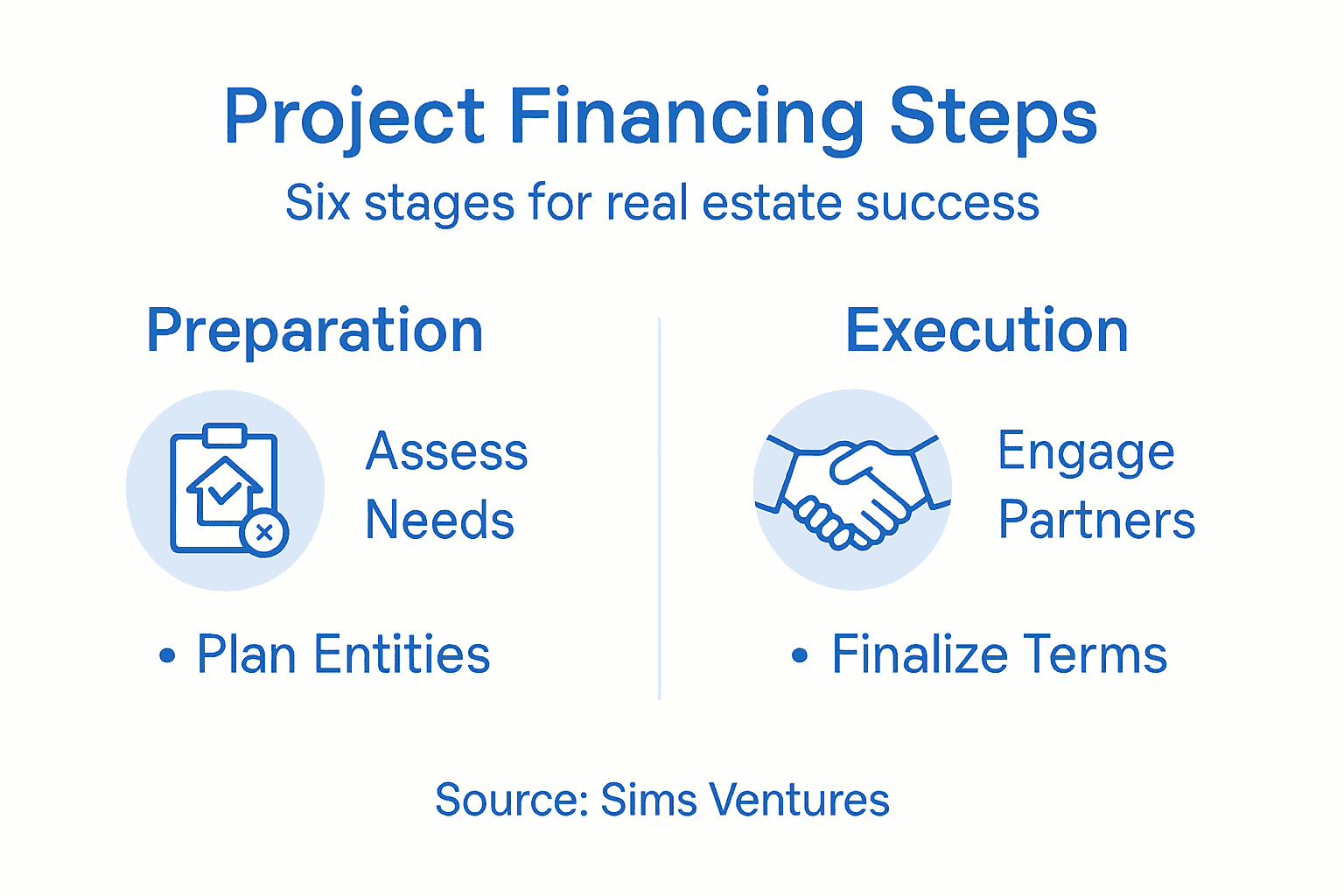
Securing financing for an ambitious United States real estate project can feel complex, especially when each stage demands precise strategy and robust documentation. From assessing project requirements to conducting due diligence and engaging funding partners, every detail influences investor confidence and project outcomes. By focusing on thorough analysis and strategic project planning, you set a strong foundation for attracting the right capital and optimizing every phase of execution.
Step 1: Assess Project Requirements and Financial Goals
Successfully securing real estate project financing begins with a comprehensive assessment of your project’s unique requirements and financial objectives. Strategic project planning helps you establish clear parameters that attract potential investors and lenders.
To effectively evaluate your project’s financial landscape, you’ll need to conduct a thorough analysis across several critical dimensions. The assessment involves examining multiple interconnected factors:
- Property valuation: Determine current market value and potential appreciation
- Cash flow projections: Calculate anticipated revenue streams and expenses
- Risk assessment: Identify potential financial vulnerabilities
- Capital requirements: Establish precise funding needs for each project phase
Real estate finance requires meticulous financial structuring that aligns short-term tactics with long-term strategic goals. Investors and lenders will want to see a comprehensive breakdown that demonstrates your project’s financial viability and potential return on investment.
Your financial assessment must tell a compelling story of potential success, backed by rigorous data and realistic projections.
Key documentation for this assessment should include detailed pro forma statements, market research reports, architectural plans, and comprehensive budget breakdowns. These documents serve as critical evidence of your project’s potential and your team’s preparedness.

Pro tip: Always build financial models with conservative estimates to demonstrate prudent risk management and increase investor confidence.
Step 2: Structure Entities and Prepare Documentation
Building a solid legal and financial foundation is critical for securing real estate project financing. Accountable entity structuring determines how your project will be legally and financially managed throughout its lifecycle.
To effectively structure your real estate project, you’ll need to create a comprehensive documentation package that demonstrates professionalism and strategic planning:
- Legal entity formation: Select appropriate business structure (LLC, corporation, partnership)
- Tax identification: Obtain federal and state tax identification numbers
- Compliance documentation: Prepare regulatory compliance statements
- Financial governance: Establish clear financial management protocols
Your documentation should include comprehensive property acquisition files that provide transparent evidence of your project’s operational and financial framework. Investors and lenders will scrutinize these documents to assess your project’s credibility and potential.
Meticulous documentation is not just paperwork—it’s your project’s first impression and primary communication tool with potential investors.
Key documents to prepare include articles of incorporation, operating agreements, detailed business plans, financial projections, property appraisals, and comprehensive risk assessments. Each document should tell a clear, compelling story about your project’s viability and potential.
Pro tip: Engage a legal professional specializing in real estate to review your entity structure and documentation to ensure maximum investor confidence and regulatory compliance.
Step 3: Conduct Due Diligence and Risk Analysis
Successfully securing real estate project financing hinges on your ability to thoroughly understand and mitigate potential risks. Comprehensive risk assessment allows you to identify, evaluate, and strategically manage potential challenges that could impact your project’s success.
Your due diligence process should encompass multiple critical dimensions of investigation:
- Financial risk evaluation: Analyze market conditions, cash flow projections, and investment sensitivity
- Legal risk assessment: Review zoning regulations, property titles, and potential legal encumbrances
- Environmental investigation: Examine potential environmental constraints or remediation requirements
- Market risk analysis: Study local real estate trends, demographic shifts, and economic indicators
World Bank due diligence frameworks emphasize the importance of examining both technical and contextual risks that could derail your project’s potential. This means going beyond surface-level assessments and conducting deep, multifaceted investigations.
Risk analysis is not about eliminating uncertainty, but about understanding and strategically managing potential challenges.
Key documentation for your risk analysis should include comprehensive market research reports, environmental impact assessments, financial stress test models, and detailed contingency planning. Each document should provide transparent insights into potential risks and your strategies for mitigation.
Pro tip: Engage independent third-party experts to conduct risk assessments to ensure objectivity and uncover potential blind spots in your analysis.
Step 4: Identify and Engage Funding Partners
Successfully securing real estate project financing requires a strategic approach to identifying and engaging the right funding partners. Government financing programs offer unique opportunities for real estate developers to access capital through specialized channels.
Your funding partner engagement strategy should focus on several key approaches:
- Diversify funding sources: Explore multiple financing channels including private lenders, government programs, and institutional investors
- Research compatibility: Match your project’s specific requirements with potential funders’ investment criteria
- Prepare comprehensive presentations: Develop detailed project proposals that demonstrate investment potential
- Network strategically: Attend industry conferences and leverage professional connections
Economic development funding opportunities provide alternative financing routes that many real estate investors overlook. Understanding these specialized programs can unlock additional funding mechanisms beyond traditional lending sources.
The right funding partner is not just a source of capital, but a strategic ally in your project’s success.
When approaching potential funding partners, your documentation should showcase your project’s unique value proposition, including detailed financial projections, risk mitigation strategies, and clear execution plans. Each interaction is an opportunity to demonstrate your professionalism and project viability.
Compare key real estate project funding sources and their characteristics:
| Funding Source | Typical Requirements | Advantages | Common Challenges |
|---|---|---|---|
| Private Lenders | Strong credit, collateral | Fast approval, flexibility | Higher interest rates |
| Government Programs | Compliance documentation | Favorable terms, incentives | Complex application process |
| Institutional Investors | Detailed financials, business plan | Large capital access | Intense due diligence |
| Economic Development Grants | Local community impact | Non-repayable funding | Competitive selection process |
Pro tip: Develop a targeted pitch deck that can be quickly customized for different funding partners, highlighting the specific aspects most relevant to each potential investor.
Step 5: Negotiate Terms and Finalize Contracts
The final stage of securing project financing requires masterful negotiation skills and strategic contract management. Strategic negotiation techniques will help you navigate complex discussions and secure favorable terms for your real estate project.
Your negotiation strategy should focus on several critical elements:
- Know your leverage: Understand your project’s unique value proposition
- Define clear objectives: Establish precise financial and structural requirements
- Identify deal-breakers: Determine non-negotiable contract terms in advance
- Maintain flexibility: Create room for strategic compromise
Contract negotiation preparation is crucial for achieving optimal financing outcomes. This means developing comprehensive understanding of each potential funding partner’s priorities and constraints.
Successful negotiation is about creating mutual value, not winning at all costs.
Key contract components to negotiate include interest rates, repayment schedules, collateral requirements, performance milestones, and exit strategies. Your documentation should demonstrate professionalism, transparency, and a deep understanding of the project’s financial landscape.
Pro tip: Consider bringing a legal professional specializing in real estate financing to review contract terms and protect your interests during final negotiations.
Step 6: Verify Funding and Begin Project Execution
The final phase of your real estate financing journey requires meticulous verification and strategic project launch. Return on investment calculations serve as your critical validation checkpoint to ensure funding aligns with project objectives.
Successful project execution demands comprehensive verification across multiple dimensions:
- Confirm funding availability: Validate complete transfer of committed capital
- Validate financial terms: Double-check all negotiated contract specifications
- Establish project timelines: Create detailed implementation schedules
- Trigger initial disbursements: Release initial project funding tranches
Real estate development readiness requires systematic preparation and precise operational alignment. This means translating your financial strategy into tangible project milestones.
Your first 90 days of execution will define the trajectory of your entire project.
Key initial actions include setting up project management infrastructure, onboarding core team members, initiating preliminary site preparations, and establishing robust financial tracking mechanisms. Your documentation and communication must remain transparent and consistent throughout this critical phase.
Here’s a summary of how documentation supports each step in real estate project financing:
| Step | Type of Documentation | Purpose | Impact on Investors |
|---|---|---|---|
| Assess Requirements | Pro forma, market reports | Validate financial projections | Demonstrates project viability |
| Structure Entities | Incorporation, agreements | Establish legal identity | Shows professionalism |
| Risk Analysis | Stress tests, impact reports | Identify and manage risks | Builds confidence in mitigation |
| Funding Partners | Project proposals, pitch decks | Present investment opportunity | Attracts potential funders |
| Negotiate Contracts | Contracts, term sheets | Set project terms | Ensures transparency and trust |
| Execution | Dashboards, tracking plans | Monitor progress and finances | Allows real-time adjustments |
Pro tip: Create a comprehensive project dashboard that tracks financial metrics, enabling real-time monitoring and rapid strategic adjustments.
Secure Your Real Estate Financing with Confidence and a Trusted Partner
Navigating the complexities of real estate project financing can be challenging. From structuring entities and conducting thorough due diligence to negotiating contracts and managing execution, every step demands precision and expertise. This article highlights the critical pain points investors face such as aligning financial goals with project risks and attracting the right funding partners with convincing documentation.
At Sims Ventures, we understand these challenges deeply. That is why we offer more than just capital. We provide strategic advisory and financing solutions tailored to your needs in Real Estate Investment: Maximize Your Profits. Our partnership approach ensures your project stands strong at every stage, giving you the confidence to advance with certainty. Whether you are structuring your project, negotiating terms, or executing post-closing strategies, we stand by you to help turn plans into success.
Ready to transform your next real estate venture into a success story now Visit Sims Ventures to explore how our expert guidance and flexible financing solutions can empower your journey. Don’t wait to secure your project’s future start today and gain the strategic advantage that sets you apart.
Frequently Asked Questions
How can I assess my project’s financial requirements before seeking financing?
To assess your project’s financial requirements, start by evaluating property valuation, cash flow projections, and capital needs. Conduct a thorough analysis within a few weeks to gain a clear understanding of the funding necessary for each phase of the project.
What types of documents should I prepare to entice potential investors?
Prepare a comprehensive documentation package that includes detailed pro forma statements, market research reports, and architectural plans. Organize these documents to present a compelling narrative about your project’s viability and potential return on investment.
How do I conduct a risk analysis for my real estate project?
Conduct a risk analysis by evaluating financial, legal, environmental, and market conditions affecting your project. Identify potential vulnerabilities and develop mitigation strategies within a specified timeframe to enhance your project’s credibility with investors.
What should I consider when choosing funding partners for my project?
When choosing funding partners, consider diversifying your sources by exploring private lenders, government programs, and institutional investors. Research each partner’s investment criteria to ensure alignment with your project’s requirements.
How do I effectively negotiate financing terms for my real estate project?
Effectively negotiate financing terms by understanding your project’s value, defining clear financial objectives, and knowing your non-negotiables. Approach negotiations with flexibility and establish a win-win mindset to secure favorable contract terms.
What are the initial steps to take after securing project financing?
After securing project financing, confirm the availability of funds, validate the financial terms, and establish a project timeline. Initiate key actions like onboarding team members and setting up financial tracking mechanisms to ensure a successful project launch.
Recommended
- Real Estate Financing Tutorial: Secure Strategic Success
- How to Structure Real Estate Deals for Maximum Returns
- Why Optimize Funding Sources for Real Estate Success
- Why Traditional Bank Financing Does Not Matter Anymore 2026
- Financing Options for Investors: Building Wealth in Real Estate | Bold Street AI
