

What Is ARV? a Real Estate Investor’s Guide for 2026
After-Repair Value, or ARV, is the estimated market value of a property after the work is finished, and many lenders size loans around 70% of ARV. For a fix-and-flip investor, it's the most important number in the deal because it drives your offer price, your rehab budget, your financing options, and whether the project leaves enough room for profit.
You're usually asking this question at the exact point where the stakes get real. You've walked a rough property, you can see the finished product in your head, and now you need to know whether that vision will hold up when an appraiser and a lender look at the same deal. That's where a lot of new investors get tripped up. Their ARV makes sense to them, but the lender underwrites to a different standard, and the appraisal lands lower than expected.
ARV is the projected market value of a property once all necessary repairs, renovations, and improvements have been completed. If you understand that number properly, you stop guessing and start structuring deals that can close.
What Is After-Repair Value and Why It Matters Most
You walk a property, see the finished product clearly, and the numbers look strong on your spreadsheet. Then the appraisal comes in lighter than expected, and the lender trims proceeds. That gap is where a lot of first flips get into trouble.
ARV is the property's expected market value after the renovation is complete. For an investor, that number sets the ceiling on the deal. For an appraiser, it has to be supported by comparable sales and a credible scope of work. For a lender, it is one of the main inputs used to decide how much capital they will put into the project.
That difference matters more than new investors expect.
If your ARV is too aggressive, you can overpay on the purchase, overspend on the rehab, and still come up short when the lender underwrites the file. If your ARV is well supported, you can negotiate harder, build a cleaner budget, and put yourself in a much better position to get funded without last-minute surprises. Running the numbers through a fix and flip calculator helps, but the key advantage comes from using an ARV that can hold up under appraisal review.
Why ARV matters before you make an offer
ARV affects nearly every decision that makes or breaks a flip.
- Your offer price: The wrong ARV leads to the wrong maximum bid.
- Your rehab plan: The finish level has to match the resale you are counting on.
- Your financing: Lenders underwrite the future value conservatively, not the best-case version of it.
- Your margin: Profit only exists if the finished value holds after costs, fees, and time are accounted for.
I tell borrowers this all the time. A property can survive a modest overrun in one line item. It usually does not survive a bad ARV.
Why investors, appraisers, and lenders often disagree
Investors naturally look for upside. Appraisers need closed sales that prove the number. Lenders look at the file through a risk lens and ask a harder question. If the rehab is completed as planned, what value is defensible enough to lend against today?
That friction is normal. It does not mean your deal is bad. It means your ARV has to be documented, not just believed.
The investors who get better terms are usually the ones who can show a clear renovation scope, realistic costs, and comps that match the actual finished product. When your ARV lines up with how the appraiser will value the property and how the lender will underwrite it, you make stronger offers and close with fewer surprises.
How to Calculate ARV for Your Next Project
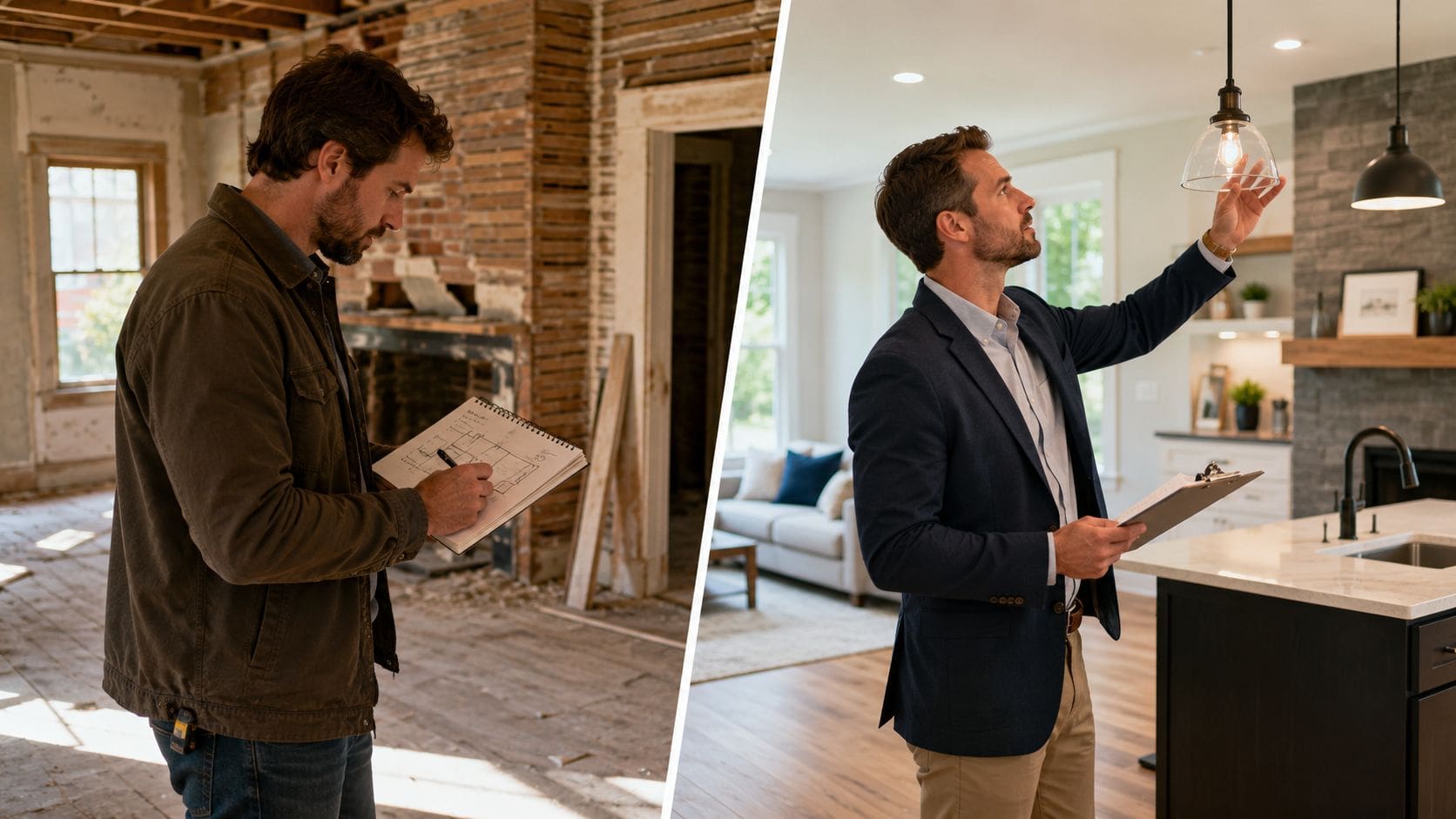
You walk a property, run your numbers, and see a profitable flip at a $325,000 resale. The appraiser comes in at $305,000. The lender underwrites the lower figure, and now your projected borrowed funds and margin both shrink. That gap usually starts in the way ARV was calculated.
ARV is only useful if it can survive all three reviews. Yours, the appraiser's, and the lender's.
Start with the resale, not the rehab budget
A lot of new investors back into ARV by adding renovation cost to today's value. That shortcut causes problems because buyers do not pay based on what you spent. Appraisers and lenders care about what the finished house should sell for compared with similar closed sales.
The better approach is simple. Estimate the value of the property as if the work were already complete, then test whether your scope supports that number.
Pull comps that match the house you will actually deliver
Use sold comps, not active listings. Listings show seller ambition. Closed sales show what the market accepted.
The strongest comps are recent sales in the same neighborhood, with similar square footage, bed and bath count, lot utility, and overall condition after renovation. The finish level matters more than many investors expect. If your comp set includes polished homes with new kitchens, updated baths, consistent flooring, and strong curb appeal, your scope needs to produce a similar product.
That is where investor optimism often creates friction. I see borrowers choose comps based on the highest resale in the area, then submit a scope that only covers paint, carpet, and fixtures. The number may work in a spreadsheet. It usually does not hold up in appraisal review.
Build your scope before you trust the ARV
The scope of work is not separate from ARV. It is the proof behind it.
Line out the rehab in enough detail that a third party can understand the finished product. Break it down by major categories such as roof, HVAC, windows, kitchen, baths, flooring, paint, exterior, and any layout changes. Then compare that plan to the condition and finish of your selected comps.
Some work protects the deal but adds little visible value. Foundation repair, drainage correction, electrical updates, and a failing roof often fall into that bucket. You still need to do the work, but you should not expect the resale market to reward every dollar one-for-one. Cosmetic improvements usually affect buyer demand more directly, as long as they fit the neighborhood standard.
For a fast first pass, many investors use a fix and flip profit calculator to screen whether a deal deserves a full comp and underwriting review.
Use a simple process
A practical ARV calculation looks like this:
- Find three to six sold comps that match the finished house you plan to deliver.
- Adjust for meaningful differences such as size, extra bath, garage, lot utility, or condition.
- Estimate a conservative resale range, not just a best-case number.
- Check whether your renovation scope is strong enough to justify that range.
- Underwrite the deal using the lower end if the comp set is thin or the market is softening.
That last step matters. Lenders rarely size a loan off the most optimistic value in the file. They look for the number that can be defended.
Work a clean example
Say you buy a dated three-bed, two-bath home in a subdivision where renovated sales have recently closed between $290,000 and $305,000. Your planned rehab includes a full kitchen update, two bathroom renovations, interior paint, flooring, lighting, landscaping, and minor exterior repairs. After reviewing the sales and your scope, you conclude the finished property should trade around $295,000 to $300,000.
That gives you a working ARV range.
If your budget only covers partial updates, the right move is to lower the ARV, not force the comps to fit. That discipline protects your spread and makes financing easier to secure.
Sanity-check the number the same way a lender will
Before you rely on your ARV, ask a few hard questions:
- Would an appraiser see these comps as truly comparable?
- Does my scope match the quality and completeness of those renovated sales?
- Am I counting on upgrades the neighborhood does not consistently support?
- If the appraisal comes in below my target, does the deal still work?
The best ARV is a financeable ARV. If your number can hold up under appraisal and underwriting, you can bid faster, borrow with more confidence, and keep more profit when the project exits.
The Investor View vs The Appraiser View

You walk a property and see a profitable flip. The appraiser sees a file that has to survive review. Your lender sees collateral, execution risk, and a loan amount that still has to make sense if the project slips.
All three are looking at ARV. They are not using it the same way.
That difference is where a lot of new investors get caught. They build a deal around the value they believe they can create, then the appraisal comes in tighter, and the lender underwrites off the more conservative number. The project may still be good, but now it needs more cash, a smaller scope, or a lower purchase price.
Why your ARV often comes in above the appraiser's
An investor prices the finished story. Clean exterior, updated kitchen, sharp photos, fast resale.
An appraiser has to prove that story with closed sales. If your comp set stretches outside the neighborhood, uses bigger homes, or assumes a finish level the market rarely pays for, the appraiser will pull the value back. That is not the appraiser missing the upside. That is the appraiser doing the job.
Here is the practical split:
| Perspective | Primary question |
|---|---|
| Investor | What should this sell for if the rehab is done right and the market holds? |
| Appraiser | What do recent sold comps support after reasonable adjustments? |
| Lender | What value fits our underwriting and protects the loan if the deal gets harder? |
I see this friction all the time in real estate underwriting decisions. Investors usually lose ground in one of two places. They overestimate what the rehab will add, or they underestimate how conservative the financing side will be once an appraisal is in the file.
Where deals start to break apart
The biggest gap usually is not a dramatic mistake. It is a stack of smaller assumptions.
- Finish mismatch: Your budget supports a rental-grade update, but your ARV is based on retail-level renovated sales.
- Comp stretch: Your best comps are farther away, newer, larger, or from a stronger pocket of the market.
- Weak adjustment support: You expect dollar-for-dollar credit for improvements that buyers in that area do not consistently reward.
- Lender overlays: Even with a workable appraisal, the lender may still size proceeds below your target based on experience, liquidity requirements, or project risk.
If your profit disappears when value gets trimmed, the issue usually started at acquisition.
How to close the gap before the appraisal happens
Treat your ARV like a case you have to prove.
Start with the rehab scope. Be specific about materials, rooms, exterior work, and whether you are matching the finish level in your comp set. "Full cosmetic update" is not enough. Line-item detail gives the appraiser and the lender something concrete to evaluate.
Then build a comp package that a skeptical reviewer could follow. Use recent sold renovated properties first. Note the similarities in size, layout, location, lot type, and finish quality. If one comp is stronger but slightly outside the immediate area, explain why it still matters.
Include photos if they help show finish level. That matters more than new investors think.
Finally, underwrite your deal assuming some resistance. If your ARV is $300,000, ask whether the project still works at $290,000 or $285,000. Experienced investors make money because they leave room for appraisal friction, not because they win every value argument.
A good ARV helps you buy. A defensible ARV helps you close, fund, and exit with your margin intact.
How Lenders Use ARV to Fund Your Deal

You submit a deal at a $300,000 ARV. Your appraiser comes back at $285,000. Your lender underwrites to the lower number, trims proceeds, and suddenly your down payment, reserves, and profit all get tighter. That gap is where a lot of new investors lose control of a deal.
From the lending side, ARV is a risk filter. We are not funding the spreadsheet version of the project. We are funding the version that still works if rehab drags, bids change, or the resale price lands below your target. The closer your ARV, the appraisal, and the underwriting file line up, the easier it is to get the structure you want.
The 70% Rule in plain language
Many lenders and investors use the 70% Rule as a starting screen for flips:
Maximum Purchase Price = (ARV × 0.70) – Rehab Costs
Using that formula:
- ARV: $245,000
- Rehab costs: $45,000
- Maximum allowable offer: about $136,000
The math is straightforward:
($245,000 × 0.70) – $45,000 = approximately $136,000
That number is not a universal offer price. It is a quick way to test whether the deal leaves enough room for financing costs, carrying costs, closing costs, and mistakes. If the project only works when you stretch past that cushion, the lender will see the same problem you should see before you bid.
How loan sizing actually gets set
Lenders usually size a loan from two directions at once. One limit is tied to the property today, usually as a percentage of purchase price or current value. The other is tied to the projected finished value, usually as a percentage of ARV. Your final loan amount has to fit inside both.
That is why investors get surprised at closing. They focus on the headline ARV, but the lender is also reviewing basis, rehab budget, timeline, liquidity, and exit risk. Even with a strong ARV, a padded scope, weak comp support, or thin cash reserves can reduce proceeds.
If you want a better read on how those decisions get made, review this breakdown of real estate underwriting standards for investment property loans.
What gets a lender comfortable
A fundable file usually comes down to three things.
Your ARV matches the appraisal logic.
If your value depends on premium comps, larger homes, or a better school pocket, expect pushback.Your rehab budget matches the value story.
If you are projecting top-of-market resale, the scope has to support that finish level. Lenders notice when the budget says rental-grade and the ARV says retail-premium.Your deal has room for friction.
A tight deal can still close, but it rarely gets the best terms. More cushion usually means a cleaner approval, fewer conditions, and less renegotiation after appraisal.
This is the part new investors often miss. The lender is not trying to prove you wrong. The lender is trying to see whether your number will survive third-party review and still protect the loan.
Strong ARV support does more than justify value. It gives the lender a reason to trust your judgment.
Why this changes your financing options
Investors who understand ARV from the lender's side submit cleaner deals. They buy with enough margin, build scopes that match the resale target, and avoid asking the appraisal to rescue a weak acquisition.
That changes the conversation. Instead of arguing for every dollar of projected value, you show a file that is easy to underwrite. In practice, that is how you get faster approvals, more predictable loan sizing, and better odds of keeping your profit after the appraisal comes in.
Common ARV Pitfalls and How to Defend Your Value
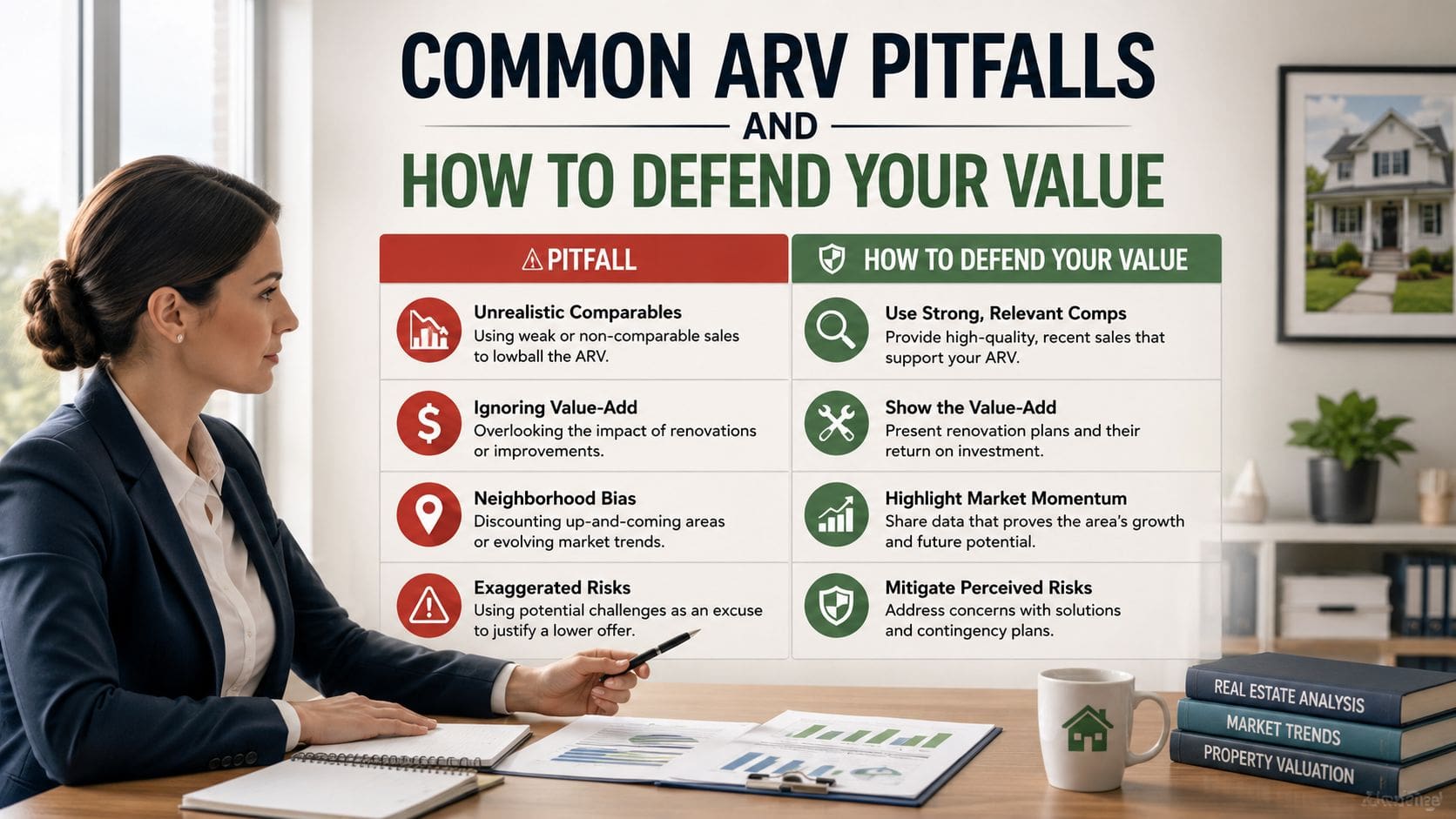
Most ARV mistakes aren't math mistakes. They're judgment mistakes. The number looks clean because the assumptions underneath it never got pressure-tested.
One of the biggest issues is rigidity. This discussion of ARV loan risk and market movement notes that the rigid 70% rule can ignore market volatility and inflation, and that comps from the last 3–6 months can overstate ARV in fast-changing markets. The practical takeaway is to use a more dynamic rule tied to current conditions rather than treating one shortcut as universal truth.
The mistakes that hurt deals most
- Using active listings as proof of value: Sellers can ask anything. Closed sales show what buyers paid.
- Choosing comps that match your hope, not your project: If your finishes won't resemble the comp set, the ARV won't hold.
- Underwriting old market conditions: A resale target based on stale comps can break quickly when buyer behavior shifts.
- Underestimating rehab friction: Permit delays, change orders, and hidden repairs can distort both your timeline and your margin.
- Ignoring the lender's view: A deal that works only in your spreadsheet may fail once underwriting trims the assumptions.
How to defend your ARV intelligently
The strongest defense is documentation. Don't hand over a target value with no support and expect everyone else to fill in the logic.
Build a compact package that includes:
- Your comp list with notes: Explain why each sale is relevant.
- Before-and-after logic: Show how the scope of work aligns with the finish standard in your chosen comps.
- A realistic budget: Include labor, materials, permits, and contractor fees in a way that tracks with the actual plan.
- A margin check: Review both financing and cost basis through the lens of LTV versus LTC so you know where the deal is most likely to tighten.
Don't try to “win” the appraisal. Try to make your value conclusion the most defensible one in the file.
A better operating habit
Treat ARV as a range first, then narrow it. Start with conservative sold evidence, match your scope accurately, and ask what happens if the exit is softer than planned. That approach won't make every deal look exciting, but it does keep you out of the deals that only work on paper.
Investors who last in this business usually aren't the ones with the boldest ARVs. They're the ones whose numbers survive contact with actual circumstances.
Making ARV Your Competitive Advantage
You find a property that looks like a winner. Your numbers say the finished value leaves plenty of margin. Then the appraisal comes in lower than expected, underwriting cuts proceeds, and the deal you thought was strong suddenly needs more cash.
That gap is where experienced investors separate themselves.
ARV gives you an edge when you use it to line up three opinions before you close: your value conclusion, the appraiser's support, and the lender's underwriting limits. If those three are close, you can move faster, bid with more confidence, and spend less time renegotiating your own deal after inspection, appraisal, or review.
This is also where newer investors lose money. They underwrite to the best-case exit, rehab to a finish level the neighborhood does not support, and assume the lender will see the property the same way they do. A lender will still ask whether the comps hold up, whether the scope matches the target buyer, and whether the finished value leaves enough room for risk.
Use ARV as a decision tool, not a sales pitch. Build your case the way an appraiser and credit team will review it. Tight comp selection, a scope that clearly matches those comps, and a realistic exit price do more for your financing than an aggressive number ever will.
Good ARV work also improves your borrowing position. Asset-based lenders often focus heavily on the property, the rehab plan, and the projected finished value, which can help investors who do not fit conventional income-documentation standards. The better your ARV package is, the easier it is for a lender to understand the deal and structure terms that hold up through the project.
If you still ask, “what is ARV?” here's the practical answer. It is the value test that keeps your offer price, renovation plan, appraisal support, and loan request tied to the same reality. Get that right, and you make better offers, protect your margin, and close more deals that survive contact with actual conditions.
If you're evaluating flips in Georgia, North Carolina, South Carolina, or Texas and want a lending partner that understands how ARV, scope, and underwriting interact in practice, talk with Sims Ventures. They focus on asset-based financing for investors, move quickly on time-sensitive deals, and can help you structure projects that make sense before you commit capital.
