

Why Monitor Cash Flow: Profitable Real Estate Growth
Every seasoned real estate investor knows that effective cash flow management can make or break a project long before the final sale. Staying on top of where money is coming in and flowing out is more than just bean counting; it is the difference between seizing new opportunities or running into liquidity crunches. Understanding how to define and track various cash flow types sets the foundation for sustainable project profitability, offering sharper insight and control over every dollar at work.
Defining Cash Flow in Real Estate Projects
In real estate investing, cash flow represents the lifeblood of any successful project, tracking the actual movement of money in and out of an investment. Understanding this financial metric is crucial for making strategic decisions and maintaining project stability.
At its core, cash flow in real estate encompasses several key components:
- Income streams from rental properties or property sales
- Operating expenses including maintenance, taxes, and management costs
- Capital expenditures for property improvements or upgrades
- Financing payments such as mortgage and interest costs
Professional real estate investors use detailed cash flow tracking methods to assess project viability. This approach involves carefully monitoring the difference between money generated by a property and its associated expenses. The goal is not just tracking current finances, but creating predictive models that anticipate potential financial challenges.
The discounted cash flow (DCF) method offers a sophisticated approach to evaluating real estate investments. By estimating future cash inflows and outflows and calculating their present value, investors can make more informed decisions about potential returns. This method helps translate projected future earnings into current financial understanding, accounting for factors like time value of money and potential market fluctuations.
Pro tip: Develop a comprehensive spreadsheet tracking monthly income, expenses, and projected cash flows to maintain clear financial visibility for each real estate project.
Types of Cash Flow and Their Distinctions
In real estate investing, understanding the nuanced types of cash flow is critical for comprehensive financial management. These distinct categories help investors track and analyze financial performance across different dimensions of their real estate projects.
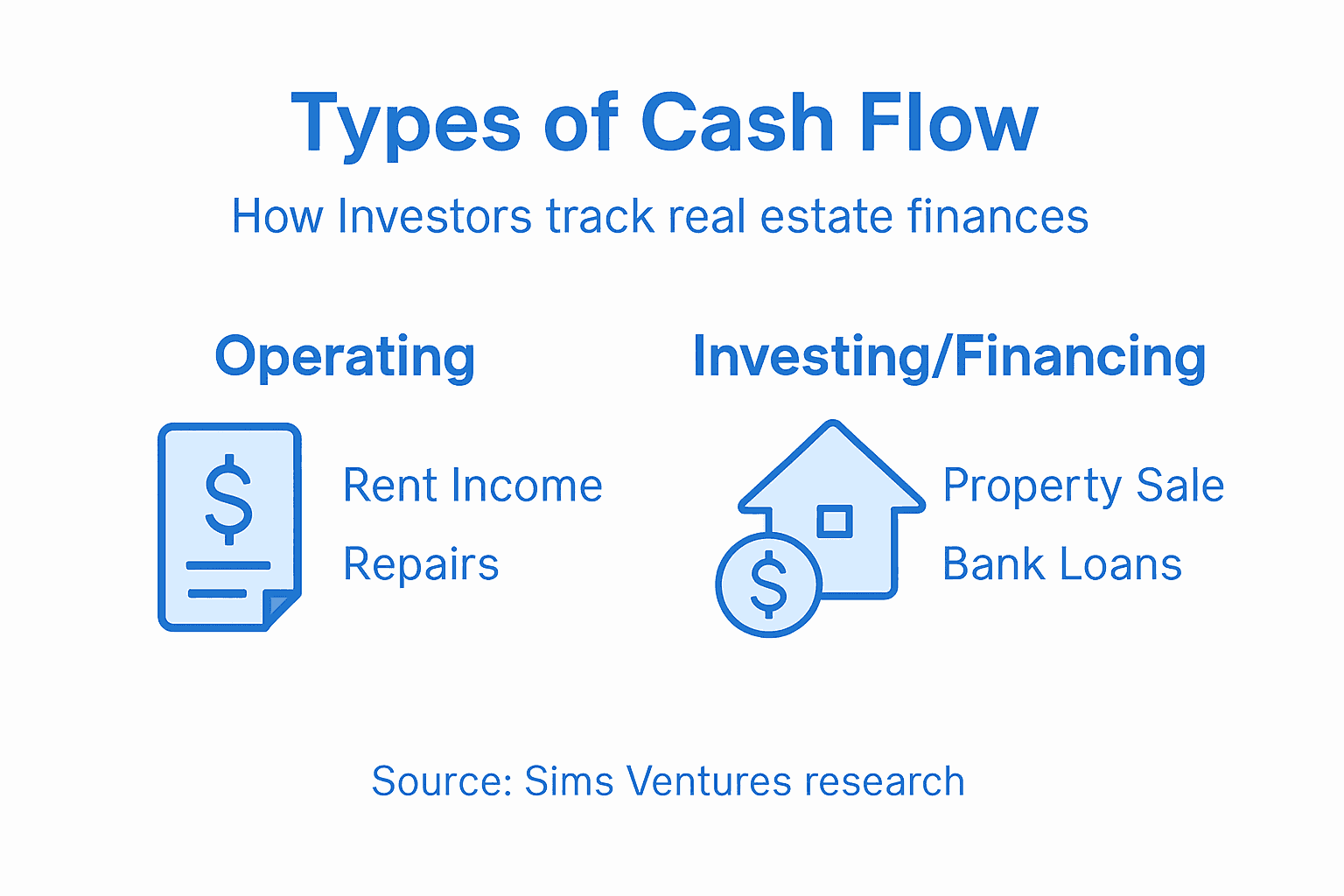
According to professional accounting standards, cash flows are typically classified into three primary categories:
- Operating Cash Flow: Income and expenses directly related to core real estate business activities
- Investing Cash Flow: Transactions involving long-term asset purchases or sales
- Financing Cash Flow: Funds associated with debt, equity, and capital structure changes
The standard cash flow classification method provides investors with a structured approach to financial tracking. Operating cash flow represents the most immediate and critical metric, reflecting the actual cash generated from rental income, property management, and day-to-day operational expenses.

Investing and financing cash flows offer deeper insights into a real estate project’s strategic financial movements. Investing cash flows capture significant capital investments like property acquisitions or major renovations, while financing cash flows reveal how the project is funded—whether through mortgage financing, investor contributions, or other capital sources. Understanding these distinctions allows real estate professionals to make more informed decisions about resource allocation and long-term financial strategy.
Here’s how key cash flow types compare in real estate investing:
| Cash Flow Type | Typical Activities Included | Primary Impact on Project |
|---|---|---|
| Operating Cash Flow | Rent collection, maintenance costs | Day-to-day financial stability |
| Investing Cash Flow | Property purchases, renovations | Long-term value and growth |
| Financing Cash Flow | Mortgage payments, new loans | Capital structure management |
Pro tip: Create separate tracking spreadsheets for each cash flow type to maintain clear visibility and simplify financial reporting for your real estate investments.
How Cash Flow Monitoring Maximizes Profitability
Cash flow monitoring is the strategic heartbeat of successful real estate investing, transforming raw financial data into actionable insights that drive profitability. By consistently tracking and analyzing financial movements, investors can make precision-driven decisions that optimize their investment performance.
Effective cash flow monitoring delivers critical advantages for real estate investors:
- Early warning signals for potential financial challenges
- Performance benchmarking across different investment properties
- Resource allocation optimization
- Risk mitigation through proactive financial management
- Investment opportunity identification
Financial performance tracking provides investors with a comprehensive understanding of their real estate portfolio’s economic health. Sophisticated investors use detailed cash flow analysis to uncover operational inefficiencies, identify potential bottlenecks, and strategically reallocate resources to maximize returns.
Real estate professionals recognize that consistent cash flow monitoring is more than a financial exercise—it’s a strategic planning tool. By understanding incremental cash flows from various investments and operational activities, investors can prioritize the most profitable projects, avoid costly financing scenarios, and maintain robust financial stability. This approach allows for dynamic decision-making that adapts to changing market conditions and investment landscapes.
Pro tip: Implement a quarterly cash flow review process that compares actual financial performance against initial projections, allowing for rapid strategic adjustments and continuous improvement.
Common Risks of Poor Cash Flow Management
Poor cash flow management represents a critical threat to real estate investment success, potentially transforming promising projects into financial nightmares. Understanding these risks is essential for investors seeking to protect their financial stability and long-term growth potential.
The most significant risks associated with inadequate cash flow management include:
- Liquidity constraints preventing critical property maintenance
- Missed investment opportunities due to limited financial flexibility
- Credit score damage from delayed bill payments
- Increased borrowing costs resulting from financial instability
- Potential project failure when cash reserves are insufficient
Financial management risks can create a domino effect of operational challenges that extend far beyond immediate monetary concerns. Real estate investors who fail to maintain robust cash flow tracking may find themselves unable to respond quickly to market changes, repair unexpected property damage, or seize time-sensitive investment opportunities.
The consequences of poor cash flow management extend beyond immediate financial strain. Persistent cash flow problems can lead to reputational damage, reduced investor confidence, and diminished ability to secure future financing. Sophisticated investors understand that maintaining a comprehensive cash flow monitoring system is not just a financial best practice—it’s a critical risk management strategy that protects the entire investment ecosystem.
The following table outlines risks of poor cash flow management and their possible business consequences:
| Risk Factor | Likely Business Consequence |
|---|---|
| Liquidity shortages | Delayed repairs, tenant dissatisfaction |
| Missed payments | Lower credit rating, loan rejections |
| No emergency reserves | Forced asset sales in downturns |
| Untracked expenses | Budget overruns, undetected losses |
Pro tip: Establish a dedicated emergency cash reserve equal to 3-6 months of projected property expenses to buffer against unexpected financial challenges and maintain investment stability.
Best Practices for Effective Cash Flow Tracking
Successful real estate investing demands a strategic approach to cash flow tracking, transforming financial data into actionable insights that drive investment performance. Implementing robust monitoring practices allows investors to maintain financial agility and make informed decisions.
Key best practices for effective cash flow tracking include:
- Automated transaction categorization
- Regular financial reconciliation
- Detailed expense tracking
- Comprehensive income documentation
- Predictive financial modeling
- Real-time performance dashboards
Cash flow management strategies require systematic approaches that go beyond basic record-keeping. Professional investors develop comprehensive systems that capture nuanced financial details, enabling precise tracking of every dollar moving through their real estate portfolios.
Technology plays a critical role in modern cash flow tracking. Advanced accounting software, integrated banking platforms, and custom financial dashboards provide real-time insights that help investors quickly identify trends, potential issues, and opportunities. Sophisticated tracking methods allow for dynamic financial management, enabling rapid adjustments to investment strategies based on current performance metrics.
Pro tip: Invest in cloud-based accounting software that automatically categorizes transactions and generates comprehensive financial reports, saving time and reducing manual tracking errors.
Strengthen Your Real Estate Cash Flow with Expert Financing and Advisory
Managing cash flow effectively is the key challenge highlighted in “Why Monitor Cash Flow Profitable Real Estate Growth”. You understand the importance of tracking operating, investing, and financing cash flows to avoid risks like liquidity shortages or missed investment opportunities. The goal is clear Maintaining consistent cash flow monitoring can protect your financial health and maximize your profitability.
At Sims Ventures, we provide more than capital—our specialized financing solutions come paired with strategic advisory to help you structure your deals and optimize cash flow management. Whether you need support in structuring entities, negotiating contracts, or managing post-closing execution, we partner with you for stability and growth. Explore how our innovative financial and business solutions address the very pain points that can undermine real estate projects.
Ready to take control and grow your investments with confidence Discover the difference of a strategic partner at Sims Ventures. Learn more about our approach to structuring entities and negotiating contracts, and how our expertise in optimizing deal and capital structuring can help you maintain positive cash flow from deal to deal. Act now to safeguard your projects and unlock your full investment potential.
Frequently Asked Questions
Why is cash flow monitoring crucial for real estate investments?
Cash flow monitoring is essential because it provides insights into the financial health of your investments. By tracking cash inflows and outflows, investors can make informed decisions, identify potential financial challenges early, and optimize their resource allocation.
What are the types of cash flow that real estate investors should track?
Real estate investors should track three primary types of cash flow: Operating Cash Flow, which includes income and expenses from day-to-day activities; Investing Cash Flow, concerning purchases or sales of long-term assets; and Financing Cash Flow, related to debt and equity financing activities.
How can poor cash flow management affect my real estate project?
Poor cash flow management can lead to significant risks, such as liquidity shortages that hinder property maintenance, missed investment opportunities, and potential project failures due to insufficient cash reserves. It may also harm your credit rating and investor confidence.
What best practices should I implement for effective cash flow tracking?
To effectively track cash flow, implement best practices such as automated transaction categorization, regular financial reconciliation, detailed tracking of expenses and income, and predictive financial modeling. Utilizing cloud-based accounting software can also enhance your tracking capabilities.
Recommended
- Ways to Build Wealth for Financial Independence 2026
- Savvy Investors Close Deals with New Approaches 2026
- State to Invest for Strong Cash Flow Opportunities 2026
- Future of Residential Real Estate Investing Opportunities 2026
- New Buildings for Rent: What to Look For and What to Avoid – Luxury Apartments for Rent in Boca Raton | Premium Boca Raton Apartments | Aapartments Boca Raton
