

How to Structure Real Estate Deals for Maximum Returns
Every real estate investor faces the challenge of turning ambitious plans into real profits. The difference often comes down to defining clear objectives and building a team that covers every angle. Whether you are growing your portfolio or tackling complex financing hurdles, organizing these crucial first steps can safeguard your investments and set you up for long-term success. You will discover actionable strategies to streamline deal structuring, mitigate risk, and protect your interests in unpredictable markets.
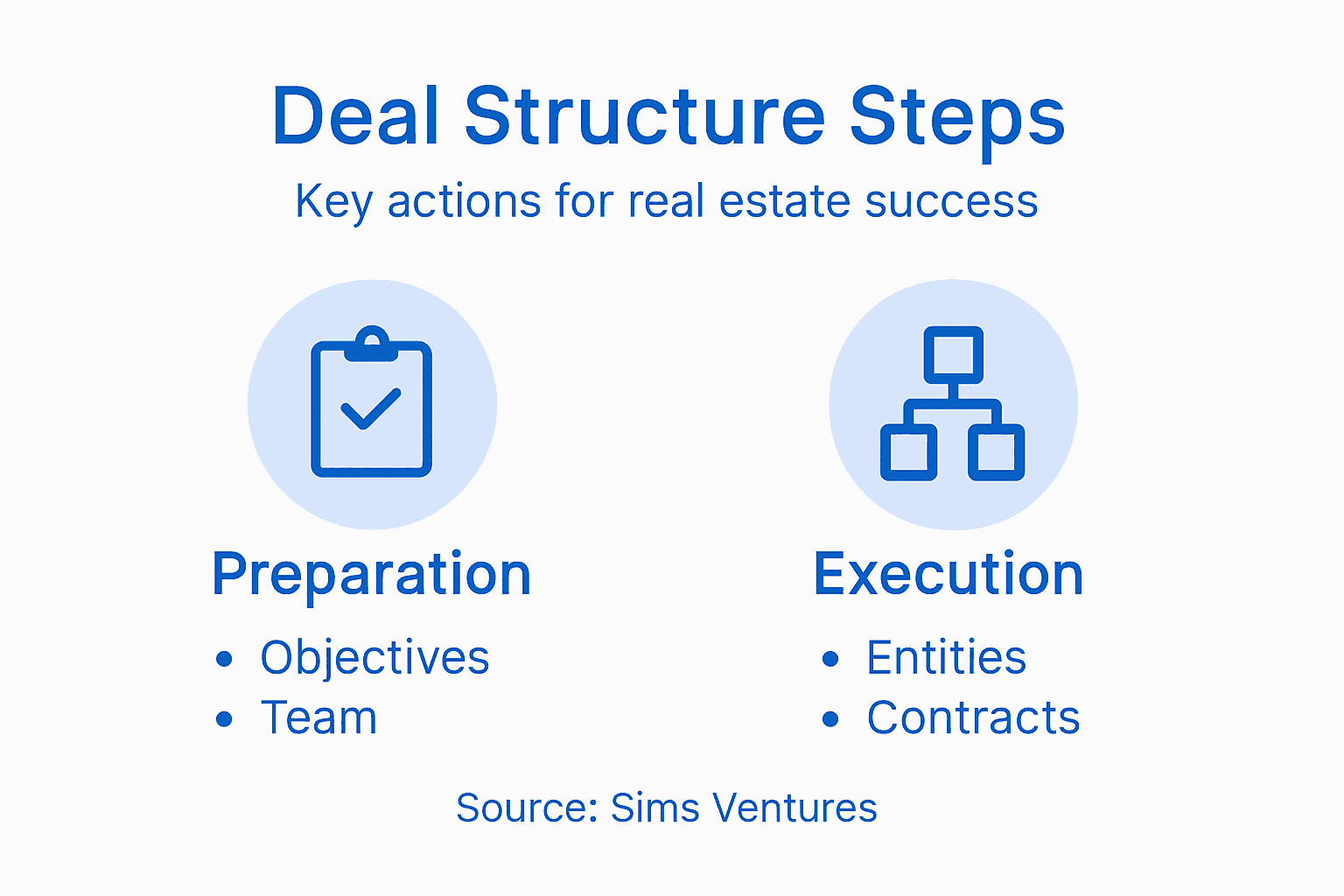
Step 1: Define objectives and assemble your team
In the world of real estate investment, success starts with crystal-clear objectives and a powerhouse team. This crucial first step sets the foundation for everything that follows.
Begin by establishing precise investment goals that align with your financial strategy. Developing goals requires strategic input from multiple perspectives, ensuring comprehensive planning. Your objectives should follow the SMART framework – Specific, Measurable, Achievable, Relevant, and Time-bound. For real estate deals, this might look like:
- Generating $150,000 in annual passive rental income
- Acquiring 3-5 multi-unit properties within 18 months
- Achieving a 12% annual return on investment
- Expanding portfolio into emerging metropolitan markets
Next, focus on assembling a dynamic team that can transform these objectives into reality. Effective team assembly is vital for navigating complex real estate markets. Your core team should include:
- Real estate attorney
- Certified public accountant
- Property management specialist
- Experienced real estate broker
- Financial advisor or investment strategist
The right team doesn’t just support your goals – they multiply your potential for success.
Choosing team members isn’t just about credentials. Look for professionals who demonstrate adaptability, strategic thinking, and a proven track record in real estate investment.
Pro tip: Schedule initial strategy sessions with potential team members to assess their collaborative spirit and alignment with your investment vision.
Step 2: Form entities and allocate responsibilities
Building a successful real estate investment strategy requires more than just great ideas – it demands strategic legal and operational structuring. This step focuses on creating the right legal framework and clearly defining team roles to protect your investments and maximize potential.
Structuring real estate deals strategically involves understanding how different investment entities can balance risk and control. You’ll want to consider several key entity types:
- Limited Liability Company (LLC)
- Limited Partnership (LP)
- Real Estate Investment Trust (REIT)
- S-Corporation
- Joint Venture Partnership
Each structure offers unique advantages for protecting investor interests and managing tax implications. Real estate transactions require clear entity roles to reduce potential conflicts and streamline deal execution.

Here’s a comparison of common real estate investment entity types and their primary business impacts:
| Entity Type | Asset Protection Level | Tax Flexibility | Typical Use Cases |
|---|---|---|---|
| LLC | High | Pass-through possible | Small partnerships, asset holding |
| Limited Partnership | Moderate-High | Pass-through | Syndications, investor groups |
| REIT | High | Corporate, dividend | Large-scale investments |
| S-Corporation | Moderate | Pass-through/separate | Small companies, flip investors |
| Joint Venture | Varies (by contract) | Flexible by agreement | Development, short-term projects |
When allocating responsibilities, focus on creating a comprehensive framework that outlines each team member’s specific duties:
- Define precise decision-making authority
- Establish clear financial contribution expectations
- Create transparent reporting mechanisms
- Set performance benchmarks and accountability standards
- Design exit strategies for potential partner departures
Effective entity formation is not just legal paperwork – it’s the blueprint for your investment’s future success.
Consider consulting with a real estate attorney and tax professional to ensure your chosen structure aligns perfectly with your investment goals and risk tolerance.
Pro tip: Draft a detailed partnership agreement that explicitly outlines each member’s roles, financial contributions, and decision-making powers to prevent future misunderstandings.
Step 3: Conduct due diligence and assess risk
Successful real estate investing hinges on understanding potential risks and opportunities before committing significant capital. Due diligence represents your defensive strategy for protecting investments and uncovering hidden value in potential property acquisitions.
Residential real estate transactions require comprehensive verification to ensure legal compliance and mitigate potential financial risks. Your due diligence process should encompass multiple critical assessment areas:
- Property title and ownership history
- Existing liens and encumbrances
- Zoning and land use regulations
- Physical property condition
- Environmental assessment reports
- Local market trends and comparable sales
Legal due diligence involves thorough investigation of potential transaction complexities. Your comprehensive risk assessment should include:
- Review all existing property documentation
- Verify seller’s legal right to transfer ownership
- Analyze potential environmental liabilities
- Evaluate current tenant lease agreements
- Assess potential repair and renovation costs
Real estate due diligence isn’t about finding perfection – it’s about understanding exactly what you’re acquiring.
Consider engaging specialized professionals like property inspectors, environmental engineers, and real estate attorneys to conduct thorough assessments that go beyond surface-level evaluations.
This summary table outlines due diligence roles and the specialist typically responsible:
| Assessment Area | Lead Professional | Key Responsibility |
|---|---|---|
| Title & Ownership | Real Estate Attorney | Verify clear title and rights |
| Physical Condition | Property Inspector | Assess repairs and compliance |
| Environmental Review | Environmental Engineer | Detect contamination risks |
| Lease Analysis | Property Manager/Broker | Evaluate rent rolls and vacancies |
| Market Trends | Financial Advisor/Broker | Analyze comparables and projections |
Pro tip: Always budget for unexpected findings during due diligence and maintain a financial buffer of 10-15% above your initial project estimates to manage potential risk discoveries.
Step 4: Negotiate terms and secure financing
Mastering the art of negotiation and financing is crucial for transforming real estate opportunities into profitable investments. Strategic deal structuring requires a nuanced approach that balances risk, potential returns, and collaborative partnership dynamics.
Negotiation in real estate demands careful balance between portfolio-level strategy and asset-specific considerations. Your negotiation process should focus on several critical elements:
- Establishing clear investment objectives
- Defining risk-sharing mechanisms
- Outlining potential exit strategies
- Determining cash flow distribution models
- Creating flexible funding structures
Successful negotiation follows a structured process that requires meticulous preparation and strategic thinking. Key negotiation principles include:
- Identify your core investment objectives
- Research market comparables and benchmark terms
- Establish your best alternative to a negotiated agreement (BATNA)
- Define your walkaway points
- Create a zone of possible agreement (ZOPA)
Effective negotiation is less about winning and more about creating mutually beneficial partnerships.
When securing financing, traditional bank financing can often derail project timelines and limit your strategic flexibility. Consider alternative financing approaches that offer more adaptable terms.
Pro tip: Always maintain multiple financing options and be prepared to demonstrate comprehensive due diligence to potential investors, which increases your negotiating credibility.
Step 5: Draft and execute contracts efficiently
Transforming negotiated terms into legally binding agreements requires precision, strategic thinking, and a methodical approach. Contract drafting is your blueprint for protecting investments and establishing clear expectations among all parties involved.
Contract drafting demands clarity and precision to prevent future misunderstandings and potential disputes. Your contract development process should prioritize:
- Comprehensive term sheet development
- Leveraging previous contract precedents
- Using plain, unambiguous language
- Specifying exact responsibilities
- Defining clear performance timelines
- Establishing comprehensive remedy mechanisms
The contract formation process involves strategic activities that extend beyond simple document creation. Key steps include:
- Complete thorough acquisition planning
- Conduct comprehensive market research
- Draft precise contract language
- Review and validate contract terms
- Execute and administer the final agreement
A well-crafted contract is your first line of defense in protecting your real estate investment.
Pay special attention to details that can significantly impact your investment’s success. Each clause should reflect your negotiated terms with surgical precision, leaving no room for interpretation or potential conflict.
Pro tip: Always have a qualified real estate attorney review your contracts, and consider building in flexible modification clauses that allow for reasonable adjustments as market conditions evolve.
Step 6: Review deal structure post-closing
Successful real estate investments require meticulous attention even after the deal closes. Post-closing review represents your strategic safeguard against potential risks and ensures the investment aligns with your original objectives.
Post-closing review verifies regulatory compliance and confirms all critical transaction elements are properly executed. Your comprehensive review should systematically examine:
- Title insurance verification
- Mortgage recording accuracy
- Lien priority confirmation
- Tax assessment validation
- Contractual representation fulfillment
- Financial distribution mechanisms
Managing post-closing risks requires proactive monitoring to prevent potential legal complications. Critical review steps include:
- Validate all closing documents
- Confirm fund disbursement protocols
- Review contractual representations
- Assess potential liability exposures
- Document any exceptions or discrepancies
The true test of a successful deal isn’t signing the contract – it’s what happens afterward.
Careful post-closing review helps identify potential issues early, allowing you to address them proactively before they escalate into significant problems that could compromise your investment strategy.
Pro tip: Create a standardized post-closing checklist and schedule a comprehensive review within 30 days of closing to catch and resolve any potential discrepancies quickly.
Unlock Greater Success by Structuring Your Real Estate Deals Right
Navigating the complexities of entity formation, negotiation, and due diligence can feel overwhelming for any real estate investor aiming for maximum returns. This article highlights the critical challenges like assembling the right team, drafting precise contracts, and conducting thorough risk assessments that can make or break your investment outcomes. If you want to move with certainty and power through every phase—from structuring entities to post-closing reviews—having strategic financing and advisory support is essential.
At Sims Ventures, we understand these hurdles and provide tailored solutions that go beyond traditional funding. Our expertise partners with you to optimize deal and capital structuring while ensuring rigorous due diligence and smooth contract execution. Explore how our specialized services help you maximize your profits in Real Estate Investment. It’s time to gain more than just capital — gain a strategic advantage that fuels long-term growth. Ready to elevate your real estate investing journey? Visit us at Sims Ventures and take the next confident step toward success.
Frequently Asked Questions
How do I define investment objectives for real estate deals?
To define investment objectives, use the SMART framework: Specific, Measurable, Achievable, Relevant, and Time-bound. For instance, set a goal to generate $150,000 in annual passive rental income within the next 12 months.
What types of legal structures should I consider for my real estate investment?
Consider various legal structures like Limited Liability Companies (LLCs), Limited Partnerships (LPs), or Real Estate Investment Trusts (REITs) based on your investment goals. Analyze each type’s asset protection level and tax implications to determine the best fit for your situation.
What should I include in my due diligence process for a property?
Your due diligence process should cover property title verification, existing liens, zoning regulations, and physical property condition. Engage professionals, like property inspectors or environmental engineers, to conduct thorough assessments and identify any potential risks before making an investment.
How can I effectively negotiate terms for a real estate deal?
To negotiate effectively, identify your core investment objectives and research market comparables to establish a fair price. Prepare a clear agenda for the negotiation meeting and define your walkaway points to ensure you achieve favorable terms.
What key elements should be included in real estate contracts?
Include clear and comprehensive terms in your real estate contracts, such as specific responsibilities, performance timelines, and remedy mechanisms for disputes. Ensure the language is plain and unambiguous to prevent future misunderstandings among parties involved.
How do I manage risks during the post-closing review of a real estate deal?
Manage risks by conducting a thorough post-closing review that verifies all documents and checks for compliance with contractual representations. Create a standardized checklist and complete this review within 30 days of closing to quickly address any discrepancies that may arise.
