

Fix and Flip Hard Money Loans: The 2026 Investor’s Guide
You're under contract on a property that makes sense on paper. The location is right. The renovation plan is clear. The resale potential is there. Then the seller says they want a fast close, and the bank timeline stops the deal cold.
That's where serious investors stop thinking like homeowners and start thinking like operators. A fix and flip project is not a conventional mortgage scenario. It's a short-window business plan tied to a specific asset, a rehab schedule, and an exit. If the financing doesn't match that reality, the deal gets harder than it needs to be.
As a private lender, I've seen the same mistake over and over. Newer investors spend all their time finding the property and almost no time matching the capital to the job. The right financing can keep a project moving. The wrong financing can leave you short on rehab cash, behind on contractor payments, and scrambling when the original timeline slips.
When Your Perfect Deal Needs Unconventional Speed
A good flip often comes with a bad deadline.
The property is dated, which is why the margin exists. The seller wants certainty, which is why the closing window is tight. A conventional lender wants a slower file, more borrower documentation, and a cleaner property condition than many flip deals can offer. Those priorities don't line up.
Fix and flip hard money loans exist for this exact situation. They're built for investors who need to move on a distressed or value-add property without waiting through a conventional mortgage process that wasn't designed for a rehab deal in the first place.
The biggest practical advantage is speed. An industry rate review notes that expedited closing timelines are approximately 15 days, and often around two weeks after appraisal, with that speed offset by a 12%+ interest floor and 2–5 point fee structure. That trade-off matters. You're paying more for capital because you're buying time, certainty, and a process centered on the property rather than your last two years of tax returns.
Practical rule: If the deal only works with cheap money and a slow close, it may not be a real flip opportunity.
In active markets, speed changes the conversation with sellers. A clean, credible close can matter as much as price. That's especially true when the property has condition issues, title complexity, or a rehab plan that would make a conventional underwriter uneasy.
Here's what usually keeps a fast-close deal alive:
- A realistic scope of work: Lenders need to see that the renovation plan matches the property and the exit.
- Clean third-party items: Appraisal and title often determine whether a quick close is possible.
- A borrower who's prepared: Insurance, entity documents, purchase contract, and contractor information need to be ready.
Hard money is not cheaper. It is not passive. It is not forgiving of bad planning. But when the right deal shows up and the timeline is short, it gives investors a tool that fits the job.
What Exactly Are Fix and Flip Hard Money Loans
Not all hard money is the same. That distinction matters more than most first-time flippers realize.
A generic hard money loan may get you to the closing table. A true fix and flip loan is built to get you through the whole project, including the renovation phase. That means the structure matters just as much as the approval.
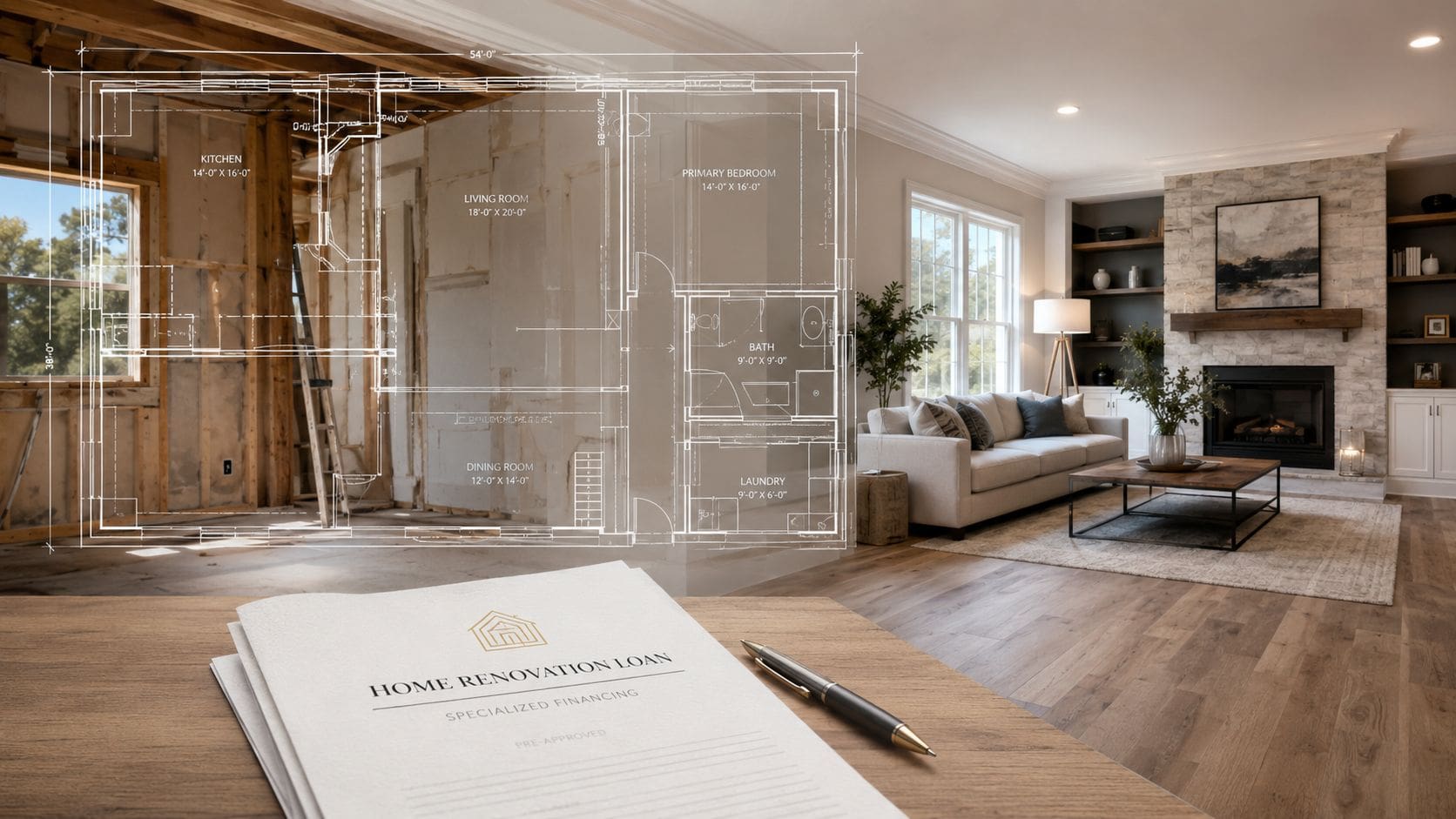
Generic hard money versus a real flip loan
The clearest line is rehab funding.
Stormfield Capital notes that most general hard money loans are not built to support detailed renovation timelines, while true fix-and-flip loans are purpose-built with rehab funding released in stages as construction milestones are completed. That single difference changes how the project runs day to day.
If you use a generic bridge loan on a rehab property, several problems can show up fast:
- Contractor cash flow gets choppy: If the loan wasn't structured around draws, you may have to front more cash than expected.
- The scope can drift: Without a defined budget and release process, investors tend to lose control of sequencing.
- The lender and borrower may expect different things: One side thinks it's a simple bridge loan. The other side thinks rehab funds are baked in.
A purpose-built fix and flip loan starts with a budget, a schedule, and a draw process. That's what makes it functional for a real construction plan.
What the draw schedule actually does
Think of construction draws like fuel stops on a road trip. You don't need all the fuel dumped into the car at once. You need the right amount at the right point so the project keeps moving.
A structured draw schedule usually ties money to completed work. Demo gets done. The next stage gets inspected or documented. Funds are released. Then the project moves forward. That protects the lender, but it also protects the investor from blowing through budget too early.
A rehab project rarely fails because of one dramatic mistake. It usually fails because cash timing, contractor timing, and lender timing stop matching.
That's why I tell new investors to ask a basic question before they worry about rate. Is this loan built for acquisition only, or is it built for acquisition plus rehab execution? If the answer isn't clear, the problem will show up later, usually when the contractor wants to get paid.
Decoding the Language of a Hard Money Loan
If you can't read a loan structure, you can't manage a flip. Most confusion comes from five terms that sound technical but are straightforward once you tie them to the actual deal.

ARV and the future value question
ARV means After-Repair Value. It is the lender's view of what the property should be worth once the work is complete.
The easiest way to think about ARV is this: current value tells you what the house is today, ARV tells you what the business plan says it can become. Your loan is often built around that future-state value, not just the property's present condition. If you want a deeper walkthrough, this guide on ARV and how private lenders use it to fund a flip lays out the concept clearly.
LTV and LTC are two different gauges
Investors often mix up LTV and LTC. They shouldn't.
- LTV means Loan-to-Value. In flip lending, that usually means the loan amount compared to value, often tied to ARV.
- LTC means Loan-to-Cost. That compares the loan amount to the total project cost, usually purchase plus rehab.
Those two gauges answer different questions. LTV asks, “What level of financing is the lender willing to provide against value?” LTC asks, “How much of the actual project bill will the lender cover?”
According to RCN Capital's 2025 hard money lending overview, fix-and-flip loans commonly finance up to 70–90% of ARV, can cover 100% of renovation costs, and some programs offer up to 93% LTC and up to 75% ARV. That's why some investors can preserve cash for holding costs, interest payments, and surprises instead of tying it all up at closing.
Points and draws are where beginners get surprised
Origination points are an upfront fee charged as part of the loan. Investors tend to focus on rate and forget that points affect total project cost on day one.
Construction draws are staged releases of rehab funds. You don't usually receive the full rehab budget in one lump sum. The lender holds that budget and releases it as work is completed under the agreed structure.
Here's the practical version:
| Term | Plain-English meaning | Why it matters |
|---|---|---|
| ARV | What the property should be worth after renovation | Drives leverage and exit planning |
| LTV | Loan amount compared to value | Tells you how aggressive the leverage is |
| LTC | Loan amount compared to total project cost | Tells you how much cash you need to bring |
| Points | Upfront lender fee | Changes your all-in cost immediately |
| Draws | Rehab funds released in stages | Controls contractor cash flow and project pacing |
If you don't know whether your deal is constrained by ARV or by cost, you don't yet know how much financing you really have.
The True Cost and Timeline of a Flip Loan
Speed is valuable, but it isn't free. A lot of first-time investors look at a quoted interest rate and think they understand the cost of the loan. They don't. You need to price the entire structure and match it against the project timeline.
What investors are really paying for
The current market for fix and flip hard money isn't mystery pricing. The range is visible, and the main variables are borrower experience, property quality, and execution risk.
Data compiled for 2026 shows an all-in cost structure of 9.5% to 13% interest plus 1.5 to 3.0 origination points, with experienced investors in major markets such as Texas and Georgia averaging 10 to 11.5% while first-time borrowers face 12 to 14% rates. That spread tells you something important. The lender is pricing the probability that the deal runs cleanly from close to exit.
For a new investor, the practical takeaway isn't “rates are high.” It's this: your execution becomes part of the collateral. If your scope is loose, your budget is thin, or your contractor plan is weak, the cost of capital usually reflects that.
A simple way to pressure-test the deal is to run it through a fix and flip calculator built for project-level cost planning. You're not just checking profit. You're checking whether the timeline leaves room for reality.
Where the timeline gets won or lost
A fast closing window is possible when the borrower treats the loan process like a project, not like a casual application.
These are the stages that usually control the file:
Purchase contract review
The lender needs to understand the asset, the contract terms, and whether the property fits a flip profile.Scope and budget review
Rehab cost assumptions need to make sense. If the budget is too thin, the exit starts looking weak.Appraisal and title
These third-party items often decide whether the targeted closing window holds.Underwriting decision
During the underwriting decision, the deal, not just the borrower, gets tested.Closing coordination
Insurance, entity paperwork, and final conditions need to be lined up without delay.
Why interest-only can help
On a short-term project, interest-only payments can help preserve monthly cash flow while the property is under construction and not yet producing income. That structure doesn't reduce your total obligation, but it can give the project breathing room while you focus on renovation and sale.
Cheap capital can hide a weak deal for a while. Expensive short-term capital exposes a weak deal almost immediately.
That's why disciplined investors underwrite the holding period realistically. If the schedule is fragile from the beginning, the financing cost will magnify every delay.
How to Qualify and Pass Underwriting
Hard money is asset-based, not borrower-blind. The property matters most, but the borrower still has to prove they can execute the plan. A lender isn't just funding a house. They're funding a timeline, a renovation strategy, and an exit.
The five things lenders are really reviewing
I think about underwriting in five buckets. Not because it sounds neat, but because that's how problem files usually reveal themselves.
Character
This is not about personality. It's about credibility.
Have you closed investment deals before? Have you managed contractors? Do you respond quickly, send clean documents, and know your own numbers? A first-time investor can get approved, but first-time investors who are vague usually struggle.
Capacity
This is the strength of the deal itself.
Can the renovation plan support the projected value? Is the timeline believable? Does the budget reflect actual work, or is it just a rough guess? Capacity is where a deal either stands up or starts to wobble.
Capital
Asset-based lending still expects the borrower to have some room to operate.
Even when leverage is strong, investors need liquidity for closing costs, holding costs, change orders, and delays. Projects rarely follow the first draft perfectly.
Collateral
This is the property. Condition, location, resale profile, and the logic of the business plan all sit here.
A lender looks at whether the asset can support the loan if the project doesn't go as planned. Distressed houses can absolutely work. Unclear collateral usually doesn't.
Conditions
Local market conditions affect risk. In Georgia, North Carolina, South Carolina, and Texas, investors also need to think about neighborhood velocity, buyer depth, and how quickly the project can move from rehab to sale or refinance. Even when two properties look similar on paper, one market may offer a much cleaner exit than the other.
The exit strategy test that gets many borrowers denied
A lot of beginners think underwriting stops at ARV. It doesn't.
The key question is whether the whole project still works if the exit comes in weaker than expected. That's where lenders start stress-testing assumptions. If the resale price softens, if the ARV lands lower than hoped, or if the rehab takes longer, does the deal still make sense?
One practical line in the sand matters a lot. A commonly used underwriting rule is that lenders will reject deals where the all-in cost, meaning purchase plus rehab, exceeds 70% of ARV. Newer investors miss this constantly because they focus on gross profit instead of capital stack discipline.
That rule does two things:
- It forces a margin between total cost and projected value.
- It gives the lender room if the project underperforms.
If your deal breaches that threshold, the issue usually isn't the lender being conservative. The issue is that the margin for error is already too thin.
What helps a file move cleanly
A strong submission usually includes:
- A clear purchase contract: No confusion about price, seller credits, or closing deadlines.
- A line-item rehab budget: Broad estimates are weak. Specific scopes are stronger.
- A realistic exit summary: Sale plan, expected buyer profile, and fallback strategy.
- Proof of liquidity: Enough reserves to handle the parts the loan doesn't cover.
- A responsive borrower: Slow communication can kill a fast-close deal.
If you want a practical checklist, this overview of hard money loan qualifications for investors is a useful reference point.
The biggest underwriting mistake I see is simple. Investors treat the lender like a source of money instead of a risk partner. Once you understand how the lender is testing the downside, your application gets sharper fast.
A Sample Deal Breakdown with Sims Ventures
A hypothetical deal shows the process better than theory.
Say an investor in Atlanta finds a dated property in a solid resale pocket. The house needs cosmetic updates, kitchen and bath work, flooring, paint, light exterior repair, and general cleanup. The borrower's goal is straightforward: close fast, renovate on schedule, and sell into the retail market.
For this example, the investor applies through Sims Ventures for a purpose-built flip loan structured around acquisition, rehab, and staged draws. The lender reviews the contract, scope of work, budget, resale logic, and borrower liquidity before issuing terms.
How the lender looks at the file
The first screen is not emotion. It's math and execution.
The lender checks whether the all-in cost stays within the ARV guardrails already discussed. Then the lender looks at whether the draw schedule lines up with actual phases of work. A budget that says “misc rehab” is weak. A budget broken into demo, rough work, finishes, and punch work is usable.
The second screen is timing. If the borrower says the property will be market-ready quickly but the scope includes multiple trades, permit-sensitive items, and no contractor coordination, the timeline won't feel credible.
Sample fix-and-flip deal analysis
Below is a hypothetical structure using only verified loan-to-value ranges and cost parameters already covered earlier in this article. The exact pricing on any real deal depends on the asset, the borrower, and the exit.
| Metric | Value | Calculation Notes |
|---|---|---|
| Property type | Single-family fix and flip | Atlanta-area investment property |
| Loan purpose | Purchase plus rehab | Structured as a fix-and-flip loan with draws |
| ARV support | Up to 75% ARV possible | Based on the verified range cited earlier in the article |
| LTC support | Up to 93% LTC possible | Based on the verified range cited earlier in the article |
| Rehab funding | Can cover full rehab budget | Subject to draw schedule and approved scope |
| Interest structure | Interest-only | Common for short-term flip debt, as discussed earlier |
| Loan term | Short-term bridge window | Match term to rehab and resale plan |
| Origination fee | Within market point range | Depends on risk and borrower profile |
| Exit path | Sale of renovated property | Primary exit for this scenario |
What makes this deal financeable
This kind of deal tends to work when four things line up:
- The purchase is right: Margin is created at acquisition, not hoped for at resale.
- The rehab is specific: The scope improves value without turning into an overbuild for the neighborhood.
- The draw process is planned: Contractor payment timing and project milestones are aligned.
- The exit is believable: The resale plan matches actual buyer demand in that pocket.
A lender doesn't need a perfect project. A lender needs a project with enough structure that problems can be managed before they become losses.
A weak version of the same deal usually looks like this: the investor underestimates rehab, uses optimistic resale assumptions, and leaves no room for carrying cost pressure if the project sits longer than expected. On paper, both deals may claim a profit. In underwriting, only one of them looks durable.
That's the practical value of working through a deal like an operator before you ask for funding. The goal isn't just to get approved. The goal is to avoid getting approved for the wrong structure.
Planning Your Exit Strategy from Day One
The best time to think about your exit is before you close, not when the rehab is almost done.
A fix and flip hard money loan should line up with a defined outcome. For most investors, that means selling the renovated property. But smart borrowers also map a second path in case the resale market softens, the property appraises differently than expected, or holding the asset turns out to be the better long-term move.
Selling is the primary exit
When the plan is to sell, the investor needs to stay disciplined through the whole project.
That means controlling renovation scope, protecting timeline, and pricing the finished product against what buyers in that neighborhood will pay. Too many flippers create avoidable problems by chasing finishes that don't fit the market or by drifting past the point of useful improvement.
The strongest sale exits usually have three qualities:
- The product matches the neighborhood: Renovate for the buyer pool that exists.
- The timeline is managed early: Don't wait until the final week to think about listing readiness.
- The numbers work before appreciation: The deal should stand on the business plan, not a hopeful market jump.
Holding can be the smarter backup
Some projects start as flips and end up making more sense as rentals. That's not failure if the financing and property support the pivot.

The useful version of that pivot is the bridge-to-DSCR path. HardMoneyScout's rates overview describes this as a standard exit strategy where a hard money loan at 65–75% LTV with a 12–36 month term is refinanced into a DSCR loan at 7–10% over 15–30 years after the property reaches 1.0–1.25x DSCR coverage. That structure gives investors a way to acquire and renovate first, then move into longer-term debt once the property is stabilized and leased.
Why this matters before the rehab starts
The backup exit affects decisions from the beginning:
- Scope of work: If holding is possible, the rehab should support durability and rental appeal, not just fast cosmetics.
- Layout choices: A rental-focused fallback may favor practical finishes over over-customization.
- Budget discipline: A refinance exit still depends on the property carrying the debt cleanly.
The strongest investors don't just ask, “How do I sell this?” They ask, “What do I do if selling isn't the best move when the property is done?”
That's the mindset that keeps short-term financing useful instead of dangerous. A flip loan works best when the endgame is already defined and the fallback is credible.
If you're evaluating a deal in Georgia, North Carolina, South Carolina, or Texas and want a second set of eyes on the structure, Sims Ventures provides asset-based financing for fix-and-flip projects, rental properties, and bridge-to-DSCR strategies. Bring the contract, scope of work, budget, and exit plan. A serious review starts there.
