

Ground Up Construction: A Builder’s Guide to Financing
A lot of investors first meet ground up construction standing on a vacant lot with two competing thoughts. One is opportunity. The other is uncertainty.
You can already see the finished asset. A new build with the right layout, the right finish level, and the right exit. Sell it, rent it, refinance it. But the lot itself doesn't tell you whether the deal works. The financing does.
That's where newer builders get in trouble. They treat the loan as something to solve after they solve the plans, permits, and budget. In practice, the loan structure shapes all of it. Your draw schedule affects subcontractor pacing. Your lender's document requirements affect how early you need your plans and approvals. Your carry costs start well before the property produces revenue. If you miss that, a good site can still become a bad project.
Ground up construction isn't reserved for large developers with institutional backing. Smaller builders and self-employed investors use private capital to build profitable residential projects every day, especially in growth markets across Georgia, North Carolina, South Carolina, and Texas. The difference isn't ambition. It's control. The people who succeed know how the build and the capital stack fit together before they break ground.
From Dirt to a Done Deal
A promising lot can fool you.
On paper, the deal looks clean. The location works. The resale comps make sense. The rental demand looks durable. Then the project begins. Soil work comes back with an issue. Permitting takes longer than expected. The framer wants a deposit before the first draw hits. The investor who only modeled vertical construction costs suddenly realizes the timeline itself has become a line item.
That's the part many guides miss. They explain how a house gets built, but not how money moves through the job. In the field, those two things are inseparable.
Ground up construction succeeds when the capital plan matches the construction sequence. If those two drift apart, the project starts fighting itself.
A disciplined builder thinks in milestones, not just materials. Before any concrete gets poured, the financing has to support the order of operations. That means knowing what has to be paid upfront, what gets reimbursed through draws, and where the cash gaps sit.
Three questions matter early:
- Can the site support the product you want to build: Zoning, setback rules, utility access, and lot-specific constraints can change the deal before design is final.
- Can your budget survive the pre-construction phase: Plans, engineering, permits, and other soft costs hit before the visible work starts.
- Can your lender fund the project at the pace the job requires: A cheap loan with rigid draws can cost more than a flexible loan that keeps the site moving.
Builders who understand that don't just finish projects. They create repeatable projects.
What Ground Up Construction Really Means for Investors
Ground up construction starts with a blank canvas. That's the attraction and the risk.
With a renovation, you inherit an existing structure and work within its limits. Sometimes that works in your favor. Sometimes you discover the house has been hiding expensive problems behind finished walls. A new build removes that uncertainty inside the structure, but it replaces it with a different kind of diligence before construction starts.

The blank canvas changes the underwriting
When a lender reviews a renovation, they're looking at an asset that already exists. In ground up construction, the asset is still theoretical. That means the lender is underwriting your plans, your team, your approvals, and your budget discipline as much as the finished property.
That's why pre-construction isn't paperwork. It's the true foundation of the deal.
According to the American Institute of Architects permitting guidance, permitting for ground-up residential construction in major markets such as Atlanta and Dallas averages 12 to 18 weeks, compared with 4 to 6 weeks for internal renovations. The same guidance notes that soft costs such as permits, engineering, and zoning can account for 25 to 30% of total project costs in ground up construction, versus 10 to 15% in renovations.
Those numbers matter because they change how you capitalize the job. A builder who budgets like this is just a renovation with more lumber usually runs short before the shell is up.
What lenders want before first draw
Before a serious lender funds a new build, they usually want to see that the project can move from paper to dirt without a regulatory surprise. That often includes:
- A buildable site: Not just owned or under contract, but suitable for the intended structure.
- Geotechnical and site diligence: Soil and drainage issues can reshape the foundation plan and cost profile.
- Approved plans or permit-ready plans: The further along your design package, the easier it is to assess risk.
- Zoning confirmation: If the use, density, setbacks, or variances aren't settled, the timeline isn't settled either.
- A contractor path: Even if you self-manage, the lender needs confidence that the build team can execute.
Practical rule: If a missing permit, variance, or site report can stop the project, it can also stop the loan.
Why investors like new builds anyway
The upside is control.
With ground up construction, you choose the product that fits the lot and the exit. You can design for resale, for long-term rental durability, or for a refinance strategy. You're not trying to force an old structure into a modern business plan. You're creating the structure that matches the plan from day one.
That control is valuable. But it only pays off when the pre-construction phase is treated like a finance exercise, not just a design exercise.
The 7 Stages of a New Build Project
Ground up construction works best when you think like a lender and a superintendent at the same time. Every major build phase should line up with a measurable milestone, because that's how money gets released and risk gets managed.
The market backdrop supports the strategy. The U.S. Bureau of Labor Statistics projects that the U.S. construction industry will grow 4.7 percent from 2023 to 2033, faster than the 4.0 percent projected for all industries combined. Demand for new construction is there. Execution still decides who gets paid.
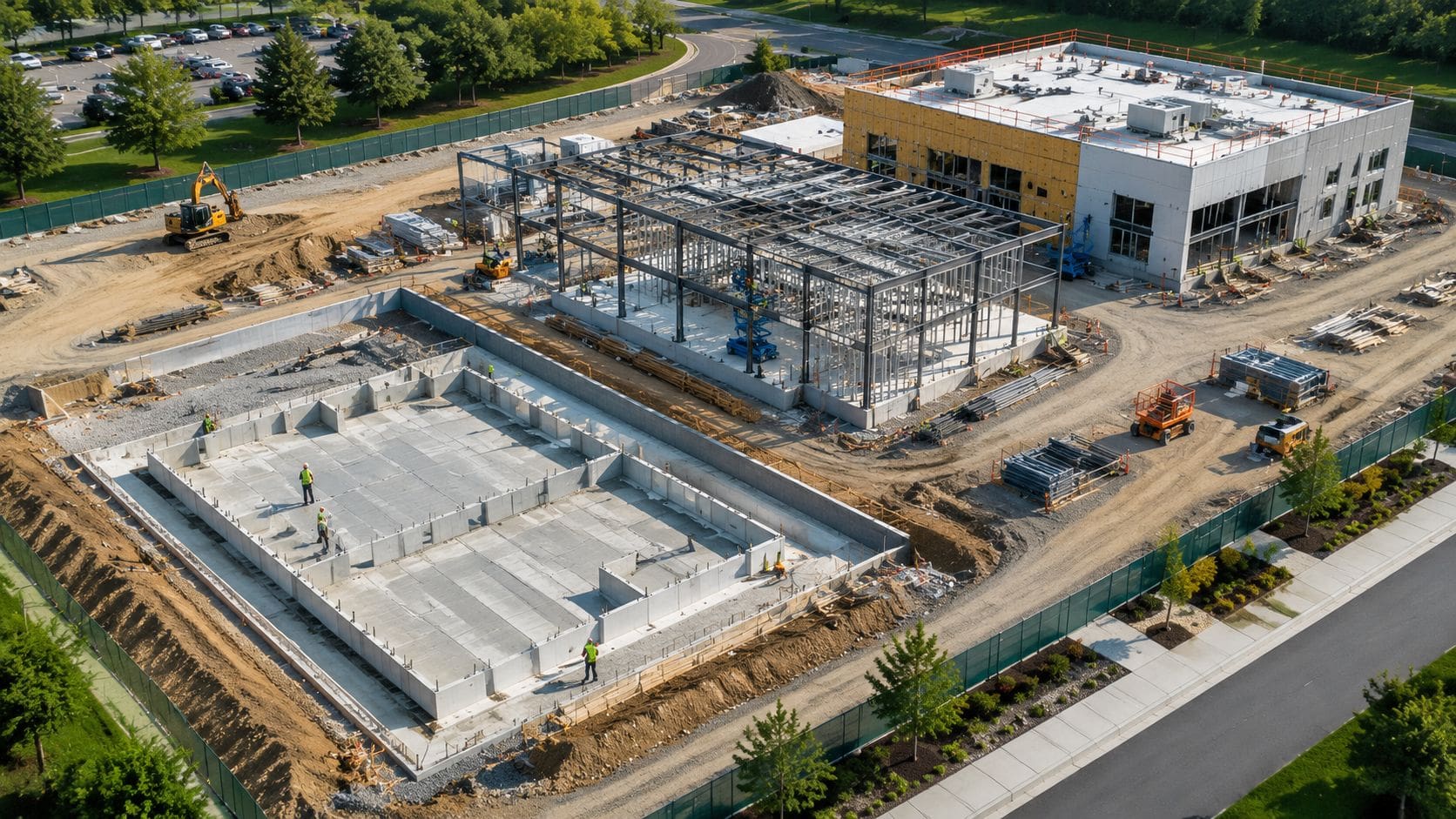
Stage 1 site prep and foundation
At this stage, the lot becomes a job site. Clearing, grading, excavation, utility prep, footings, and the foundation all sit here.
From a financing standpoint, lenders want visible, verifiable progress. The inspector is looking for completed site work, foundation forms, rebar, poured concrete, and evidence that the work matches plan.
If this phase drifts, the entire schedule drifts. Foundation issues don't stay isolated. They push every trade behind them.
Stage 2 framing
Framing gives the project shape and confirms whether the build is moving with real momentum. Walls, roof structure, sheathing, and basic structural form typically define this stage.
A draw at framing should follow actual installation, not projected completion; framing is often where optimism outruns reality. Builders talk in percentages. Inspectors work from what's physically on site.
If the frame isn't standing, the budget isn't advancing, no matter what the spreadsheet says.
Stage 3 rough-in for plumbing electrical and HVAC
Once the shell is established, the invisible systems go in. Plumbing lines, electrical runs, service panels, ductwork, and other core systems are installed before walls are closed.
This stage often reveals coordination quality. Clean rough-in work tells you the contractor sequencing is solid. Messy trade overlap usually signals future rework, inspection trouble, or schedule pressure.
Stage 4 exterior dry-in and insulation
Windows, exterior doors, roofing, weather barrier, siding, and insulation push the project toward a protected envelope. This is a major threshold because the build becomes less exposed to weather and site damage.
In practical terms, a builder begins to save time at this stage. Once the structure is dried in, interior work can continue with less interruption.
Stage 5 drywall and interior finishes
Drywall creates the visual transition from construction site to actual house. Then come texture, paint, trim, interior doors, cabinets, and flooring.
Budget discipline is put to the test. Finish decisions can subtly expand if the scope wasn't nailed down early. Builders who treat selections casually usually pay for it late.
Stage 6 final finishes and fixtures
Fixtures, appliances, hardware, punch corrections, exterior touch-ups, and site cleanup happen here. The house may look done to an untrained eye, but lenders and inspectors still focus on what's incomplete.
This stage often slows because the remaining items are small but scattered. A single unresolved issue can hold up final signoff.
Stage 7 final inspection and certificate of occupancy
The project isn't complete until the jurisdiction signs off and the property is legally occupiable. For the lender, this is the finish line that supports the final release and the transition to sale, lease-up, or refinance.
Here's the milestone view most investors should keep in mind:
| Stage | What happens on site | What triggers the draw mindset |
|---|---|---|
| Site prep and foundation | Dirt work, excavation, concrete, foundation | Verified structural start |
| Framing | Structural shell goes vertical | Visible building form |
| Rough-in | Mechanical systems installed | Core infrastructure in place |
| Exterior and insulation | Shell protected from weather | Build is dried in |
| Drywall and interiors | Walls closed, interior finish work begins | House becomes functionally complete |
| Final finishes | Fixtures, appliances, punch items | Project nears turnover |
| Final inspection | Signoff and occupancy approval | Exit strategy can activate |
Budgeting Your Project Costs and Timelines
A build can be on budget on paper and still run out of cash in the field.
That usually happens because the cost estimate was treated as a static number instead of a timing plan. In ground up construction, money does not leave in a straight line. It moves in bursts, tied to permits, deposits, mobilization, inspections, and draw reimbursements. If the timing is off by even a few weeks, the budget gets stressed long before the house is finished.
I tell newer builders to underwrite two jobs at once. One is the construction job. The other is the cash management job. If you only price sticks, bricks, and labor, you miss the part that puts projects into default.
The three buckets that matter
| Cost Category | Description | Typical % of Total Budget |
|---|---|---|
| Soft Costs | Plans, engineering, permits, zoning, pre-construction services | Varies by project |
| Hard Costs | Labor, materials, site work, structure, systems, finishes | Varies by project |
| Carrying Costs | Interest, taxes, insurance, utilities, administrative holding costs | Varies by project |
The percentages vary, but the structure does not. Every deal has these three buckets, and each one hits your liquidity differently.
Hard costs get the attention because they are visible. You can walk the site and see concrete, framing, roofing, and trim. Soft costs and carrying costs are less visible, but they are often what force a builder to inject more cash mid-project. Permit revisions, engineering updates, insurance renewals, extension fees, interest accrual, and utility holding costs all show up whether the crew is productive or not.
Carrying cost is where weak planning gets exposed. A permit delay, a weather slowdown, or a missed inspection can push the project out by 30 days. That extra month does not just move the completion date. It adds interest, taxes, insurance, and overhead while sale or refinance proceeds stay out of reach.
Why timelines break budgets
The overall schedule starts before the first wall goes up. It starts when deposits are due, when interest begins accruing, and when your equity gets tied up.
A few pressure points show up on almost every build:
- Front-loaded cash needs: Survey, plans, entitlement work, permit fees, and early deposits often hit before meaningful vertical progress.
- Draw timing gaps: Work may be complete, but cash is still waiting on inspection, paperwork, and lender release.
- Jurisdiction delays: Building departments and utility providers work on their own timelines.
- Site surprises: Soil conditions, drainage corrections, and weather can slow the first phases and shift every trade behind them.
Builders who stay in the game budget for friction. They do not treat delay as a rare event.
A contingency reserve shows that the budget reflects how construction actually works.
For investors in GA, NC, SC, and TX using private capital, this matters even more because the financing structure shapes the build rhythm. A tight draw schedule can protect capital, but it also means the builder needs enough liquidity to bridge labor and material costs between inspections. A looser structure gives more breathing room, but usually at a higher cost of capital or lower lender comfort. That trade-off needs to be priced before closing, not argued about in month four.
A practical scheduling habit
Run two schedules from day one.
The first is the contractor schedule. It tracks field activity, trade sequencing, and expected completion dates. The second is the cash schedule. It tracks when equity goes in, when each line item gets purchased, when draw requests are submitted, and how long reimbursements usually take. If those schedules are not reviewed together every week, the project can look healthy on site while the bank balance says otherwise.
This is one reason newer builders get squeezed by conventional loan structures. The project may be buildable, but the funding process can still create a cash gap that slows production or forces expensive last-minute decisions. Review why traditional bank financing can derail your project timeline before you choose your capital stack.
The Complete Guide to Financing Your Build
A new builder usually learns this lesson fast. The project can be profitable on paper and still run out of cash in the field.
That happens because construction financing is not just a source of funds. It sets the pace of the job, dictates how aggressively you can order materials, and determines how much cash you need to carry between inspections. If you get the loan structure wrong, the build gets harder than it needs to be.
How a construction loan actually works
A construction loan releases capital in stages tied to progress. The lender approves the full deal at closing, but money comes out through draws as work gets completed and verified.
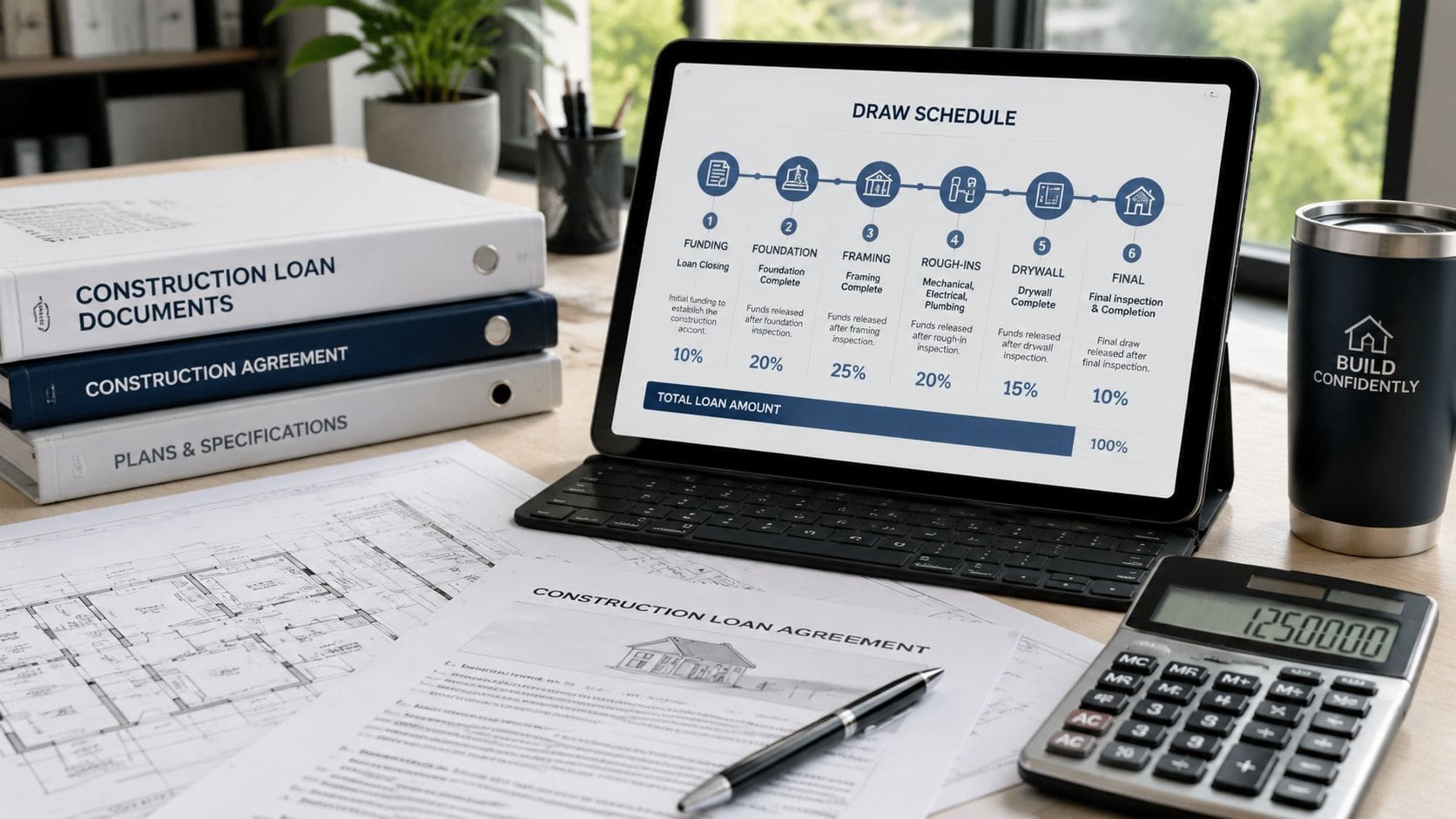
In practice, the sequence is simple:
- You submit a draw request tied to completed scope.
- A third-party inspector confirms the work on site.
- The lender releases funds based on verified progress.
That inspection step matters. It keeps the lender from funding ahead of the job, and it keeps the borrower honest about what is done versus what is scheduled or ordered.
For investors using private capital in GA, NC, SC, and TX, this affects real decisions in the field. If your framer, roofer, and supplier all want deposits before the next draw clears, you either have enough liquidity to bridge that gap or you lose time. Financing and construction are tied together from day one.
The two terms every investor should understand
Loan-to-Cost (LTC) measures the loan amount against the project cost the lender is willing to recognize and fund.
Loan-to-Value (LTV) measures the loan amount against the property value, either as-is or as completed, depending on the loan structure.
On ground-up deals, LTC usually drives the conversation first. It tells you how much cash you must bring in and how much room you have if costs move. LTV still matters, especially on the exit, but it does not solve a weak cost basis during construction.
The practical point is straightforward. Lenders fund against a disciplined budget, verified work, and a reasonable contingency. They do not fund wishful math.
Where bank-style lending often creates pressure
Conventional construction lending works for some borrowers, especially those with strong tax returns, time to wait, and a project that fits a standard box. A lot of investors do not fit that profile.
The pressure points are usually predictable:
- More emphasis on personal income documentation: That can be a poor fit for self-employed builders and investors who write off aggressively.
- Longer approval and closing timelines: That can cost you the lot or push the start date into a worse season.
- Less flexibility after closing: Budget reallocations and scope changes can turn into a credit event instead of a normal project adjustment.
- Tighter administrative process: The deal may be sound, but the file still gets slowed down if it does not match the lender's preferred borrower profile.
I tell borrowers to look past rate alone. Cheap money that arrives late or moves slowly can cost more than a higher rate loan with a clean draw process and faster decisions.
What private capital tends to reward
Private construction lenders usually underwrite the project more directly. The questions are less about formatting and more about execution.
- Is the lot buildable
- Does the budget match the plans
- Has the builder handled similar product
- Is the timeline credible
- Does the exit support the loan
- Is the borrower contributing enough equity
That approach fits many investor builds because the asset, the plan, and the operator matter more than perfect W-2 style income presentation. If you are comparing structures, review this guide on how to secure project financing for real estate before you lock in your capital stack.
The best financing for a new build is the structure that keeps the job funded, inspected, and moving on time.
What lenders want in the file
A lender can only move as fast as the package allows. Clean files close faster and create fewer problems once the project starts.
A solid construction loan package usually includes:
- Builder resume or experience summary: If you are new, pair with a licensed contractor who has delivered similar homes.
- Plans and scope of work: Enough detail to confirm product type, finish level, and build feasibility.
- Line-item budget: Real numbers by trade, not a rough total.
- Permit status or permit-readiness: Full approval is strongest, but clear permit path is still useful.
- Entity documents: Current organizational docs, ownership clarity, and clean borrowing structure.
- Exit strategy: Sale, refinance, or rental hold should be defined before closing, not after drywall.
Missing details usually show up later as funding friction. That is when draws get delayed, change requests get harder, and contingency starts carrying problems it was never meant to cover.
The smart exit for rental investors
If the plan is to hold the property, the construction loan is only phase one. The build loan gets you to completion. The permanent debt should match the income profile of the finished asset.
A common path is a Bridge-to-DSCR structure. You build with short-term project financing, lease or stabilize the property, then refinance into a DSCR loan based on rental income. That can be a cleaner fit for self-employed investors because the completed property does more of the underwriting work.
This only works well if you planned for it early. Rent assumptions, finish level, unit mix, and total basis all need to support the refinance. If the takeout loan was an afterthought, the project may still finish, but your exit can get tight very quickly.
Mitigating Risk in GA NC SC and TX
Regional execution matters in ground up construction. A builder can run the same plan set through four different states and get four different approval experiences.
In the Southeast, regulatory mismatch is a real loan issue, not just an administrative annoyance. A Federal Housing Finance Agency study found that 28% of ground-up loan denials in the Southeast were due to state regulatory mismatches, and noted that state-specific rules can delay permit approvals by 30 to 60 days.
Where investors usually get exposed
In practical terms, the biggest risk points are usually these:
- Contractor risk: A good renovation GC isn't automatically a good new-build GC. Ground-up sequencing is less forgiving.
- Regulatory risk: Texas, Georgia, North Carolina, and South Carolina don't behave like one permitting market.
- Cash flow risk: Even a profitable deal can stall if draw timing and subcontractor expectations aren't aligned.
Texas may raise site and exemption questions that don't apply the same way in Georgia. Coastal and storm-related requirements can shape design and approval flow in the Carolinas. Local interpretation matters almost as much as state rule.
A better operating posture
Treat every project as a four-part checklist before you close:
- Confirm the jurisdiction path: Don't rely on general assumptions about state rules.
- Vet the builder on similar product: Similar lot type, similar municipality, similar scope.
- Match draw structure to field reality: If the site needs more front-loaded cash, solve that before closing.
- Keep lender communication active: Silence creates surprises. Surprises create delays.
For investors building in the region, it helps to understand local capital expectations and market conditions through resources such as South Carolina hard money lending guidance, especially if you're working across multiple Southeastern states.
Ground up construction rewards discipline. The investors who do it well don't just build houses. They build a repeatable process for site selection, budgeting, draw management, and exits.
If you're planning a new build in Georgia, North Carolina, South Carolina, or Texas, Sims Ventures can help you evaluate the deal, structure the right financing path, and line up a construction loan strategy that fits how the project will run in the field.
