
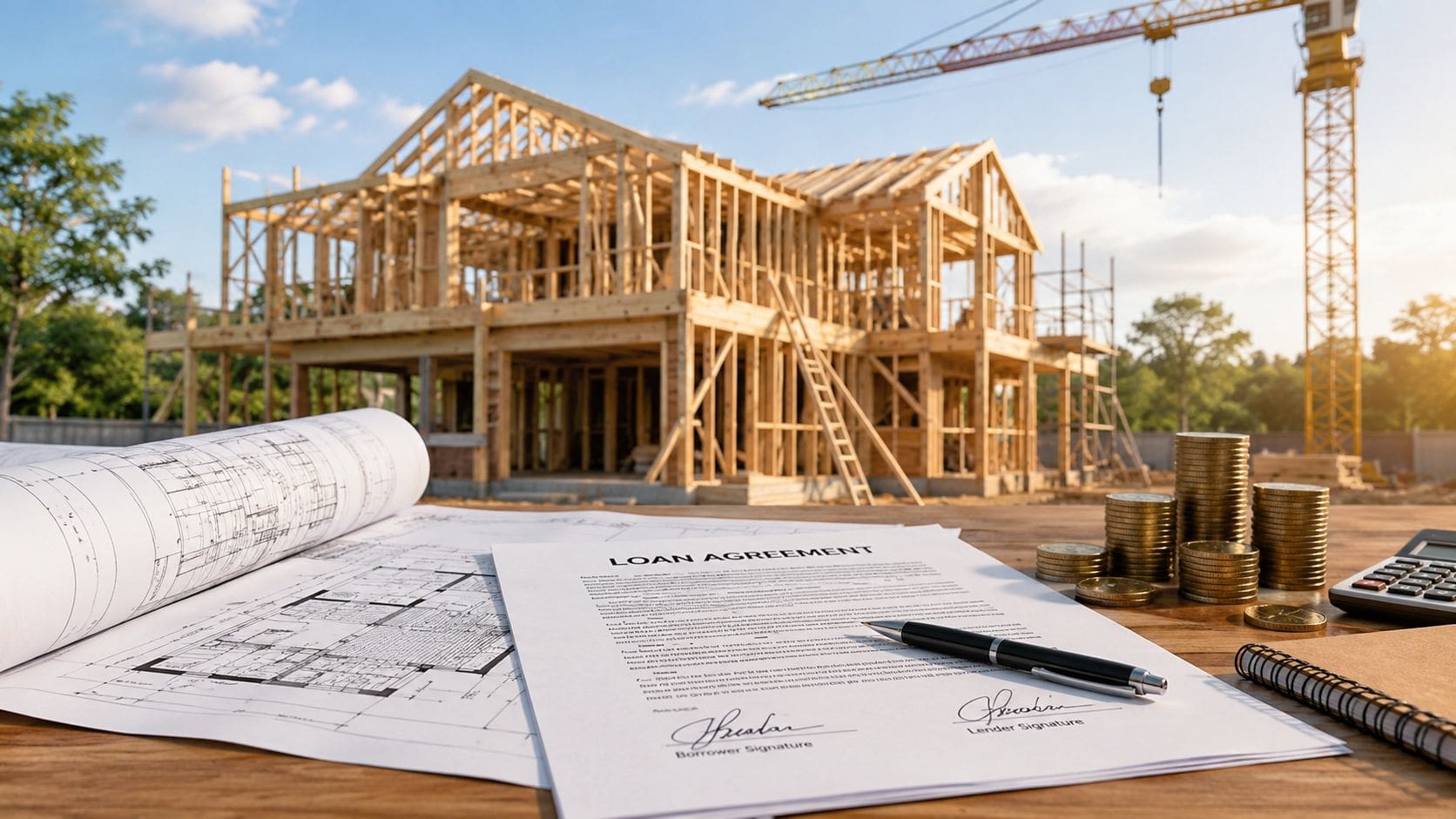
Self Build Construction Loan: A Complete Guide
You've got the lot under contract, the plans are moving, and now a significant problem shows up. The bank doesn't care that the foundation is “next week.” It cares that there's no finished house to appraise, no permanent collateral to lean on, and no W-2 story that fits a ground-up project run by a builder, investor, or owner-builder. That's why a self build construction loan exists, and why the borrower who treats it like a simple mortgage usually loses time and money.
The right mindset is blunt. This is project finance first and real estate financing second. If you manage the monthly decisions badly, the loan becomes expensive fast. If you use it the right way, it becomes the control point that keeps land, hard costs, reserves, and draw timing aligned with the actual build.
Why Self Build Construction Loans Exist in the First Place
A builder closes on a half-acre lot in metro Atlanta on Friday and starts chasing subs on Monday. There's no vertical construction yet, just dirt, permits, and a spreadsheet that looks cleaner than the site will ever feel. A conventional mortgage has no real answer for that situation, because the lender can't underwrite a finished house that doesn't exist and can't rely on completed collateral to protect itself if the build stalls.
That's the gap a self build construction loan fills. It finances a structure that only becomes real in stages, which is why lenders care so much about milestones, scope, and cash reserves. They're not funding a static asset, they're funding a sequence of decisions, and every decision affects whether the project finishes on budget. For a borrower who is self-employed, investor-focused, or acting as the general contractor, the file looks nothing like a standard owner-occupied mortgage file.
The market has treated this niche as meaningful for a long time. In Canada, a national CMHC review found self-builder projects accounted for 9.5% of residential home-construction loan portfolios on average, while self-contractor projects accounted for 14.6%. The same review found refusal rates of 30.9% for self-builders and 22.3% for self-contractors, which tells you these loans have always been important, and always been harder to place. CMHC review
The lender is not buying your vision, it's buying the sequence of work that turns dirt into collateral.
That's the mental model to carry into the rest of the deal. The loan exists because the borrower needs capital before the asset is complete, and because the lender needs controls while the asset is incomplete. If you want a deeper take on why bank timing can wreck a build schedule, see this builder's dilemma breakdown.
What a Self Build Construction Loan Is
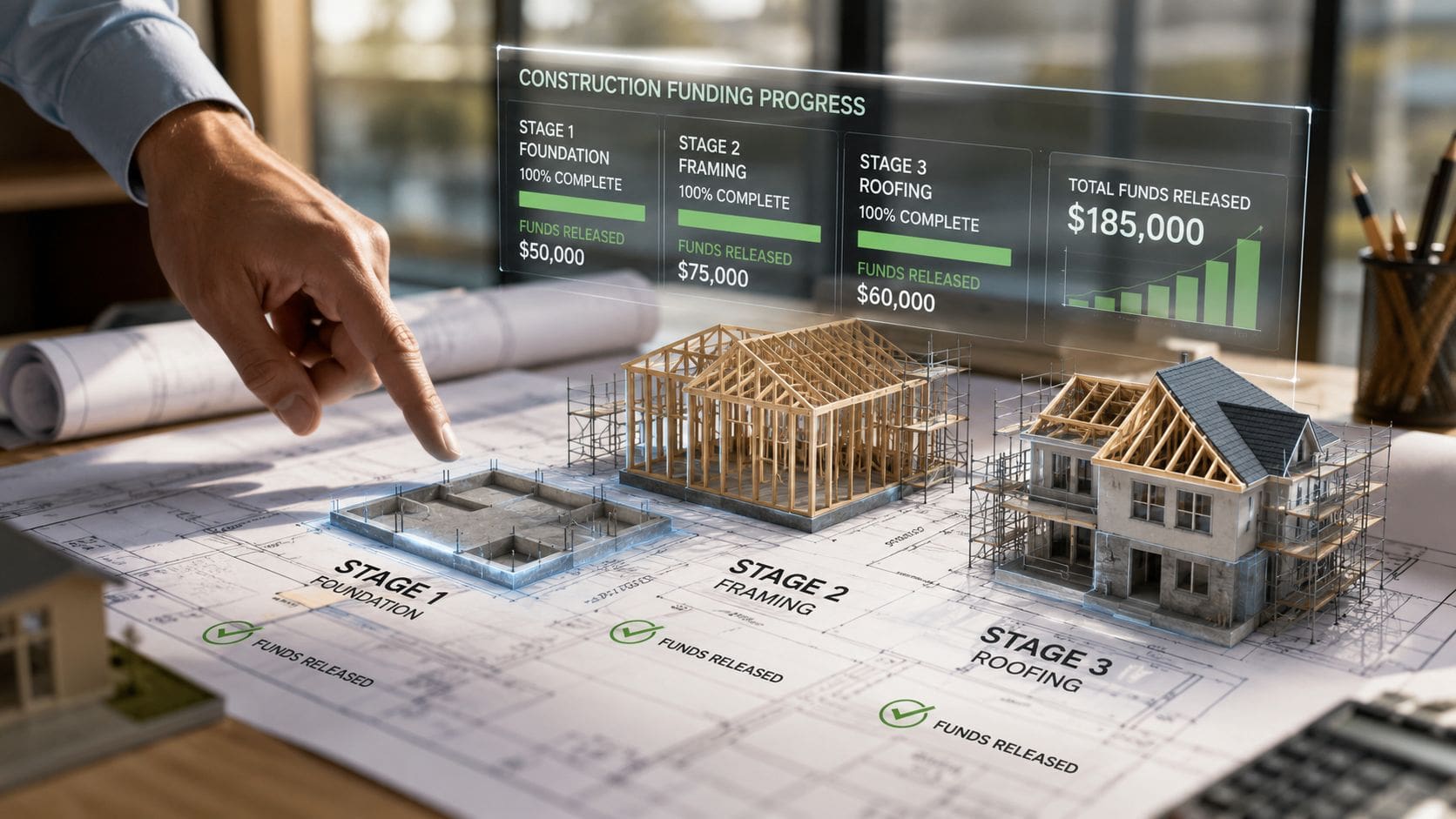
A self build construction loan is a short-term, staged-draw facility. That structure matters more than the label. The lender does not hand over the full approved amount on day one. It releases funds only after verified milestones are complete, such as foundation, framing, roofing, and final inspection, so each draw is tied to visible progress and code-compliant work. The setup reduces lender risk, and it also forces the borrower to run the project with discipline, because money follows execution instead of hope.
Why the payment structure matters
During construction, interest is usually charged only on the amount advanced, not the full approved balance. That keeps early carrying costs lower while you are still paying for land, permits, utility work, and site prep, which is exactly when cash is tightest. As draws increase, carrying costs rise with the project, so the loan tracks the build instead of forcing a full mortgage payment before the house has value.
That draw-based structure is the point. It gives the borrower breathing room in the messy front end of the project, and it gives the lender a built-in control point before the next tranche of capital goes out. In practice, the loan behaves more like a controlled capital stack than a traditional purchase mortgage. Owner-builder construction loan overview
How it differs from other loan types
It does not function like a permanent mortgage, because it does not start as long-term amortizing debt. It does not function like a construction-to-permanent loan, because that structure is built to convert into permanent financing at completion. It is also different from a fix-and-flip facility, because the exit logic is often sale or refinance after a ground-up delivery, not a rehab on an existing structure.
The lender also underwrites the person running the project, not just the parcel. That means the borrower's role as general contractor matters as much as the property itself. If you are managing subs, budgets, inspections, and sequencing, the lender is evaluating whether you can finish the job, not just whether the lot looks good on paper.
How Self Build Loans Compare to Other Financing Structures
A lot of borrowers waste weeks shopping the wrong product. They need one structure for acquisition plus build control, but they're comparing it to a rental refi, a quick bridge loan, or a multi-project credit line. That's why the cleanest way to think about this loan is by borrower type, interest accrual, and exit.
| Structure | Best For | Interest Accrues On | Typical Exit |
|---|---|---|---|
| Self Build Loan | A borrower managing a ground-up residential build | Amount actually advanced during draws | Sale, refinance, or conversion depending on terms |
| Hard Money | Speed-sensitive acquisitions or distressed assets | Funded balance, usually short-term and expensive | Sale or refinance |
| Construction-to-Permanent | Owner-occupants or borrowers wanting one closing | Construction balance, then permanent mortgage after completion | Automatic conversion to long-term debt |
| DSCR Rental Loan | Stabilized rental properties, not active builds | Existing loan balance on income-producing property | Long-term hold |
| Builder Line of Credit | Builders running multiple projects at once | Revolving facility balance used across deals | Ongoing reuse across projects |
The self-build loan sits in the middle of that map. It's the right answer when the project is a single build, the borrower wants tight control, and the capital has to follow milestones instead of being released all at once. It's also the better answer when the borrower doesn't want to tie up capital in a permanent loan before the house is done.
A builder line of credit serves a different purpose. That facility is for cadence, not one-off control. If you have multiple lots or multiple vertical starts in motion, a line of credit can keep capital rotating while a self-build facility handles the specific project that needs staged construction funding. Sims Ventures offers a builder line of credit for exactly that kind of sequencing, especially when the goal is to keep multiple deals moving instead of starving one project to feed another.
Use the self-build loan for the build you need to finish cleanly. Use revolving capital for the pipeline you need to keep alive.
That distinction saves money. Borrowers who force every project into one structure end up overpaying for flexibility they don't need or understating the controls they do need.
Eligibility, Underwriting, and the Documentation Checklist
Underwriting on a self build construction loan starts with three questions. Can the borrower finish the project, can the budget absorb overruns, and does the equity position leave the lender protected if the market softens? That is why lenders lean hard on loan-to-value (LTV) or loan-to-cost (LTC) caps, contingency liquidity, and the borrower's demonstrated ability to manage the build. In published market examples, many self-build products sit around 75% to 80% LTV, while some specialist programs go up to 90% LTV when the file includes detailed phase-by-phase bids and proof of liquid assets to complete the project. Homebuilding guidance on self-build mortgage structure
What underwriters actually look for
They want a file that proves the build has a budget, a sequence, and a backstop. Experience matters, but experience alone doesn't save a bad budget. If the numbers are tight, the lender will worry that a change order, weather delay, or scope change will force the project to stall before the next draw. The equity you bring to the table has to absorb those bumps, because self-build lending assumes the borrower is also acting as project manager.
That's why contingency liquidity is not optional. It is the difference between a project that survives a surprise and a project that stops at framing. If you are light on reserves, the lender will see it immediately.
What to gather before you apply
Bring the file organized or don't bring it yet. A borrower who assembles the following list upfront usually saves weeks:
- Purchase contract for the land, because the lender needs to see where the lot stands in the capital stack.
- Signed contractor or owner-builder agreement, so the build responsibility is clear.
- Hard-cost budget with line items, not a rough lump sum.
- Soft-cost budget, including permits, impact fees, and utility taps.
- Construction schedule, with realistic sequencing.
- Insurance binder, especially builder's risk coverage.
- Personal financial statements, because the lender still wants to see liquidity and obligations.
Before you submit, read the local financing requirements carefully and clean up the file against this construction loan requirements guide. The people who self-qualify waste less time than the people who apply with a half-finished package and hope the lender will sort it out.
From Application to Draw Release on a Self Build Loan
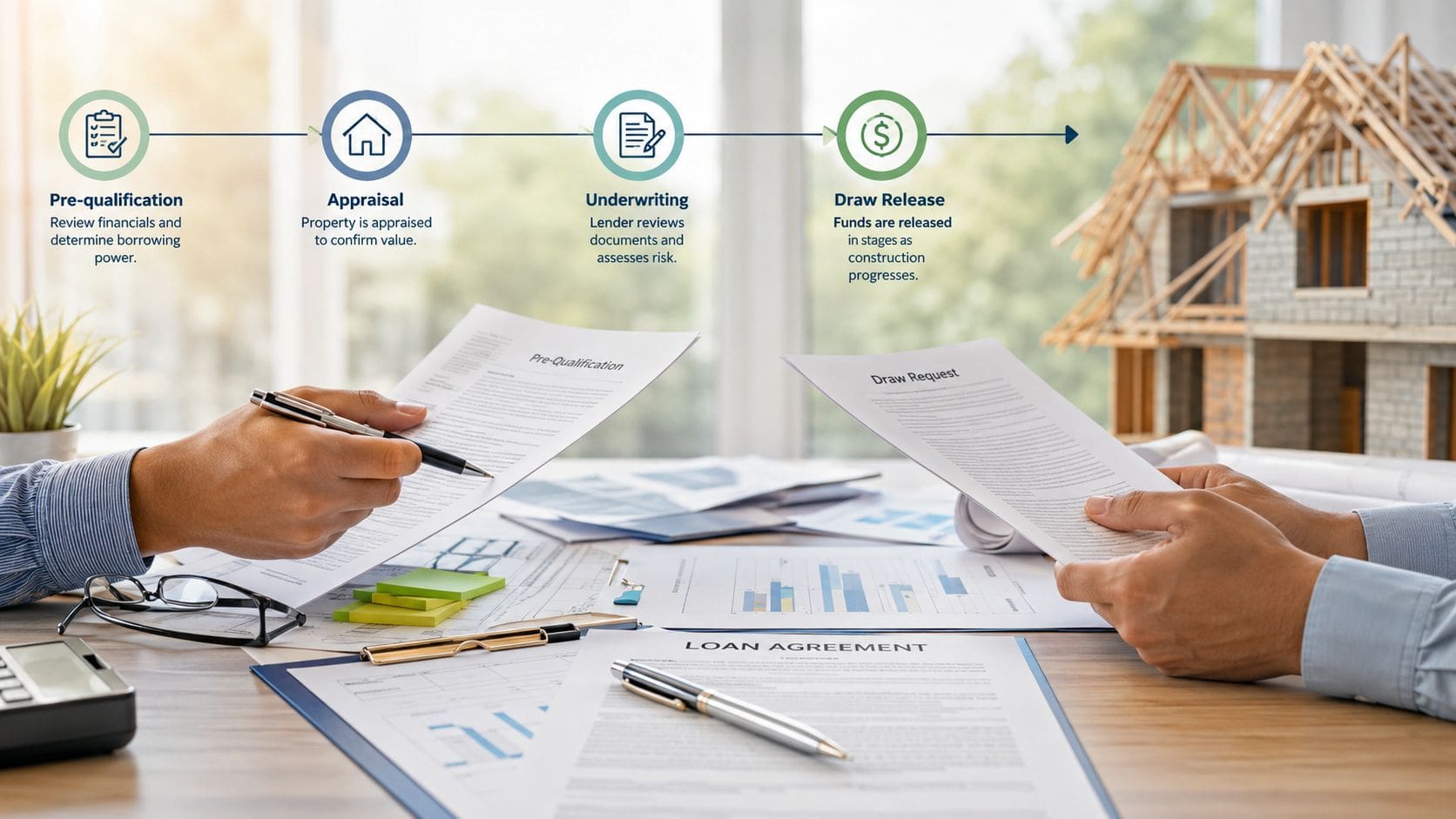
A clean approval usually moves through four practical phases. First comes pre-qualification and the term discussion, where the lender tests whether the deal can fit within its lending and reserve parameters. Then come third-party items, usually the appraisal, title work, and insurance review. After that, formal underwriting closes the loop, and the land or project financing gets locked. Once the build starts, significant effort begins, because every draw becomes an administrative event.
What happens before the first draw
The borrower shouldn't think of closing as the finish line. It's the start of a recurring process. Every draw request needs clean support, because the lender is looking for proof that the work is complete enough to justify more capital. If the file is messy, the inspection and funding cycle slows down, and that delay becomes a carry-cost problem fast.
The cleanest packages usually include invoices, progress photos, updated schedules, and change orders when something shifts. If the draw request doesn't match the actual site conditions, the lender will push back. That's not bureaucracy for its own sake, it's how staged construction capital protects itself.
Schedule the paperwork before you need the cash. Builders who wait until they're desperate always feel the delay twice.
What draw inspections verify
A draw inspection typically checks three things. The inspector wants to see the percent of work complete, the materials on site, and whether the work matches code and approved plans. If the phase doesn't line up with the requested amount, the draw gets held until the file is corrected.
That means the borrower has to stay ahead of the process. Don't order materials late, don't ignore change orders, and don't assume the next inspection will be forgiving. The borrowers who submit clean draw packages stay on schedule more often than the ones who treat the draw desk like an afterthought.
For investors in Sims Ventures' coverage area, a private lender can often target a closing window around 15 days when appraisal, title, and underwriting are in place. Construction draw schedule guide That speed is useful, but only if the borrower brings an organized file and understands that each draw still requires real documentation.
Three Real Self Build Deals Across the Southeast and Texas
An investor-builder in the Atlanta suburbs buys a lot, puts a spec home on it, and keeps the hard-cost budget tight enough to survive two small changes without breaking the file. The loan funds the build in phases, the borrower keeps the draw requests clean, and the house exits at completion through a sale. That deal works because the borrower never confused construction funding with permanent financing. The money was there to finish the project, not to carry the property indefinitely.
In Charlotte, a builder runs two ground-up projects at once. One closes with a self-build facility because that lot needs tighter milestone control, while the second gets funded through a builder line of credit so capital can rotate between the two jobs. That combination keeps one deal from starving the other. The lesson is simple, if you're building a pipeline, don't force every project into a single lane.
A South Carolina owner-builder gets hit with a lumber spike and the budget gets squeezed. The project doesn't die, but the contingency reserve gets used and the appraisal has to be revised to reflect the changed economics. The borrower survives because the file had reserve support and enough equity to absorb the shock. Without that cushion, the draw schedule would have stalled right when the project needed momentum most.
The regional lesson is the same in GA, NC, SC, and TX. Ground-up lending rewards the borrower who plans for boring problems, not the borrower who assumes every trade shows up on time and every bid stays fixed. If you underestimate hard costs, the lender won't rescue the budget just because the walls are already up.
Where Self Build Loans Stall and How Borrowers Recover
The first failure pattern is scope creep. A borrower starts with a clean plan, then upgrades finishes, expands square footage, or changes the layout midstream. Hard costs jump above the approved budget, and the draw schedule can't keep up. The fix is not optimism, it's a fixed-price contractor agreement or a written cap on scope before the first draw.
The second problem is delay. Weather, supply issues, and subcontractor gaps push the project past the expected loan term, and carrying costs keep rising while the house sits unfinished. Build a real reserve into the file and don't treat the timeline as a guess. If the lender can see a 10% contingency in the budget, the file is much easier to defend when the market gets sloppy.
Five ways self-build files go sideways
- Missing inspections: Schedule the inspection before the materials arrive, not after the crew is standing around.
- Land overreach: Don't over-commit funds to the lot purchase and starve the vertical build of working capital.
- Exit risk: Line up the take-out financing early, whether that's a DSCR refi or a portfolio solution.
- Weak paperwork: Submit draw packages with invoices and schedules that match what's on site.
- Bad sequencing: Separate land equity from build capital so one mistake doesn't drain the whole project.
The third failure pattern is documentation drift. A draw gets rejected because the invoices don't line up, the photos are thin, or the inspection request was filed too late. That's avoidable. The borrower needs a routine, not a reaction. The fourth problem is using too much cash to win the land, then discovering the build has no oxygen. The lot is important, but it can't eat the whole equity stack.
The fifth problem is exit risk. Too many borrowers wait until the house is done to think about permanent take-out financing. That's backward. If you want the project to convert cleanly, pre-qualify the exit before the first shovel hits dirt. That keeps the endgame from becoming a scramble.
A self-build file fails at the edges, not the center. Most problems start as small budget or paperwork misses and end as capital problems.
Next Steps for Builders and Investors Considering a Self Build Loan
If you're a builder, a fix-and-flip investor moving into ground-up, or a portfolio owner in GA, NC, SC, or TX, get the deal parameters on paper now. Define land basis, hard costs, soft costs, and contingency before you ask anyone for money. Then assemble the documents, sanity-check the financing structure, and ask for a term sheet before you make offers on the lot.
Asset-based lenders underwrite the deal, not the W-2, which is why this structure works for self-employed borrowers and newer builders who have a real project but a messy tax story. If your goal is higher deal cadence, pair a self-build facility with a builder line of credit instead of forcing every job through one capital source. The smart move in 2026 is to treat ground-up construction as a repeatable strategy, not a one-off bet.
Sims Ventures funds ground-up construction, builder lines of credit, and other asset-based strategies for borrowers who want speed and deal-focused underwriting. If you're planning a self build construction loan in Georgia, North Carolina, South Carolina, or Texas, visit Sims Ventures to talk through structure, draw timing, and the right capital stack for your next project.
