
How Hard Money Loans Work for Real Estate Investors
You're under contract on a distressed property, the seller wants certainty, and your conventional lender has pushed closing beyond the deadline. The deal looks profitable on paper, but the financing timeline is about to kill it. That's the situation where investors start asking how hard money loans work, and whether the higher cost is justified by the ability to close.
Hard money is not “easy money.” It's short-term, asset-based financing built around collateral, project feasibility, and a credible repayment plan. The lender may care less about your W-2 income than a bank does, but that doesn't mean underwriting is relaxed. It means the lender is examining different risks, including the property's value, the renovation budget, the draw process, and the exit.
Why Investors Turn to Hard Money Lending
An Atlanta investor can secure a distressed property and negotiate a workable contract, yet lose the deal when a bank cannot complete underwriting by the seller's deadline. Across the Southeast, execution often matters more than a lower theoretical financing rate. The question is whether the loan closes the opportunity without creating a larger repayment problem.
Hard money provides speed and certainty of execution when a seller wants a quick closing or the property cannot qualify for conventional financing in its current condition. A private lender evaluates the asset, renovation plan, and exit directly, rather than relying on the full income documentation required by an income-based mortgage. That flexibility can help self-employed investors, new LLCs, and borrowers with complicated tax returns.
The borrower still needs financial capacity, liquidity, relevant experience, and a credible repayment plan. A lender may give the property greater weight, but weak project economics remain a problem. These asset-based lending insights from Homebase offer useful context on how collateral-focused lending differs from conventional underwriting.
The trade is deliberate
Hard money costs more because the lender is accepting execution, collateral, and project risks that traditional lenders may avoid. Industry summaries describe terms commonly lasting 6 to 24 months, loan-to-value limits around 60% to 75% of after-repair value, and origination points often between 1.5% and 3% of the loan amount, as documented in this 2026 hard money loan market summary.
The quoted rate is only one part of the decision. An investor must test the after-repair value, or ARV, against realistic comparable sales because an inflated ARV can cap proceeds and leave a funding gap. The draw schedule creates a second trap. Contractors need to be paid before reimbursement, so insufficient liquidity can stall work even when the approved budget is adequate.
A third issue appears at the exit. If a borrower plans to refinance into a DSCR loan, construction delays, seasoning requirements, valuation changes, or weaker rents can extend the bridge period. Each extra month adds interest, insurance, taxes, and possibly extension fees.
Practical rule: Use hard money when it solves a timing or eligibility problem that protects the deal. Do not use it to rescue a project without a reliable exit.
The right question is whether the property can produce enough value, cash flow, or sale proceeds to repay the short-term loan before carrying costs and maturity pressure control the outcome.
How Asset-Based Underwriting Works
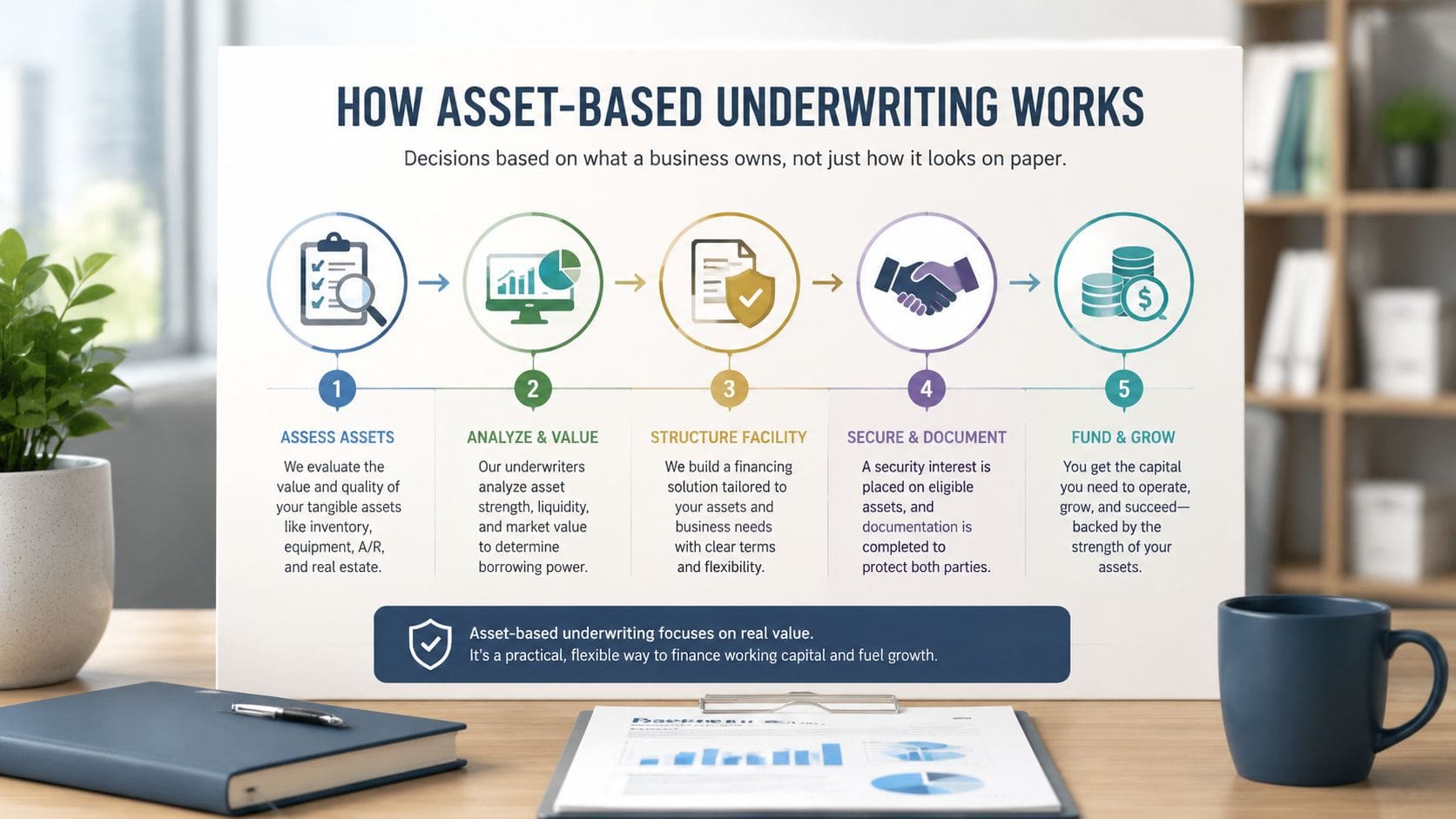
A borrower can have strong income and still lose a hard money approval if the property cannot support the debt. Asset-based underwriting starts with the collateral, the project plan, and the repayment path. Personal income and credit still matter, but they usually support the decision rather than drive it.
Start with the property and its value
For a fix-and-flip, the lender begins with after-repair value, or ARV. Reviewers analyze comparable renovated properties, location, current condition, the proposed scope, and the borrower's resale assumptions. The lender is not underwriting the investor's hoped-for sale price. The approved loan depends on a value supported by realistic comparables.
For a rental or DSCR loan, the focus shifts toward the property's as-is or stabilized value and its ability to produce rent. This distinction matters when a borrower plans to move from a short-term bridge loan into permanent financing. A lower valuation or weaker rent projection can delay that exit and leave the bridge outstanding longer than planned.
The lender then tests two separate limits. Loan-to-value, or LTV, compares the loan amount with the property value. Loan-to-cost, or LTC, compares the loan with acquisition and project costs. LTV limits exposure to value loss, while LTC shows how much of the total budget the lender is willing to fund.
For fix-and-flip deals, total exposure commonly falls near 70% to 75% of ARV, according to guidance on 100% financing and ARV limits. A structure may cover the full acquisition and rehabilitation budget only when that combined amount stays below the lender's ARV ceiling.
That ceiling creates a frequent funding gap. If acquisition and renovation already reach the maximum approved percentage of ARV, a cost overrun cannot be added to the loan. The borrower must bring more cash, reduce the scope, or risk a stalled project. An approved construction budget does not guarantee that every dollar will be advanced.
Underwrite the repayment source
For a rental, the lender examines debt service coverage ratio, or DSCR. The calculation compares qualifying rental income with the property's full principal, interest, taxes, and insurance payment. Market rent from an appraisal may replace the borrower's personal income in that analysis. A ratio of 1.0 or higher is commonly treated as a minimum floor, although requirements vary by program.
The review also covers credit, liquidity, reserves, and experience. These factors may carry less weight than in conventional lending, yet they affect pricing, conditions, and confidence in the execution plan. A first-time investor with a sound property can qualify, but may receive more conservative terms than an experienced operator with a documented record.
This asset-based mortgage loan overview explains how collateral and property performance fit into this type of financing.
The final test is the exit. Repayment may come from a sale, refinance, rental stabilization, or another defined source. Minimal income documentation doesn't mean minimal scrutiny. The asset must carry the debt, and the exit must remain credible if construction takes longer, costs rise, or bridge financing must cover the gap before DSCR eligibility is established.
Understanding Rates Fees and Closing Timelines
A project can look profitable at acquisition and still lose its margin before completion. The financing cost depends on the lender's risk, property type, borrower experience, loan purpose, and how long the bridge remains outstanding. Current market pricing commonly places first-position hard money rates around 9.5% to 13%, with origination points often between 1.5% and 3%, according to this current hard money loan cost summary.
Points are charged at origination and calculated from the loan amount, not the purchase price. Interest is usually charged monthly on the outstanding balance. Renovation funds held for future draws may not accrue interest until advanced, depending on the note. Underwriting, appraisal, title, insurance, legal, and inspection charges can all sit outside the quoted rate.
A practical cost view
Suppose a borrower uses a $200,000 bridge loan for six months at 12% interest and pays 2 points. Interest totals $12,000, while the origination charge adds $4,000. The financing cost reaches $16,000 before appraisal, title, insurance, legal, or inspection expenses.
The clock matters because delays can change the economics. A quick closing followed by an on-time sale may justify the premium. A delayed permit, missed draw, contractor dispute, or slow resale can keep the balance outstanding and consume the spread.
| Loan Type | Interest Rate Range | Origination Points | Typical Fees | Time to Close | Term Length |
|---|---|---|---|---|---|
| First-position hard money | 9.5% to 13% | 1.5% to 3% | Underwriting, appraisal, title, and project-related costs | Depends on documentation and third-party completion | 6 to 24 months |
| 30-year fixed mortgage benchmark | 6.49% benchmark | Not specified in the verified data | Varies by lender and transaction | Longer than private execution in many time-sensitive deals | 30 years |
The comparison helps show the premium, but rate alone gives an incomplete answer. A long-term mortgage and a short-term bridge loan serve different purposes, and the bridge may carry a higher rate because it funds a time-sensitive acquisition or a property outside conventional condition standards.
Liquidity between draws is another pressure point. If the lender reimburses approved work only after inspections, the borrower may need cash to pay labor and materials before the next advance. A loan can therefore be fully approved while the project still faces a working-capital gap.
Before signing, confirm the prepayment penalty, extension terms, default pricing, minimum interest, draw requirements, inspection charges, and whether points can be rolled into the loan. Review the maturity date against the realistic sale or refinance schedule. The cost of a bridge-to-DSCR transition includes the time required to finish repairs, stabilize the rental, document income, and qualify for permanent debt.
A broader explanation of private capital appears in this guide to private money lending. Evaluate the deal using net profit after financing, holding costs, draw-related liquidity, and exit timing, rather than comparing interest rates in isolation.
Comparing Fix-and-Flip DSCR and Construction Loans
A $180,000 acquisition and renovation budget can look fully funded until the projected ARV creates the constraint. If the lender's ARV ceiling is also $180,000, there is no room inside the loan for a change order, material increase, or contractor overrun. The investor must bring more cash or revise the project.
Hard money covers several products, but each one answers a different underwriting question. A flip depends on resale value and execution. A DSCR rental depends on stabilized cash flow and debt service. Ground-up construction depends on budget control, inspections, draw timing, and completion.
Fix-and-flip financing
A flip lender reviews the purchase price, scope of work, and projected ARV. The maximum loan is generally constrained by the lower of the LTC test and the loan-to-ARV test. The structure may fund acquisition and approved renovation costs, but the lender will not advance beyond the ARV ceiling because contractor invoices run higher.
That ceiling is often the hidden constraint. A project can have a sound scope and a willing borrower, yet still require additional liquidity when labor, materials, or permitting costs exceed the initial budget. Underwriting should include a realistic cash reserve, not only the amount needed to close.
DSCR rental financing
A DSCR loan evaluates the property as an income-producing asset. The lender compares qualifying rent with the full PITI obligation, and the commonly referenced minimum floor is 1.0 DSCR, as described in the earlier asset-based underwriting discussion. A borrower with irregular personal income may still qualify if the property's cash flow supports the debt.
The same property can therefore pass DSCR underwriting and fail a flip review. The rental case may work at a conservative value with sustainable rent, while the flip relies on aggressive resale comps, uncertain construction costs, and a short sale timeline. The asset is unchanged. The repayment source is not.
Construction financing
Ground-up construction adds draw timing to the credit decision. Lenders typically release funds through milestone-based draws, rather than providing the full commitment at closing. Common stages include foundation, framing, rough-in, drywall, and final completion. Each advance may require an inspection, updated documentation, and evidence that prior funds were used for approved work.
The borrower must finance the gap between paying the builder and receiving reimbursement. A project can have an adequate total commitment and still stall if the builder or investor lacks working capital. Review the draw process in the construction loan for investors guide before treating the approved amount as immediately available cash.
| Loan Type | Typical Term | Underwriting Focus | LTV/LTC Range | Exit Strategy |
|---|---|---|---|---|
| Fix-and-flip | 6 to 12 months | ARV, scope, budget, resale comps, borrower execution | Commonly capped around 70% to 75% of ARV | Sale after renovation |
| DSCR rental | Long-term rental structure | Property cash flow and debt service | Based on property value and borrowing structure | Hold, refinance, or sale |
| Ground-up construction | 12 to 24 months | Plans, budget, builder capacity, inspections, completion risk | Limited by project cost and completed value | Sale or permanent refinance |
The financing choice should follow the repayment plan. A flip needs enough room beneath the ARV ceiling. A rental needs supportable income after stabilization. A construction deal needs cash to cover draw timing, plus a bridge-to-DSCR schedule that allows repairs, occupancy, income documentation, and permanent-debt qualification to finish before maturity.
Hidden Costs That Catch Investors Off Guard
A project can look profitable at closing and lose its margin before completion. The hidden variable is time. Every month beyond the planned schedule adds interest, insurance, taxes, utilities, contractor exposure, and possibly extension charges. Model those costs before bidding, not after the loan is funded.
The bridge-to-DSCR transition creates a separate liquidity risk. An investor may finish the renovation yet miss the refinance window because the property is not ready for valuation, rent documentation, title clearance, insurance, or final lender approval. Recent private lending market transition data shows DSCR originations growing faster than bridge lending on one private-lending platform through November 2025, a sign that more borrowers are relying on this exit. That reliance does not make the timing gap less expensive.
Draws create a cash requirement
Renovation and construction lenders commonly reimburse completed work after inspection. The investor may need to pay the contractor, wait for the inspection, correct missing documentation, and then receive the draw.
Cash-flow warning: A loan can cover the total approved budget and still leave the borrower short of cash during the project.
The draw schedule also affects contractor relationships. If a builder expects payment on completion but reimbursement arrives later, the investor needs working capital or negotiated payment terms. A reserve sized only for overruns may not cover this reimbursement gap.
Detailed estimating protects the budget. Roofing, framing, mechanical work, and exterior repairs can exceed an allowance based on a quick visual inspection. A specialized workflow, such as Exayard AI roofing estimating, can help create a more defensible roofing cost before the lender reviews the project.
Refinancing is not an automatic exit
A DSCR refinance requires more than a completed renovation. The property must support the valuation, rent records, insurance, title condition, and lender approval. If stabilization slips, the bridge balance continues accruing interest. If the new loan produces less proceeds than projected, the borrower must bring cash to retire the old debt.
ARV creates another ceiling. A stronger renovation cannot always support a higher valuation if nearby comparable sales do not justify it. Paying for upgrades beyond the market-supported ARV converts borrowed funds into equity that may not be recoverable.
Sales carry the same pressure. Interest, points, holding costs, closing expenses, price reductions, and delay-related labor can turn a projected profit into a narrow margin. Build the model around a conservative exit and identify the month when the project stops making economic sense.
Discuss extension terms before closing. Confirm the conditions, fees, reporting requirements, and available time, then retain enough liquidity for both project costs and the repayment transition.
Market Growth and Default Risk Realities
Private real estate lending has moved from relationship-based transactions into a significant financing channel. Its original structure was direct, short-term lending priced around the property's value rather than the borrower's credit profile. The market now originates $75 billion to $100 billion annually across sectors, according to the research paper on private real estate lending's evolution.
Private lending also financed 18% of corporate SFR purchases in 2025, compared with 15% in 2024. Market estimates place private lending volume at $97.3 billion in 2024 and $121.2 billion in 2025, according to SFR private-lending market data. Growing access does not remove execution risk. It can make aggressive assumptions easier to fund.
More capital can magnify weak decisions
An investor who wins a competitive bid with an optimistic ARV may discover the ceiling only after renovations begin. Nearby comparable sales still control the lender's valuation, so upgrades beyond the market-supported ARV can convert borrowed money into unrecoverable equity. A contractor's early estimate may also miss concealed damage, while a draw schedule can leave the borrower paying labor and materials before the next advance arrives.
The bridge-to-DSCR transition creates another exposure. A completed renovation does not guarantee refinance proceeds. The property still needs an acceptable valuation, documented rents, insurance, clean title, and lender approval. If stabilization slips, interest continues accruing. If the permanent loan is smaller than expected, the borrower must supply the difference or extend the bridge.
Default risk remains material as private lending expands. A 2026 market guide places hard money default rates around 3.5% to 5.2%, varying by asset class and geography, as summarized in the 2026 hard money statistics summary.
| Market Measure | Verified Observation |
|---|---|
| U.S. private real estate lending | Estimated at $75 billion to $100 billion in annual originations across sectors |
| Private lending volume | Estimated growth from $97.3 billion in 2024 to $121.2 billion in 2025 |
| Corporate SFR purchases financed privately | 18% in 2025, compared with 15% in 2024 |
| Hard money default rates | Around 3.5% to 5.2%, varying by asset class and geography |
Losses lead lenders to tighten credit, increase scrutiny, or change pricing. Investors protect themselves by buying at a basis that leaves room for delayed draws, weaker resale evidence, and a slower refinance. The practical test is liquidity through the entire project, not approval at closing.
Deciding If Hard Money Fits Your Investment Strategy
A property can look profitable on paper and still become a cash-flow problem after closing. Hard money fits when timing, property condition, or income documentation makes conventional financing impractical and the project has a dependable repayment path. Approval speed matters only if the deal can survive the loan's full cost and repayment schedule.
Use three tests before applying:
- Deal velocity: Does the seller's deadline or bidding environment require a closing schedule traditional financing cannot reliably meet?
- Exit clarity: Will repayment come from a sale, a DSCR refinance, stabilized cash flow, or another documented source? Identify the conditions that must be satisfied before that exit works.
- Margin depth: Can the spread absorb a hard money rate in the verified 9.5% to 13% range, along with origination points and holding costs? Review the 2026 hard money rate data before treating the projected return as usable profit.
Underwrite the ARV ceiling, not just the contractor's resale estimate. If comparable sales do not support the projected value, the lender may cap proceeds even when the renovation budget is sound. That can leave you funding the gap with cash.
A draw schedule can create a second shortfall. Confirm how much liquidity is needed to pay labor and materials before each advance, and whether reserves cover inspections, delays, and interest. The bridge-to-DSCR handoff also needs a written plan. A completed renovation does not guarantee refinance proceeds if valuation, rents, insurance, title, or lender approval falls short.
Self-employment alone does not make conventional financing impossible, and hard money is not limited to distressed houses. The relevant question is whether the asset and business plan support the requested financing. A newer investor can strengthen an application with a precise scope, credible contractor, realistic comps, proof of liquidity, and a fallback exit.

Green flags and red flags
Green flags include a conservative ARV, defined sale or refinance plan, experienced contractor, liquidity for draw timing, and a budget separating hard costs from soft costs.
Red flags include thin margins, reliance on one optimistic comparable, no backup exit, a contractor without demonstrated capacity, or excessive short-term debt elsewhere. If one delay would force another loan just to make payments, the structure is too fragile.
Sims Ventures offers asset-based financing for fix-and-flip projects, DSCR rental properties, and ground-up residential construction across Georgia, North Carolina, South Carolina, and Texas. For deal evaluation and capital-structure questions, visit Sims Ventures before committing to the loan.
