
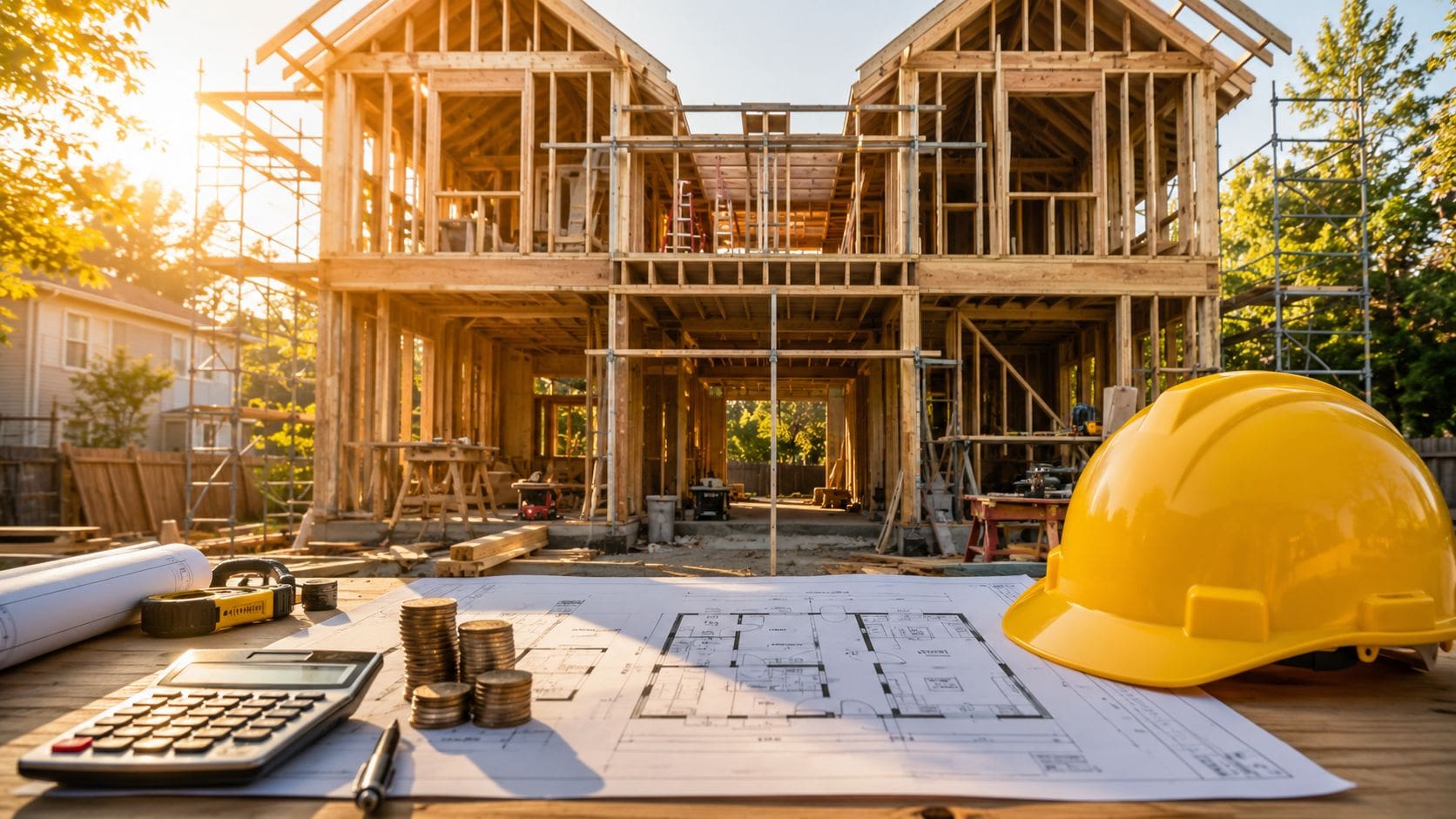
Construction Loan for Rental Property in 2026
A construction loan for rental property is short-term financing that covers the cost of building or substantially rehabbing a home you plan to rent out.
Think of it like a battery that powers the build until a longer-term rental mortgage takes over.
What A Construction Loan For Rental Property Actually Is
A construction loan for rental property finances ground-up builds or major renovations when the borrower intends to hold the asset as a rental rather than live in it.
Lenders treat these loans differently because they underwrite the property and projected cash flow more than the borrower's paycheck.
- Construction loans are typically short-term and interest-only during the build phase.
- The loan converts to permanent financing or gets paid off once the property stabilizes.
- Common structures include construction-to-permanent, short-term construction, and builder's line of credit.
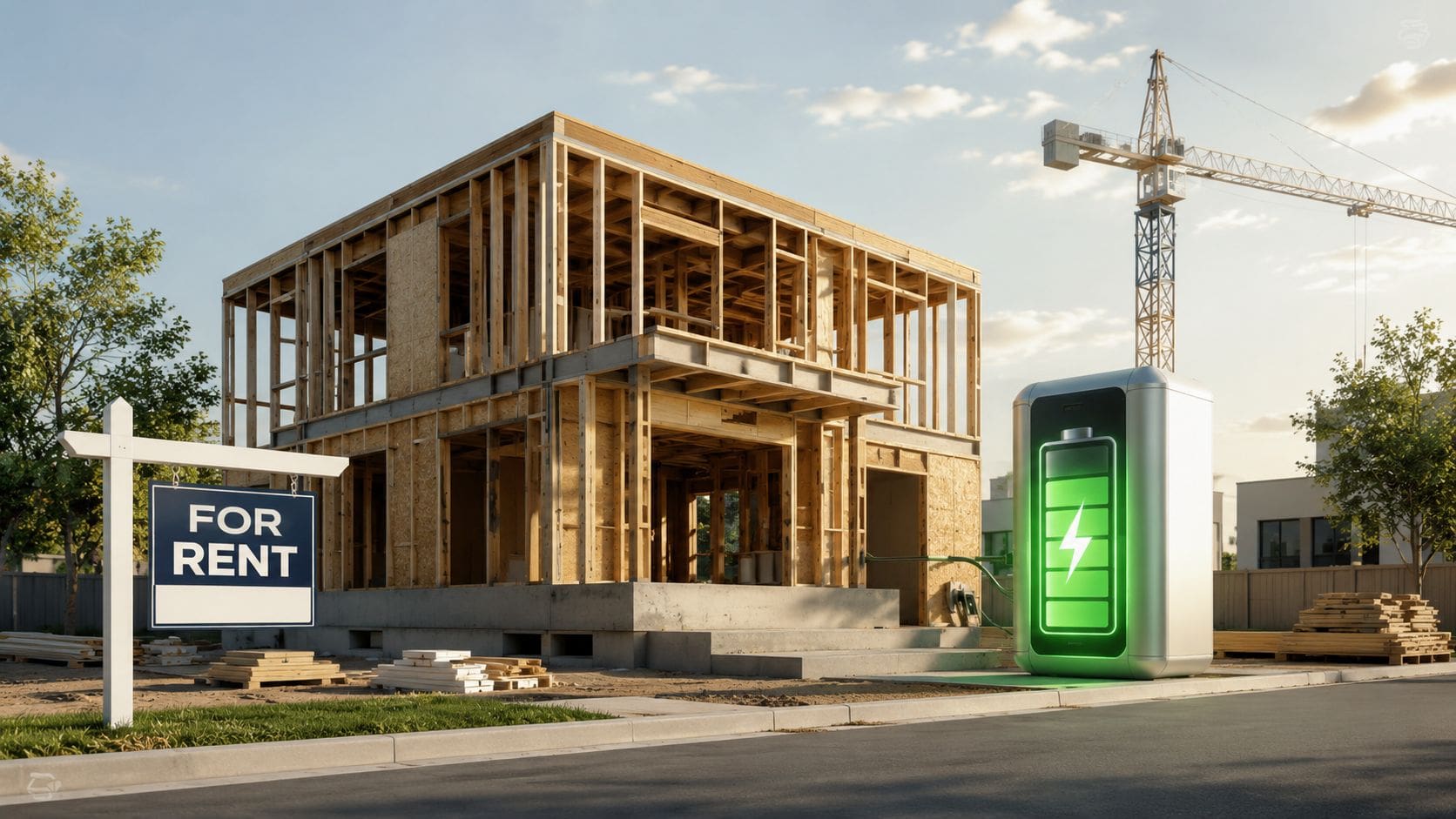
Three Construction Financing Structures Compared
Not every build calls for the same financing setup. The right structure depends on your timeline, your exit strategy, and how many projects you're running at once. Here's how the three main options stack up:
| Structure | Best For | How It Ends | Typical Use Case |
|---|---|---|---|
| Construction-to-Permanent | Owner-investors needing one close | Converts to a mortgage at completion | Single-family rental built then refinanced |
| Short-Term Construction | Fast flips or time-limited builds | Repaid or refinanced after lease-up | Rehab-to-rent projects under 12 months |
| Builder's Line of Credit | Repeat builders with a pipeline | Revolving facility with draws | Multiple specs or simultaneous projects |
Key takeaway: Lenders look at collateral and cash flow first when the property will be rented.
Why Underwriting Focuses On Cash Flow
Underwriters will often ask for projected rents, operating expenses, and a completion appraisal before they sign off.
This means DSCR (debt service coverage ratio) and loan-to-cost/value numbers drive approval more than salaried W-2 income in many cases.
- DSCR shows whether projected rent covers debt and expenses.
- Loan-to-cost limits how much of the build budget the lender will fund.
- After-repair or as-built appraisals set the maximum loan size.
Real-World Analogy And Investor Note
Imagine the loan as a contractor's staging generator: it delivers power in stages while the permanent grid gets connected.
For investors in GA, NC, SC, and TX, this structure lets you build in tight markets where inventory is scarce. Just keep in mind that state-specific permits and local comps will shape your rent projections — and your lender will want to see both.
Numbered Checklist Before You Apply
- Gather plans, budget, and builder agreement.
- Run a rent study and estimate DSCR.
- Prepare contingency reserves and permits.
Getting these pieces in order now makes everything that follows — draws, documentation, and lender selection — a lot smoother.
Underwriting Rental Projects Through Cash Flow And Collateral

When a lender underwrites a construction loan for a rental property, they're not really buying your story or your paycheck. They're buying the future income stream that property will generate. Think of it this way: the property is a restaurant, and the lender is the investor who pays for the kitchen because they expect steady dinner service night after night.
That's where the debt service coverage ratio — or DSCR — becomes the star of the show. It compares your net operating income against your annual debt, and it tells the lender one critical thing: will the projected rents actually cover the interest payments and reserves?
How Loan Size Is Set
Lenders don't just pull a number out of thin air. They layer three limits together to figure out how much they're willing to put on the table: loan-to-cost, loan-to-value at completion, and the after-repair or as-built appraisal.
Loan-to-cost protects the lender from budget overruns during construction. Loan-to-value anchors the loan to what the property is actually worth once it's stabilized and generating rent. And the appraisal? That's where your rent study gets converted into a market valuation that lenders actually trust.
- Loan-to-cost typically funds 60–80% of hard and soft costs, depending on your experience as a sponsor
- Loan-to-value after completion usually maxes out at 65–75% of the as-built appraisal
- The appraisal translates your rent projections into a number lenders can underwrite against
Lenders treat projected rent like menu prices — reasonable comps win approvals every time.
Why DSCR Helps Self-Employed Investors
If you're self-employed with variable income, traditional underwriting can feel like running through a maze blindfolded. That's exactly why many investors gravitate toward DSCR or asset-based underwriting. These programs judge your ability to repay based on the property's cash flow and the equity you're putting in — not a deep dive into your tax returns.
Here's a real example: say you're building a fourplex that projects $60,000 in net operating income with $48,000 in annual debt. You'd need a DSCR of 1.25 to clear typical underwriting. That's the math lenders want to see.
Documentation That Speeds Approval
The fastest way to kill momentum on a construction loan is a messy documentation package. Organize everything upfront and you'll avoid the back-and-forth delays that drive everyone crazy.
You'll want to have your plans, itemized budget, contractor agreement, rent study, builder resume, contingency schedule, and proof of reserves ready to go. A clear draw plan tied to specific milestones helps underwriters match funds to actual progress — and that speeds everything up.
Here's what a clean package looks like:
- Architectural plans and permits
- Detailed cost breakdown with contingency
- Rent comps and pro forma with DSCR math already worked out
Practical Timeline And Expectations
Underwriting moves fastest when two things line up: the appraisal supports your rent assumptions, and your builder has a verifiable track record. When those pieces are in place, the process tends to follow a predictable rhythm.
Expect appraisal and title work in week two. Underwriting review typically happens in week three. If all your third-party items are clean, you're looking at closing around day fifteen to twenty.
Want to see how this all comes together in practice? Check out our deeper underwriting walkthrough for additional templates and examples to build a loan package that clears on the first submission: Read also: Real Estate Underwriting Guide
How Draw Schedules and Documentation Actually Work
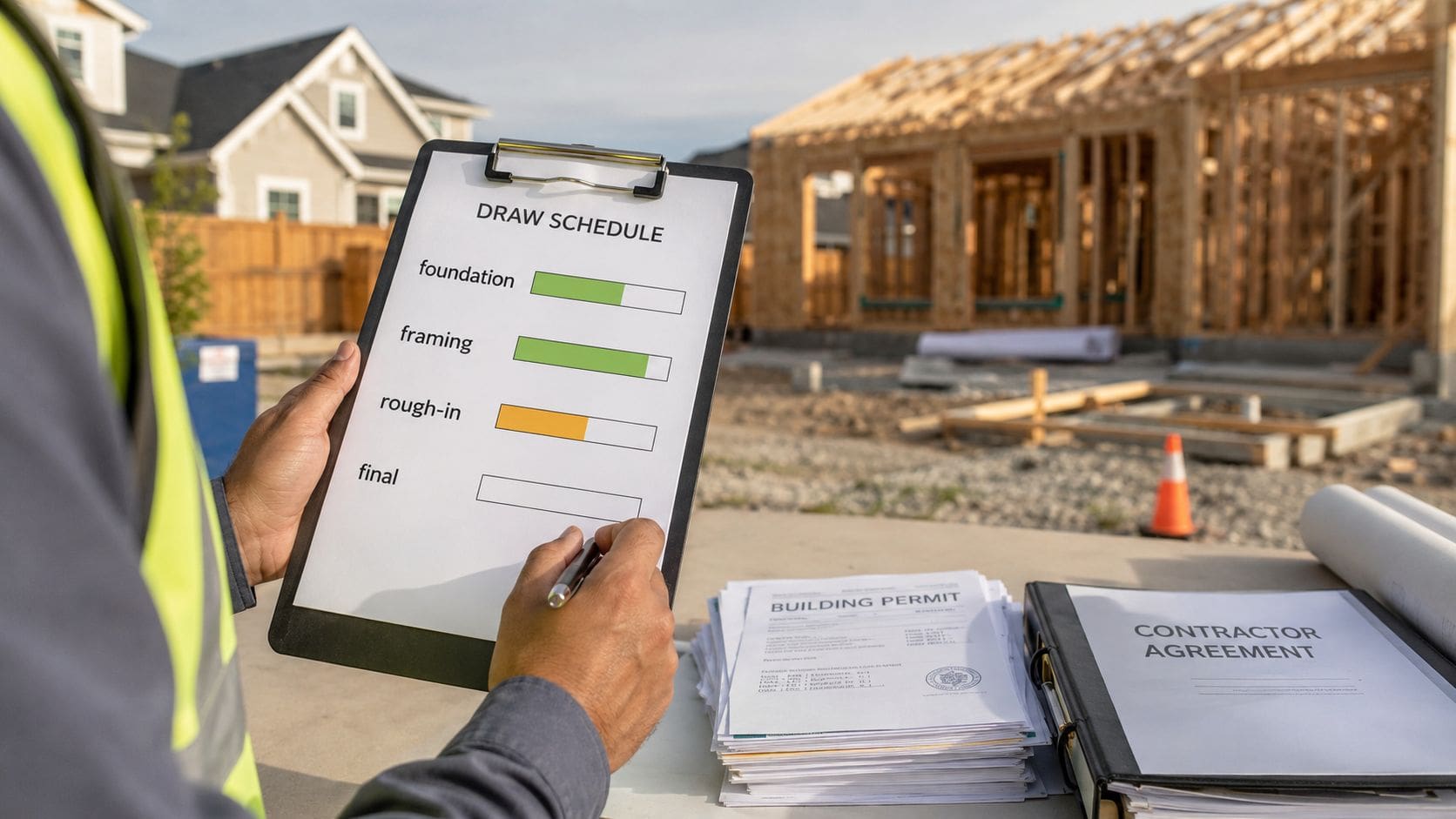
Draws are where a construction loan for rental property either flows smoothly or grinds to a halt. Think of a typical four-draw suburban Atlanta build: foundation, framing, rough-in, and final. Each draw ties a physical milestone to an inspection, a title update, and a fund release.
A missed inspection or an out-of-date title can freeze funding and stop the job site cold.
Start with a clear draw schedule that maps percentages of your budget to actual milestones. A common four-draw split runs something like 20% foundation, 30% framing, 30% rough-in, and 20% final. This keeps payments tied to measurable progress and limits the lender's risk — which is exactly why they require it in the first place.
Documentation Checklist
Get your package clean before you submit. A tidy file signals competence and speeds underwriting considerably. Here's what you'll need:
- Architectural plans and signed permits with approved dates
- Itemized budget with contingency and lender-approved line items
- Contractor agreement with payment terms, license, and insurance proof
- Rent study and pro forma showing projected rents, expenses, and DSCR
- Exit plan showing takeout financing or refinance pathway
- Builder resume and portfolio demonstrating past completions
Lenders verify each document at multiple stages, so accuracy matters more than you might think. One mismatched number can send your file back to the bottom of the stack.
Draw Mechanics and Title Work
Inspections confirm that completed work matches the requested draw percentage. After inspection, title updates clear mechanics liens before funds release.
- Inspectors confirm installed systems and billed materials
- Title company issues short-form updates or lien searches per draw
- Lender releases only verified amounts to the builder or borrower
This chain protects both the lender and your equity. Skipping any link creates risk nobody wants.
Practical Timeline and Cost Controls
Expect draw inspections and title updates to add days to each funding event. A realistic calendar for a small rental build spaces draws roughly 3–6 weeks apart. Interest accrues only on drawn funds, but inspection fees, title fees, and draw administration add up faster than most investors anticipate.
Numbered Steps to Keep Momentum
- Compile the checklist and pre-clear title before closing.
- Agree on draw percentages and milestones with your lender and builder upfront.
- Schedule inspections ahead of completion to avoid funding gaps.
Read also: Construction Draw Schedule Guide for a deeper look at timing and templates.
Tips for GA, NC, SC, and TX Investors
- Factor local permit timelines into your draw cadence — some counties move slower than others.
- Use conservative rent comps for DSCR to avoid rework during underwriting.
- Keep contingency accessible and document any change orders promptly.
Timeline, Costs, and What the Lender Actually Charges

A tight, realistic calendar prevents surprises during a construction loan for rental property. Week one is submission and lender review; week two covers appraisal and title; closing commonly lands around day fifteen if third-party items are clean. This sequence lets you schedule contractor mobilization with confidence.
Once closed, most programs charge monthly interest only on drawn funds rather than the entire approved amount. That means you pay interest like a pay-as-you-go utility rather than a lumped annual bill. For investors this preserves cash during phased builds and reduces carrying cost risk.
Typical Fees You Should Budget For
- Underwriting and processing fees that cover the lender's initial risk review.
- Appraisal fee for an as-built or after-repair valuation that sets loan limits.
- Draw inspection fees per funding event to verify progress.
- Title updates or short-form searches at each draw to clear liens.
- Unused line or commitment fees in some builder's LOC products.
Expect the combined upfront and periodic fees to equal a few hundred to a few thousand dollars depending on loan size and draw count.
Example Timeline With Costs
- Week 1 Submission — application fee and initial processing ($300–$1,000).
- Week 2 Appraisal and Title — appraisal ($600–$1,500) plus title costs.
- Day 15 Close — closing costs and initial interest reserve funding.
- Monthly During Build — interest-only payments on what's drawn; inspector invoices per draw ($150–$500 each).
Short-term construction loans often require higher upfront reserves than a construction-to-perm because conventional structures may ask for demolition-to-perm commitments. This can increase initial cash needs.
Practical Tips To Control Costs
- Negotiate draw cadence and inspection scheduling to avoid rushed, premium fees.
- Pre-clear title and tranche releases to minimize title search surprises.
- Use conservative draw percentages to reduce inspection disputes and holdbacks.
For investors in GA, NC, SC, and TX plan permit timelines into your draw schedule since local agencies can add weeks to milestones. Small timing adjustments early prevent costly funding gaps later.
Choosing a Lender and Comparing Realistic Alternatives
Picking a lender is a checklist exercise, not a popularity contest. Start by mapping which lenders actively serve GA, NC, SC, and TX and confirm they underwrite rental projects rather than primary residences.
Look for how they underwrite — asset-based or DSCR — since that determines whether your rents or your W-2s matter most. This choice changes documentation and speeds approvals.
Keep the evaluation short and repeatable with these core criteria:
- States served with local market knowledge and permit experience
- Underwriting type and required documentation (DSCR versus personal income)
- Draw cadence and inspection frequency tied to realistic milestones
- Target close timeline and in-house servicing to avoid handoffs
- Advisory support for exit planning and refinance pathways
Key insight: A lender that understands rental cash flow behaves like a partner who bankrolls a restaurant based on projected ticket sales, not the chef's personal salary.
How Investors Weigh Program Choices
For repeat builders, a Builder's Line of Credit can act like a construction toolbelt — flexible, revolving capital across multiple projects. For projects near lease-up, a Bridge-to-DSCR acts like a staging loan that hands off to longer-term DSCR financing once rents stabilize.
Alternatives to consider when the primary program doesn't fit:
- Bridge-to-DSCR financing for properties close to stabilization — short-term interest with a clear refinance path
- Fix-and-flip financing for quick rehabs where speed matters more than long-term cash flow
- Cash-out refinance to recycle equity from stabilizing rentals into the next build
Practical Comparison Table
| Option | Best Use | Typical Timeline | Exit |
|---|---|---|---|
| Builder's LOC | Multiple simultaneous specs | Ongoing revolver | Reuse or refinance per asset |
| Bridge-to-DSCR | Lease-up stabilization | 6–18 months | Refinance to DSCR loan |
| Fix-and-Flip Loan | Short rehab | 3–12 months | Sell or refinance to permanent |
Match the structure to the project. A ground-up duplex in NC might favor construction-to-perm, while a quick rehab in TX could line up with fix-and-flip lending. The details of the deal should drive the choice.
Tips for Faster Wins
- Pre-clear title and permits before application
- Use conservative rent comps for DSCR to avoid rework
- Negotiate draw cadence to align inspections and reduce delays
The right financing comes from matching the project's timeline and risk profile to the lender's program — not the product name.
Step-by-Step Process to Secure Financing in GA, NC, SC, or TX
Think of this like following a recipe with distinct stages rather than trying to cook everything at once. That mindset shift alone will save you headaches down the road.
Start by running your numbers against market rents and actual costs. You want your DSCR and loan-to-cost ratio to land squarely inside lender guidelines before you ever submit a package. This is the backbone of every construction loan for rental property — get this right, and you'll know exactly how much cash you need to bring to the table.
Once your numbers check out, gather your core package: architectural plans, an itemized budget with contingency baked in, your contractor agreement, permits, a rent study, and a clear exit strategy. Stick all of it in one folder with a cover page that highlights the metrics lenders care about most — projected gross rent, net operating income, and DSCR. A clean, organized package cuts down on back-and-forth and gets you to the underwriting finish line faster.
Loan Submission and Underwriting
Send your package in and expect lenders to run three things simultaneously: title work, an as-built appraisal, and builder vetting. Underwriting will take your rent study and translate it into an appraised value, then stress-test your DSCR against their required cushions. If you're self-employed, lean hard into property cash flow and reserves — many programs weight DSCR more heavily than personal income anyway.
Here's how to keep momentum through this phase:
- Pre-clear title early and verify land ownership or any purchase contingency.
- Lock in a realistic draw schedule with your builder before underwriting asks for it.
- Have proof of reserves and contingency funding ready to go.
Clean draw schedules keep funds flowing and prevent construction stoppages.
Inspections, Draws, and Controls
Draws aren't random payouts — they're milestone payments tied directly to inspections and title updates. On smaller builds, expect three to six weeks between each draw, and every single one requires an inspector's report plus a short-form title update. Map out your inspection windows ahead of time. The investors who plan for these checkpoints early are the ones who avoid costly delays and surprise fees.
Closing and Construction Phase
Closing usually lands around day 15 to 20, once the appraisal clears and title comes back clean. One thing borrowers love about construction loans: interest accrues only on funds you've actually drawn, not the full loan amount. That said, budget for inspection fees, title updates, and possible unused line fees — they add up. Keep a weekly cadence with both your lender and builder. Small miscommunications turn into funding freezes faster than most people realize.
Example Case Study
Picture a build-to-rent duplex in North Carolina. Projected annual NOI comes in at $36,000 with annual debt service of $28,800 — that gives you a DSCR of 1.25, which clears the bar for most rental property underwriters. Once the units are leased up, you can pivot to a bridge-to-DSCR payoff and roll that construction debt into permanent rental financing.
Checklist to Copy Into Your Pipeline
- Architectural plans and permits
- Itemized budget with contingency
- Contractor agreement and insurance
- Rent study and DSCR calculation
- Title pre-clearance and appraisal order
- Draw schedule with inspection timeline
Read also: Ground-Up Construction Guide for Investors
Common Mistakes Investors Make and How to Avoid Them
The same mistakes keep showing up when rental construction loans go sideways. The good news? Every one of them is fixable before you hit a wall. Here's what actually derails projects — and how to stay ahead of it.
Getting Rent Projections Wrong
Investors love to run optimistic numbers. Then underwriting comes back and the deal falls apart. The fix isn't complicated — build your pro forma using conservative, local rent comps and bake in realistic vacancy. If your deal only works with perfect rents and zero vacancy, it's not a deal. It's a hope.
Padding Budgets Without Tracking
Here's a sneaky one. You add a contingency line for safety, but then you don't track change orders against it. Overspend creeps in, and your lender isn't going to increase draws because your budget ballooned. Keep your contingency transparent. Document every change order as it happens so your numbers stay honest from start to finish.
Skipping a Written Takeout Plan
Lenders don't like surprises, and a vague "we'll refi later" won't cut it. Verbal exit strategies die in due diligence every single time. Instead, put your plan in writing — whether that's a DSCR refinance, a bridge payoff, or a permanent mortgage. Then attach real milestones so underwriters can see your exit isn't theoretical.
Leading With Personal Income When DSCR Matters
For rental construction loans, your W-2 is secondary. Lenders care about whether the property can service its own debt. Run sample DSCR scenarios before you submit. Show projected net operating income under stress-tested conditions. When you walk in with that math already done, the conversation shifts from "can you qualify" to "when can we close."
Poor Draw Scheduling
Missed inspections freeze payments. Title updates stall progress. And when your crew stops working because the draw didn't come through, everything falls apart. Agree on draw percentages upfront. Schedule inspections early. Get title updates pre-cleared. Treat your draw schedule like a project timeline, not an afterthought.
Picking a Primary-Residence Lender for a Rental Build
This one is more common than you'd think. If your lender specializes in owner-occupied loans, the underwriting requirements won't match what you actually need. You need DSCR-based or asset-based underwriting for rental construction. Find lenders who understand rental cash flow and actually operate in your market — whether that's Georgia, North Carolina, South Carolina, or Texas.
Ignoring Local Permitting Timelines
Permit delays shift your entire draw schedule. Every month of delay is another month of interest carry eating into your return. Before you lock in financing, map out the local county permitting process. Pad your timeline accordingly. If permits take 90 days in that county, don't plan for 45.
Skipping Builder Vetting
A contractor without a fixed-price scope and solid references is a liability waiting to happen. Change orders pile up, disputes emerge, and your project stalls. Require proof of licensing, check references, lock in firm pricing, and confirm insurance before signing anything. Your builder is your partner on this deal — vet them like one.
Quick fixes that help you self-diagnose before underwriting rejects the file.
| Common Mistake | Why It Hurts | Fix to Apply |
|---|---|---|
| Overestimated rents | Fails DSCR tests | Use conservative local comps |
| Inflated contingency | Masks real funding need | Track change orders and cash reserves |
| No takeout plan | Underwriter uncertainty | Produce documented refinance or payoff plan |
| Weak draw plan | Construction stoppage risk | Agree milestones, inspections, and title updates |
Once you've got these mistakes handled, think of construction financing for what it really is — transition capital. Plan for stabilization as carefully as you plan the build itself.
FAQ
What is the typical term for a construction loan for rental property?
Most short-term construction loans run 6 to 18 months, depending on the scope of your project and the lender's program. That window is designed to carry you through ground-up construction or a heavy rehab until the property is leased up or you refinance into permanent financing.
If you're using a construction-to-perm product, the lender essentially closes the gap with a second closing and rolls you into a long-term mortgage. You avoid two separate sets of closing costs and keep the process under one roof.
Can a 1099 or self-employed borrower qualify?
Absolutely. Plenty of programs are built for self-employed borrowers — especially when underwriting focuses on the property's cash flow rather than your personal tax returns.
With DSCR or asset-based underwriting, the lender looks at projected rental income and your reserves instead of asking for W-2 paystubs. That said, you still need to bring a clean package to the table: solid rent comps from the area, your builder's resume and track record, and documented proof of reserves. The more organized your file, the faster things move.
What happens if the project runs long?
Delays happen. Weather, permit backlogs, supply chain hiccups — they're part of the business. When your timeline slips, expect to request an extension, cover additional interest carry, and possibly go through re-inspection.
Most lenders will grant one paid extension as long as you can document the reason for the delay and show that you have extra reserves to keep the project afloat. If cost overruns start threatening completion, the practical fix is usually a bridge payoff or a cash injection to get across the finish line.
How does a DSCR rental loan connect after lease-up?
Once the property is stabilized, lenders convert or refinance your construction debt into permanent DSCR financing. The trigger is pretty straightforward: you need lease-up evidence and an as-built appraisal that shows the property's actual net operating income and current valuation.
If your projected DSCR hits the lender's threshold — typically 1.20 to 1.30 — the transition should be relatively smooth. Think of it like passing a final inspection: the numbers speak for themselves, and the lender has what they need to move forward.
Key practical takeaways for GA, NC, SC, and TX investors
- Pre-clear local permits before you break ground. Permit delays are one of the most common reasons draws get pushed back, and every week of waiting costs you money.
- Use conservative rent comps when calculating DSCR. Aggressive projections create underwriting rework and slow down approval. Under-promise and let the deal speak for itself.
- Keep contingency funds liquid and document every change order. Lenders want to see that you have a financial cushion and that you're tracking scope changes in real time.
Funding flows when the package is organized and the DSCR math is obvious to the underwriter.
Steps to prepare before your lender call
- Compile your full project package — plans, itemized budget, builder agreement, and a rent study from comparable properties in the area.
- Build a draw schedule tied to inspections and title updates. Lenders want to see exactly when and how funds get released.
- Present a clear takeout strategy — whether that's a bridge-to-DSCR refinance or permanent financing — with realistic timelines attached.
For fast, experience-driven financing and advisory, contact Sims Ventures at https://simsventures.com.
