
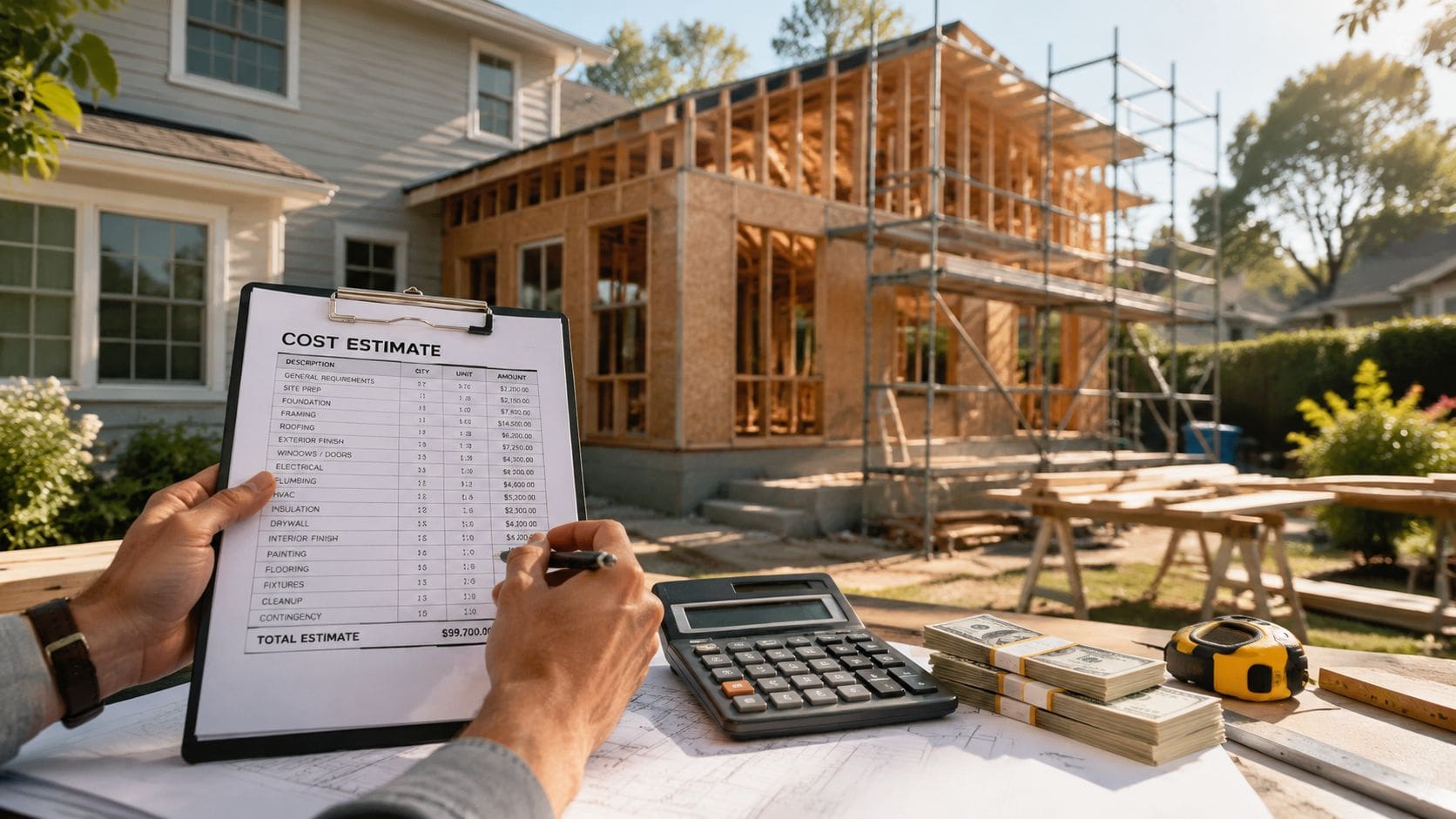
Hard Money Loan for Flipping Houses: The Complete 2026 Guide
You're under contract, the seller wants a fast close, and the clock is already working against you. The lender on the other side keeps asking for another statement, another tax return, another week. Meanwhile, the property you wanted is still sitting there, and another buyer is getting ready to move.
That's the moment a hard money loan for flipping houses stops being a niche product and starts looking like the only financing that fits the deal. It's a short-term, asset-based bridge loan built around the property and the exit, not a long amortizing mortgage built around your W-2 or full income file. In practice, that trade-off is simple, faster funding in exchange for higher cost and tighter execution discipline.
Why Fix-and-Flip Investors Turn to Hard Money
A deal can look clean on paper and still break on timing. The contract is signed, the rehab scope makes sense, and the resale math works. Then the lender asks for another document, the seller wants proof of funds again, and the closing date starts drifting past the point where the numbers still protect your margin.
Hard money exists for that gap. It is built for short-term, property-backed financing where speed and exit execution matter more than matching a borrower to a long underwriting file. The trade-off is direct. You get faster access to capital, but you pay more for it and you have less room for sloppy execution.
Industry benchmarks for 2026 place first-position hard money loans in a range that includes 9.5% to 13% rates, 1.5 to 3 origination points, 6 to 24-month terms, and loan-to-value caps commonly in the 60% to 75% range, with some lenders going to 80% for experienced borrowers. Those terms are not trying to imitate a bank mortgage. They are built to fund the property quickly while the lender focuses on collateral strength and the exit plan, which is a key pressure point in a flip.
Why speed changes everything
A hard money close can happen in 7 to 21 business days, which is a practical advantage when a seller wants certainty and other buyers are still waiting on underwriting. In a competitive market, the offer that closes on time often wins the property. The buyer who can move now has an edge. The buyer waiting on layered review usually does not.
Speed also matters after you buy. Draw schedules can create their own cash-flow trap, because rehab money does not always arrive when the contractor needs it. If the lender funds in stages and an inspection slows the next draw, you may have to cover materials, labor, or both out of pocket until the file clears. That can tighten liquidity fast, even when the project itself is sound.
The other reason investors use hard money is flexibility. A conventional mortgage tries to fit the borrower into the loan file. Hard money asks a narrower question, whether the property, the renovation plan, and the exit can support the loan. For a flip, that is the right test, but only if you also stress-test exit slippage, holding costs, and the possibility that your appraisal comes in below the number you modeled.
Practical rule: if the deal only works when the lender overlooks speed, rehab risk, draw timing, and resale delay, the deal probably does not work.
In the Southeast and Texas, where Sims Ventures serves investors across GA, NC, SC, and TX, that speed is especially valuable in active submarkets where homes can go under contract before a conventional file even clears early review. A private lender can still be disciplined without forcing the file into a bank-style timeline that kills the deal.
How ARV-Based Underwriting Works
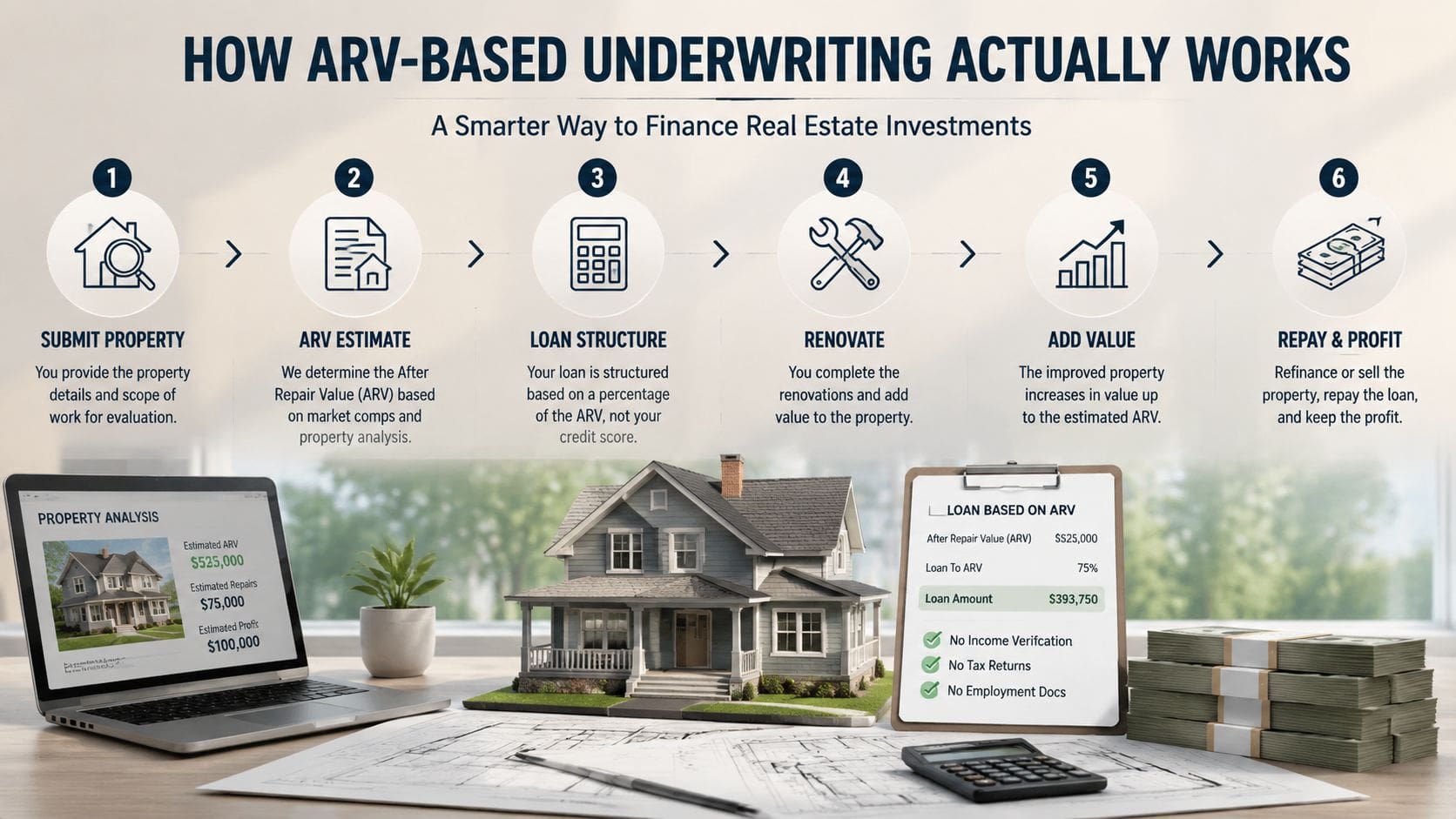
A hard money lender does not start with your purchase price. It starts with the value the house should have after the renovation is finished. That number is after-repair value, or ARV. If the lender does not believe the ARV, the rest of the loan sizing falls apart.
For a clearer explanation of the valuation concept itself, review our guide on what ARV means in real estate investing.
A simple deal example
Say you buy a property for $150,000 and plan $50,000 of rehab. Your total project cost before carry and fees is $200,000. If the finished house is expected to sell for $275,000 ARV, the loan still does not turn on your total cost alone. It turns on how much of that ARV the lender is willing to use in its underwriting.
In practice, lenders often size flip loans off a percentage of the finished value, not just the cash you put in. That usually leaves a gap between your total project cost and the maximum loan proceeds, which is where your equity cushion has to do real work. The cushion matters because appraisal variance, rehab overruns, and a slower sale can all reduce the room you thought you had.
LTC and LTARV are not the same thing
The two terms borrowers mix up most often are loan-to-cost (LTC) and loan-to-after-repair value (LTARV). LTC measures how much of the purchase and rehab the lender will fund. LTARV measures how much of the finished value the lender is willing to advance against. A deal can look fine on cost and still fail the ARV test if the purchase price is too high or the resale number is too aggressive.
A good flip is not the one with the biggest loan. It is the one where the rehab plan, resale estimate, and funding structure still leave room for delay, price cuts, and draw timing problems.
That is the part newer investors miss. The appraisal is the hinge point, but the draw schedule is what creates cash-flow stress after closing. If rehab funds are released in stages and an inspection holds up the next draw, you may have to cover labor or materials out of pocket until the lender clears the file. If you want a fuller explanation of ARV and how lenders tie it to flip underwriting, this ARV guide is the right starting point.
How to pre-screen a deal before submitting it
- Check the spread first. Compare purchase plus rehab against a conservative ARV estimate, not the most optimistic resale number.
- Confirm the band. If the loan you expect would sit above common 60% to 75% of ARV thresholds, the deal may be too tight.
- Stress the resale. If your numbers only work at the top of the market, your margin for error is thin.
- Validate the comp set. Weak comps create weak ARV, and weak ARV changes the loan amount, the draw room, and the exit plan.
Before you send a file, ask one more question. If the appraisal comes in light and the sale takes longer than planned, do you still have enough equity to finish the rehab and carry the property without forcing a bad exit? That is the test of ARV-based underwriting.
Understanding the True Cost of Hard Money Financing
A flip can look profitable on paper and still drain margin if the financing stack is tight. The rate matters, but cost shows up in points, interest, draw timing, closing costs, and exit friction, and each one can hit at a different stage of the deal.
A borrower can usually expect hard money to cost more than a conventional loan because the lender is pricing speed, collateral risk, and rehab complexity into the loan terms. The part that gets missed is cash timing. Points come out at closing, interest starts running right away, and rehab dollars are often released in stages, so the project can feel underfunded even when the headline loan amount looks fine.
Hard Money Flip Cost Breakdown
| Cost Item | Typical Range | Sample Project Estimate |
|---|---|---|
| Interest rate | 9% to 14% | Based on loan balance and hold time |
| Origination points | 1% to 4% | Paid at closing |
| Loan term | 6 to 18 months | Short hold period |
| Payments | Interest-only | Monthly carry during rehab |
| Rehab funding | Draw-based holdback | Reimbursed after inspections |
| Draw timing | Milestone-based | Cash needed before reimbursement |
| Exit pressure | Balloon payoff at sale or refi | Must clear before maturity |
| Extension risk | Possible if the project slips | Extra carry and fee exposure |
The sample estimate still depends on the loan structure, but the cash-flow pattern is the part to stress-test. A project can look comfortable at 11% with 2 points and still strain margin if materials are due before the next draw or if a contractor wants payment before reimbursement clears. That gap is where many flips lose money.
Why draw timing matters more than the rate
Hard money rehab funds are often held in draw escrow and released after inspections verify completed work. That protects the lender, but it can squeeze the borrower. You may have to cover labor, materials, and carrying costs before the next reimbursement arrives, and that shortfall is where a clean budget turns messy fast.
Cash flow rule: if you cannot cover the gap between contractor invoices and the next draw, the deal is not fully funded yet.
That is why experienced flippers build a financing line item into the spreadsheet before they make the offer. A proper hold-cost analysis should include the months you expect to own the property, the cost of carrying debt during rehab, and the extra expense if the sale takes longer than planned. Use how to calculate holding costs to pressure-test that number before you commit.
The question is whether the deal still works after every fee, every delay, and every extra month of carry. If the appraisal comes in light or the exit slips, you need enough equity cushion to finish the rehab and still sell without forcing a bad price.
Hard Money vs Conventional Financing for House Flips
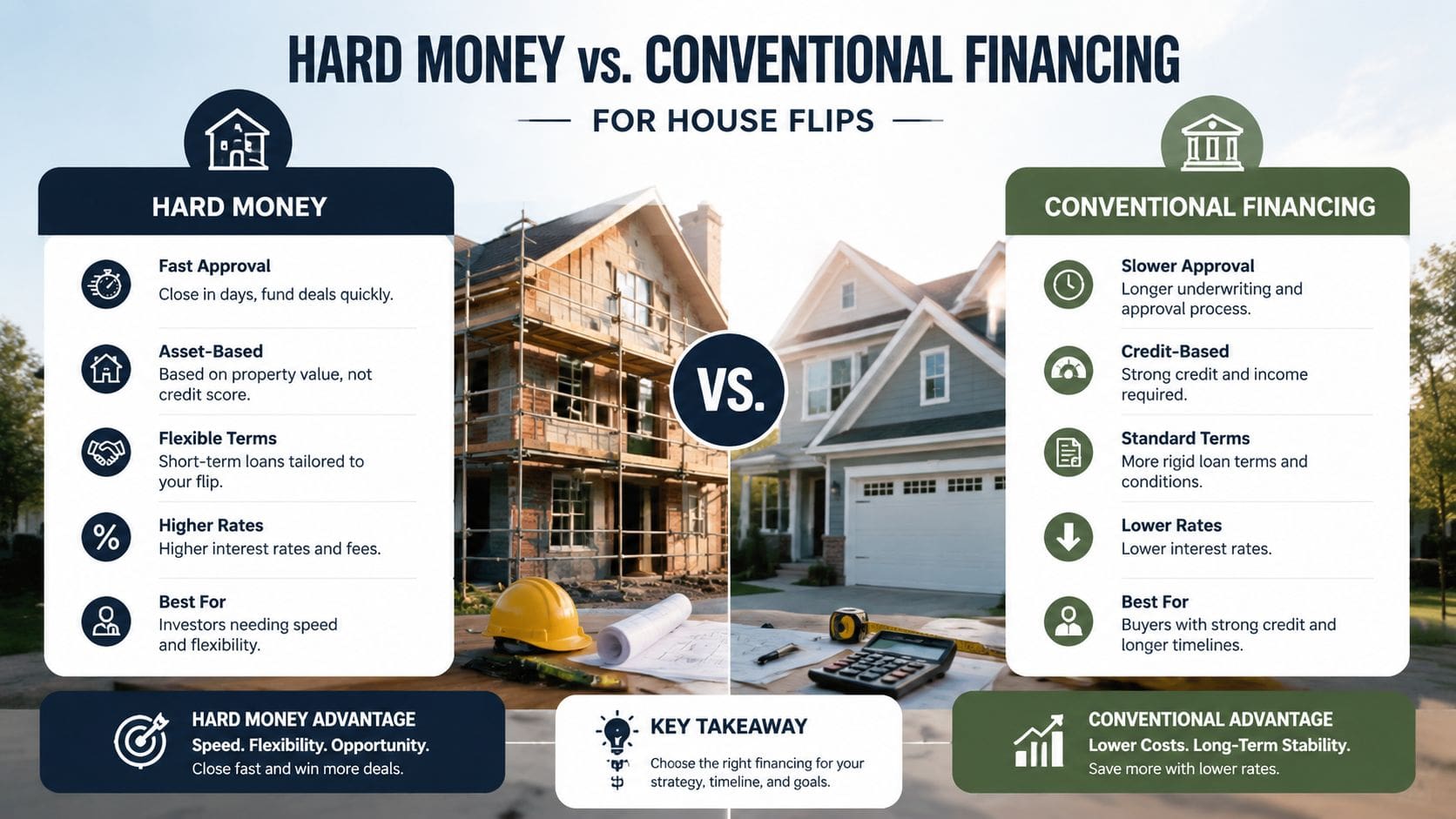
The choice between hard money and conventional financing usually comes down to one thing, whether the loan has to fit the deal fast or can wait for paperwork. For a flip, that difference is huge.
Side-by-side practical comparison
Hard money
- Closes fast, often in days rather than weeks.
- Uses the property as the primary underwriting focus.
- Fits rehab-heavy projects and time-sensitive acquisitions.
- Costs more, but gives the investor speed and flexibility.
Conventional financing
- Moves slower and asks for more borrower documentation.
- Works better when the property is in finished or near-finished condition.
- Can be useful for buy-and-hold investors who have time and documented income.
- Usually isn't built for a true rehab-and-resell strategy.
That's the core issue for a lot of self-employed investors. They may have strong deal flow and solid liquidity, but they don't present the kind of income packet a conventional lender wants. Hard money removes that bottleneck by leaning on collateral and execution instead of full tax-return review.
Where each option actually fits
Conventional financing can make sense if the plan is to hold the property, wait through a longer approval process, and rely on stable income documentation. For a fix-and-flip, though, waiting can kill the opportunity. You don't want a financing structure that works only after the deal you wanted has already gone to someone else.
Private lending can sit between the two, but for flips the question is still the same, can the capital close fast enough, and does it leave enough margin after costs? That's why experienced investors compare the total carry, not just the advertised rate.
If the lender can't match the seller's timeline, the cheapest loan in the world still won't save the deal.
The Application and Closing Timeline Explained
The cleanest closings happen before the lender ever asks for the file. Investors who show up with organized documents get through underwriting faster because the lender can verify the deal instead of chasing basic details.
What the timeline usually looks like
The process starts with deal submission. The lender reviews the purchase price, rehab budget, exit strategy, and borrower profile. If the file looks workable, the next steps are appraisal ordering, title work, and final underwriting. Sims Ventures targets an expedited closing process commonly around 15 days when appraisal and title are complete, which lines up with the broader market reality that hard money can close far faster than conventional debt.
If you want a lender-side checklist of what qualifies a file for that kind of speed, the internal page on hard money loan qualifications is the right place to start.
What borrowers can prepare in advance
- Scope of work: write it in enough detail that the lender can see how the rehab budget gets spent.
- Contractor bids: have them ready, because vague rehab numbers slow everything down.
- Comp support: show why the ARV is believable.
- Entity documents: keep ownership paperwork organized.
- Exit plan: be specific about sale timing or refinance path.
The most common bottlenecks are predictable. Appraisal delays happen when the comp set is weak or the property is unusual. Title issues show up when liens, ownership gaps, or recording problems aren't cleared early. Rehab scopes stall when the investor hasn't translated ideas into a real budget.
Why organized files close better
A lender can fix a lot of things, but it can't guess what a property is supposed to become. The better the scope, the cleaner the title, and the stronger the ARV support, the less likely the loan gets stuck in rework.
Bring the deal to the lender as if the close date already matters, because it does.
That mindset helps protect your contract deadline and your reputation with sellers and agents. It also makes it easier to move on the next opportunity without recreating the file from scratch every time.
Planning Your Exit Strategy Before You Borrow
A lot of investors assume the flip ends the same way every time, with a quick sale and a clean payoff. That works until the market softens, the rehab drifts, or the right buyer doesn't show up on schedule.
Three exits deserve attention
The first is the obvious one, traditional resale. If the project is a flip, the numbers should still work with a realistic marketing period and a conservative sale price. The second is a bridge-to-DSCR refinance, which can make sense when the investor decides to hold the property after renovation. The third is a cash-out refinance for portfolio builders who want to recycle equity into the next project.
That second path matters more than many newer investors realize. Recent market commentary shows lenders increasingly offer bridge-to-DSCR pathways, which reflects more investors who want a backup route into permanent financing once the property is stabilized. That's especially relevant for self-employed borrowers and investors who plan to rely on property cash flow instead of personal income documentation.
Build the backup plan into the deal
A hard money loan is short-term by design. If the sale slips, the loan still matures. That's where extension fees, extra carry, and rushed decision-making start to eat profit. The deal should survive if the first exit takes longer than expected.
A practical underwriting habit is to ask two questions before closing. What happens if the house sells later than planned? What happens if the investor decides to keep it? If the answer to either question is “the numbers get tight fast,” the deal needs more cushion.
Don't borrow as if the cleanest exit is guaranteed. Borrow as if you might need the second-best one.
That simple discipline protects margins better than optimism ever will.
Regional Market Notes and Your Pre-Application Checklist
State lines matter more than many borrowers think. Georgia, North Carolina, South Carolina, and Texas all have active investor activity, but each market can behave differently on appraisal tempo, buyer depth, and competition for renovated inventory. Local lender familiarity helps because a lender that works these markets often understands how quickly a property can move, where the comps get thin, and when an exit plan needs more caution.
That regional context is one reason investors keep local relationships close. A lender who already works in the area can usually spend less time learning the neighborhood and more time underwriting the actual deal.
Pre-application checklist
- Purchase details: have the contract, price, and closing timeline organized.
- Rehab budget: show line items, not a lump sum.
- ARV support: prepare comps that resemble the subject property.
- Contractor readiness: know who will do the work and when they'll start.
- Liquidity check: make sure you can cover interest, invoices, and any timing gap before the first draw comes back.
- Exit validation: decide whether the plan is resale, refi, or a backup hold strategy.
- Entity paperwork: keep ownership documents clean and current.
- Property condition notes: tell the truth about defects, because surprises kill closings later.
Sims Ventures also offers consulting sessions on deal evaluation and capital structuring, which can be useful when you're trying to pressure-test whether a flip really has enough margin after draw timing and exit slippage. For investors who want one lender relationship that can handle the broader strategy, a private lender can also be a practical fit for the loan itself.
The best time to solve a cash-flow timing problem is before the wire hits. If you're lining up a flip in GA, NC, SC, or TX, bring the deal, the rehab scope, and the exit plan together before you submit anything. That's what keeps a fast loan from becoming an expensive lesson.
If you're sizing up a flip and want a lender who understands ARV, draw timing, and backup exits, visit Sims Ventures to discuss financing and deal structure. They provide hard money and advisory support for investor projects across GA, NC, SC, and TX, which can help you pressure-test the equity cushion before you sign.
