
Construction Loan Interest Rates: Smart Strategies
Construction loan interest rates in 2026 average around 8.4% for investor-style programs, but that headline number doesn't tell you what you'll really pay each month. The true cost depends on draw timing, interest calculation method, and any holdbacks or reserve structure, not just the rate printed on the sheet.
A lot of borrowers get their first quote, compare it to a permanent mortgage, and feel the number is too high. That reaction makes sense. A construction loan is priced like short-term risk capital, not long-term home debt, and the lender is funding a project before there's completed collateral cash flow to lean on.
Why Construction Loan Rates Feel Higher Than Expected
The first surprise usually hits when an investor sees the monthly carry on a ground-up build and realizes the project is paying interest before a single wall goes up. That number can feel out of line until you remember what the lender is taking on. A construction loan is not backed by an already occupied property with steady rent or a finished home ready for sale. It's backed by a plan, a schedule, and a borrower's ability to execute.
Why the lender prices in risk
Construction capital carries a built-in premium because the lender is funding a project that can slip on time, run over budget, or miss its exit window. The National Association of Home Builders tracked a sharp jump in pricing in 2023, with average effective rates rising from 11.30% to 12.59% for speculative single-family construction loans between Q4 2022 and Q1 2023, and it noted that those Q1 2023 effective rates were the highest since it began collecting the data in 2018 (NAHB rate data).
That's why the headline rate is only part of the story. A 2026 cross-market snapshot still showed construction debt priced above conventional mortgages, with a weighted average construction loan interest rate of 8.4% in April 2026, built from a 4.8% SOFR benchmark plus lender spreads of 2.5% to 4.0% (2026 industry snapshot). In plain English, the lender starts with a benchmark and then layers on risk, servicing, and project complexity.
Practical rule: if the loan is short-term, draw-based, and exposed to build risk, the rate will usually sit above permanent financing.
Why the monthly number can still surprise you
The confusion comes from how people mentally model debt. Many borrowers assume they'll pay interest on the full commitment from day one. With construction financing, that's often not how the math works. The monthly outlay can start lower during early draws and rise later as the funded balance grows.
That's why experienced borrowers ask a different question. They don't just ask, “What's the rate?” They ask, “What balance is the lender charging interest on, and how does the draw schedule change that balance over time?” Once you focus on that, the quote starts to make more sense.
Understanding Construction Loan Interest Rates
Construction loan interest rates are the cost of short-term capital used to buy land, fund materials, pay labor, and keep a project moving before the property is producing income. They're different from a permanent mortgage because the loan is tied to the build itself, not to a finished, cash-flowing asset.
The core idea in plain language
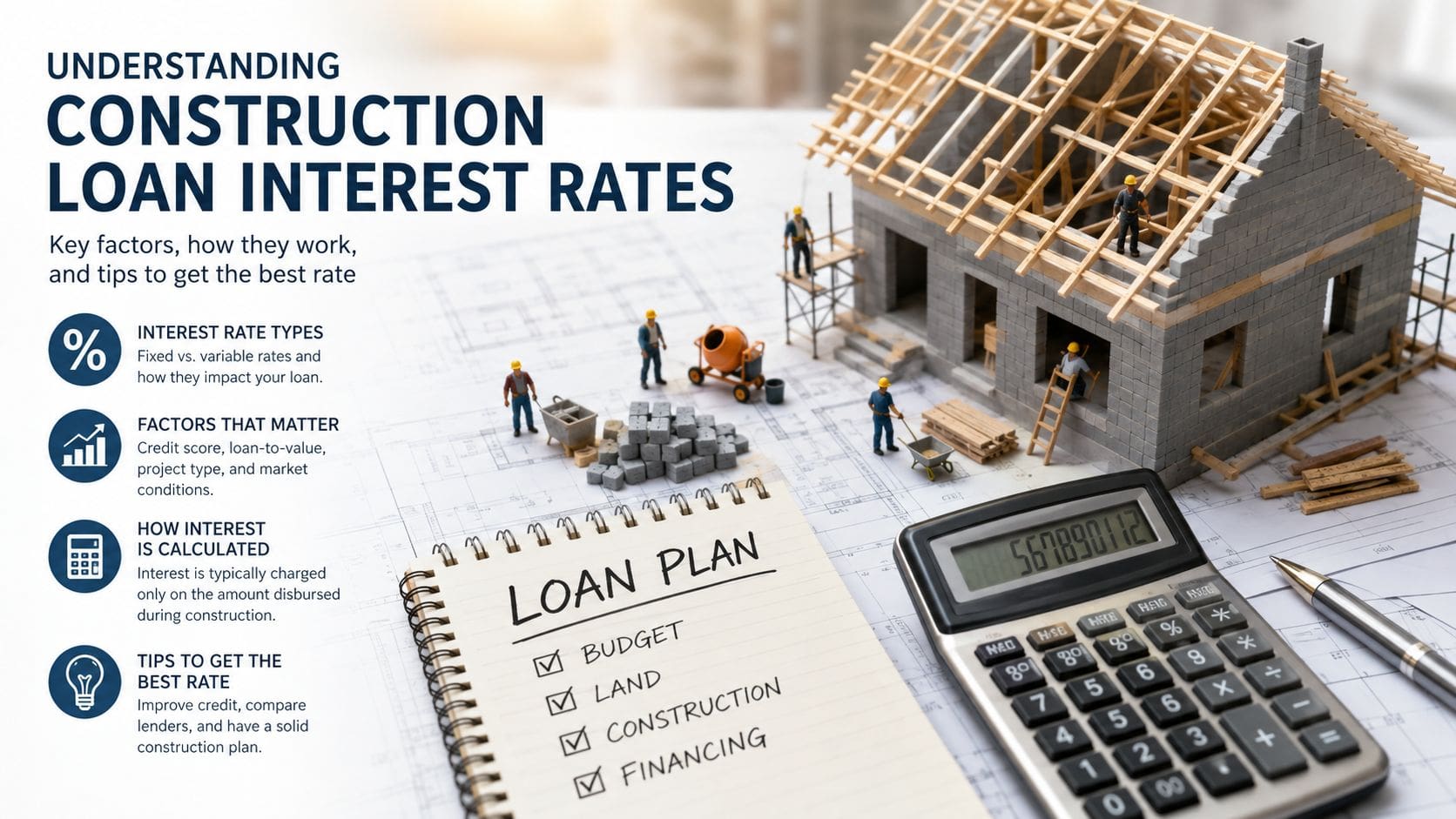
Think of a construction loan like a working line that opens in pieces. The lender doesn't usually hand over the full amount and start charging you as if the whole balance were sitting there on day one. Instead, funds are drawn as the project reaches milestones, so interest is commonly charged on what's been drawn.
That structure matters because two borrowers can get the same nominal rate and still have very different monthly bills. One borrower may have a small draw early in the project and a much lower payment. Another may pull a larger portion of the loan quickly and see carrying costs rise faster.
How this differs from permanent financing
A permanent mortgage is simpler in one respect, because the borrower usually starts with the full funded balance and pays according to a set amortization schedule. Construction financing is more dynamic. The payment changes as the draw balance changes, and the loan often behaves like interest-only debt during the build phase.
That's why the rate itself doesn't tell the whole story. A quoted rate only tells you the price of the money. It doesn't tell you when the money is advanced, how it accrues interest, or whether the lender calculates charges on drawn funds only or on the full commitment. Those details can change the monthly burden more than borrowers expect.
A construction quote can look acceptable on paper and still strain cash flow if the draw schedule is front-loaded or the interest is calculated aggressively.
Once you understand that, the rest of the deal gets easier to evaluate. You stop comparing construction debt to a mortgage and start comparing it to other short-term capital options, which is the right lens for an investor or builder.
Comparing Private Hard Money, Bridge, and Conventional Construction Loans
A borrower can look at three construction quotes and still end up with very different carrying costs. The headline rate matters, but the question is how the lender advances funds, how quickly interest starts, and how much cash stays tied up between draws. That is where the all-in cost of carry shows up.
Where each product tends to fit
Private hard money and bridge-style construction capital usually sit at the speed-first end of the market. They fit borrowers who need a fast close, a clear exit plan, and more flexible underwriting. For these programs, typical investor construction terms can run 12 to 24 months at 9% to 12% interest, with 75% to 85% LTC for experienced builders and 70% to 80% for first-timers. If you want a broader framing of how private capital compares with other short-term lending structures, this comparison of hard money loans versus private lending in 2026 is a useful companion.
Conventional construction-to-permanent financing usually sits at the lower-priced end of the spectrum, but it tends to come with a more rigid approval process and a stronger preference for owner-occupied or credit-union-style programs. The same rate sheet shows construction-to-permanent products in major U.S. markets at 5.625% to 6.500% APR, which is meaningfully different pricing, but the path to closing is often longer and the qualification standards are tighter. The tradeoff is not just rate. It is also how much certainty the lender wants before it funds the project.
A builder's line of credit sits in the middle for operators who need repeat funding under one facility. The structure can support multiple projects, but each draw still behaves like short-term construction capital, so the per-project carry needs to be modeled carefully. A line like that can look efficient on paper and still create pressure if draws lag behind subcontractor invoices.
How to choose the right tier
The right choice usually comes down to three questions. How fast does the deal need to close? How much equity are you bringing? How predictable is the build and exit? Faster and riskier projects usually need more flexible capital. Cleaner, slower, better-documented projects can sometimes qualify for lower-cost construction-to-permanent options.
If you only chase the lowest posted rate, you can end up with a loan that does not fit the project timeline. That mismatch creates cost in other places, especially when delays, inspection timing, or funding conditions slow the draw cycle. The borrower sees it as a monthly cash flow problem, but the lender sees it as a timing and structure problem.
Factors That Drive Construction Loan Interest Rates
A lender's quote starts with the rate, but the core pricing logic sits behind it. Construction lenders look at risk, timing, structure, and borrower behavior together. That's why one borrower gets a clean offer and another gets a much tighter term sheet even when the projects look similar from the outside.
The main pricing levers
Loan-to-cost ratio is usually one of the first filters. When you bring more equity, the lender's exposure drops and the pricing conversation often gets easier. Borrower experience matters too, because a builder with a clean track record is easier to underwrite than a first-timer with no completed projects.
Credit profile still matters, even in asset-focused programs. It tells the lender how the borrower handles obligations. Market conditions also shape appetite, because lenders respond to local competition, housing demand, and how busy a construction market is.
The build itself can move the rate as well. A longer draw schedule means more months of interest accrual, and that often raises the lender's concern about delays. Interest reserves can protect monthly cash flow, but they can also increase the total cost if the reserve is overfunded or poorly structured.
The items borrowers often overlook
Two borrowers can compare the same rate and still have very different all-in costs because of fees and calculation methods. Points and fees are part of the cost stack, and they can materially affect the effective burden even when the rate looks acceptable. Borrowers often don't get a clean explanation of how interest is charged during construction.
Ask the lender these three questions before you sign anything. Is the interest accrued or interest-only. Is it charged on drawn funds only or on the full commitment. Is there a minimum interest provision. Those answers matter because they change the monthly cash outlay more than the nominal rate alone.
If a lender can't explain the interest calculation in one minute, assume you still don't know the real cost.
That's the practical test. The cheapest quote on paper isn't always the cheapest loan in the field.
Sample Interest Cost Calculations for Different Borrower Profiles
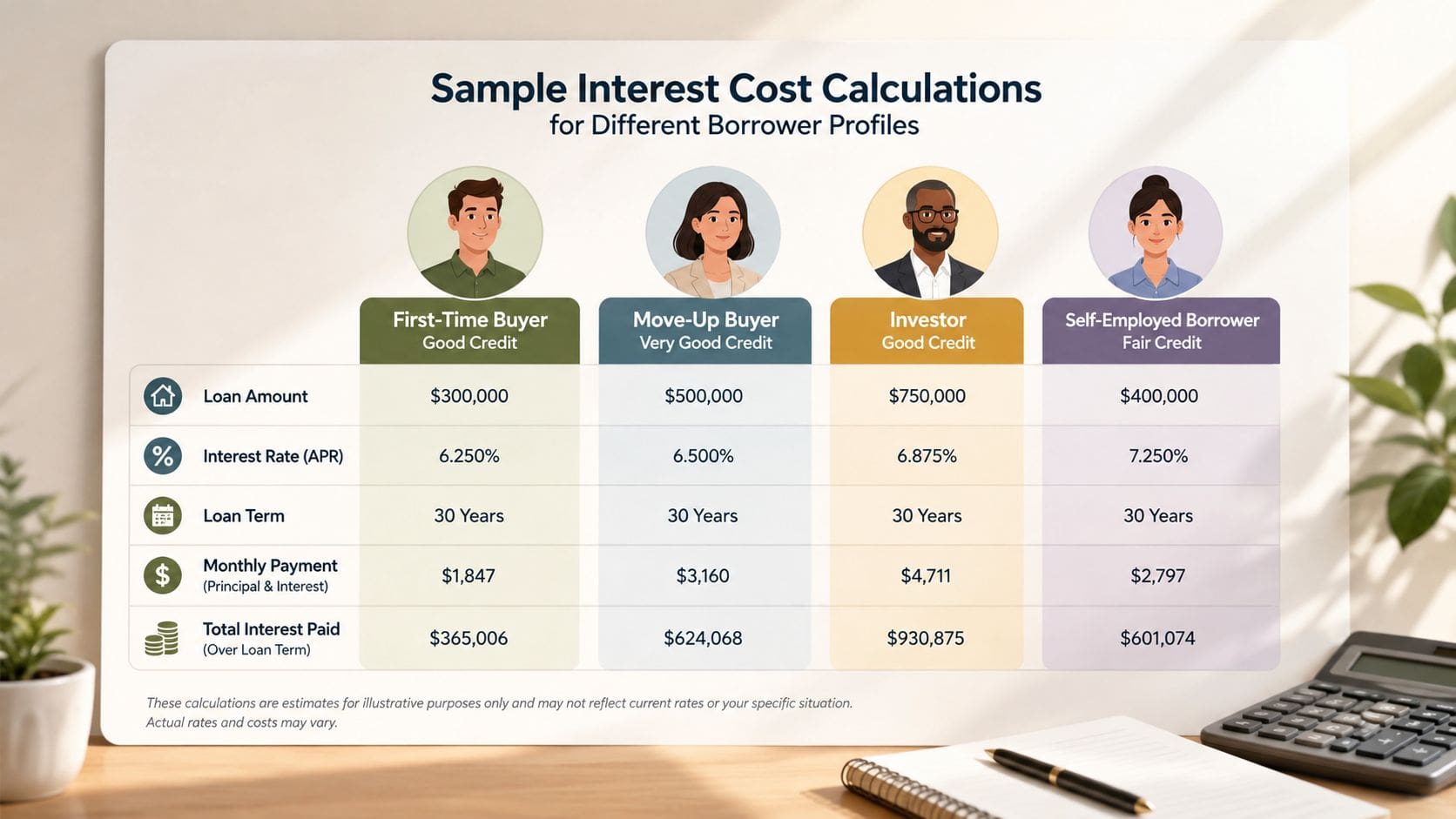
A construction loan functions more like a revolving line that releases funds in stages as milestones are reached. That is why the headline rate only tells part of the story. The monthly interest bill is tied to the balance that has been drawn, so timing matters as much as the note rate.
Scenario one, experienced investor on a flip
Take an investor with a $400,000 commitment at 10% interest who draws 60% of the total over six months. The common mistake is to treat the loan as if the full commitment is outstanding from day one. That is rarely how construction financing works in practice.
As each draw lands, the interest charge follows the drawn balance at that point in the build. Early draws create a smaller carry, so the monthly outlay starts lower. Later draws push the payment higher as the project absorbs more capital. The total interest cost over the build phase reflects the timing of each draw, not just the headline rate.
Scenario two, first-time builder on a ground-up project
Now look at a first-time builder with a $600,000 commitment at 11% interest who draws 50% over eight months and uses an interest reserve. The nominal rate is only one point higher than the first example, but the cost feels different because the build lasts longer and the lender has less comfort with the exit.
A reserve can soften the monthly burn because some or all of the interest is funded up front. It does not remove the cost. It shifts when the borrower pays it, not whether it gets paid.
What to watch in both cases
- Draw timing: slower draws usually keep early-month payments lower, but a late build can extend the carry.
- Interest reserves: these can protect liquidity, but they tie up capital that might otherwise sit in the project or another deal.
- Holdbacks: if the lender holds back part of the funds, your actual usable capital is lower than the commitment suggests.
- Extension risk: if the project slips, extra months of interest can raise the all-in cost.
The lesson is simple. Budget from the draw schedule, reserve structure, and likely completion date, not from the commitment amount alone. If a lender cannot explain the interest calculation in one minute, assume you still do not know the actual cost.
For investors building in Texas, construction loan pricing in Texas can also shift depending on market conditions and exit expectations.
Regional Rate Considerations for Georgia, North Carolina, South Carolina, and Texas
Construction loan pricing doesn't land the same way in every market. Lenders look at local deal flow, construction activity, and how easy it will be to liquidate or refinance the property later. That's why a quote in one state can look tighter or looser than a quote on a similar project somewhere else.
How region affects the quote
In Georgia, lenders often see strong demand in metro Atlanta and the surrounding growth corridors. That can tighten capital availability for smaller or newer builders, especially when the lender believes the project could take longer to exit. In North Carolina, the strength of the research triangle and Charlotte creates a more active lending environment, which can help experienced borrowers present stronger packages.
South Carolina tends to reward clean, well-positioned projects, especially when the location supports resale or rental demand. Coastal markets can behave differently from inland corridors, so the lender's appetite may shift with the specific submarket. Texas is broader and more fragmented. Houston, Dallas, and Austin each bring different land costs, construction expectations, and lender comfort levels.
Why the same deal can price differently
The loan structure might not change much from state to state, but the lender's confidence in the exit can. A similar draw schedule in one market can feel safer than the same schedule in another if the lender believes resale velocity is stronger. That feeds directly into pricing, reserve requirements, and how much flexibility you get during the build.
If you're evaluating Texas opportunities, this overview may help you think through the market more clearly, construction loans in Texas.
The practical takeaway is to present the deal like a lender, not just like a borrower. Show the build timeline, the exit path, and the equity cushion in language that makes the project easy to underwrite. Regional pricing often follows confidence, and confidence comes from clarity.
Actionable Strategies to Reduce Effective Borrowing Costs
The fastest way to lower your real cost of capital is to stop looking only at the headline rate. A better quote helps, but the larger savings usually come from tightening the structure, shortening the carry, and cutting friction during the build. That is where the monthly cash outlay starts to shrink in a way borrowers can feel.
A construction loan can look cheap on paper and still cost more than expected if draws lag, reserves are oversized, or the project sits idle between inspections. The rate matters. The timing of the money matters too.
What moves the needle
Bring more equity if you can. A stronger loan-to-cost position often improves pricing because the lender is taking less exposure, and that tends to show up in both the rate and the way the reserve is underwritten. If you already have a solid history with the same lender, use it. Repeat performance can improve terms, especially when the lender has seen you finish projects on schedule.
Keep the interest reserve under control instead of treating it like a fixed bucket that must be fully funded. If the reserve is too large, it traps cash that could stay in the project or support your next deal. That matters because every extra dollar sitting in reserve is a dollar not working elsewhere.
Draw timing matters just as much as the quoted rate. Slow inspections, missing invoices, and loose contractor paperwork can stretch the interest period and push monthly carry higher than expected. A clean draw calendar keeps the money moving, and the loan begins to behave more like the plan you underwrote.
If the project only needs expensive capital for a short stretch, plan the exit before the build is finished. Moving from short-term bridge or hard money debt into longer-term stabilized financing can reduce the all-in cost of carry once the property is ready. For a practical look at how borrowers think about this tradeoff, see financing strategies in a high-rate market.
A simple borrower checklist
- Shop more than one lender: use competing offers to compare rate, reserve structure, fees, and extension terms.
- Control the draw calendar: line up inspections, invoices, and contractor paperwork before the lender asks for them.
- Model the exit early: know whether you're refinancing, selling, or moving into stabilized debt.
- Keep your story clean: clear plans and clean budgets usually price better than vague scope documents.
If you want help thinking through structure before you apply, Sims Ventures offers real estate consulting on deal evaluation, capital structuring, and market approach, along with lending for ground-up construction and investor projects across Georgia, North Carolina, South Carolina, and Texas. That matters most when the rate sheet alone does not tell you what the deal is really going to cost.
If you're structuring a build, a flip, or a portfolio move and want a second set of eyes on the financing, visit Sims Ventures to review your options. They work through deal structure, construction capital, and refinance pathways with investors across Georgia, North Carolina, South Carolina, and Texas, so you can see the full cost before you commit.
